
The question “Mā tērā ka aha?” is a powerful challenge to consider the implications of our actions. In the context of learning Māori, it prompts me to ask: What will come of this endeavour?
‘Another language opens up a whole new window on the world. It might be small and difficult to see through at first, but it gives you a different perspective, and it might make you realise that your first window could do with a bit of polishing and even enlarging.’
(Hone Tuwhare, Die Deutsche Sprache und Ich, NZCTE, Goethe Institut, circa 1997)
Why Learn Māori?
Learning Māori, the language of New Zealand’s indigenous people, is a rewarding journey that offers a deeper connection to the country’s rich culture and history. Learning the language is more than just learning words; it’s immersing yourself in a unique worldview and fostering respect for Māori traditions. There is an expectation for all teachers in New Zealand to practise and develop the use of te reo and tikanga Māori.
Standards-for-the-Teaching-Profession-English-two-pages.pdf
| STANDARD | ELABORATION OF THE STANDARD |
| Demonstrate commitment to tangata whenuatanga and Te Tiriti o Waitangi partnership in Aotearoa New Zealand. | •Understand and recognise of the unique status of tangata whenua in Aotearoa New Zealand. • Understand and acknowledge the histories, heritages, languages and cultures of partners to Te Tiriti o Waitangi.• Practise and develop the use of te reo and tikanga Māori. |
Where to Begin?
Māori was declared an official language of NZ under the Māori Language Act of 1987. Therefore as an educator you should be well past the beginning especially if you were born here or have been in New Zealand for several years. School leaders you have a part to play here by ensuring that your teachers show evidence of this standard when undergoing appraisals. This was a recommendation of mātanga (mātauranga and te reo experts) as outlined in He Puna Whakaaro Mō Te Ahu o te Reo Māori me Te Kawa Matakura. While many English-medium school principals acknowledge the importance of te reo Māori, few translate this into concrete actions or initiatives.
The key to growing your language proficiency is to immerse yourself by surrounding yourself with the language. I listen to Māori podcasts, watch Māori television shows, and engage with Māori communities through events.
Practising with a language partner, especially a native speaker can significantly accelerate your learning process. Feedback is really important and finetune your ear to pronunciation. Record yourself and listen to what you sound like. I have Elena, Sarah and Steve who have been prodding me in my journey.
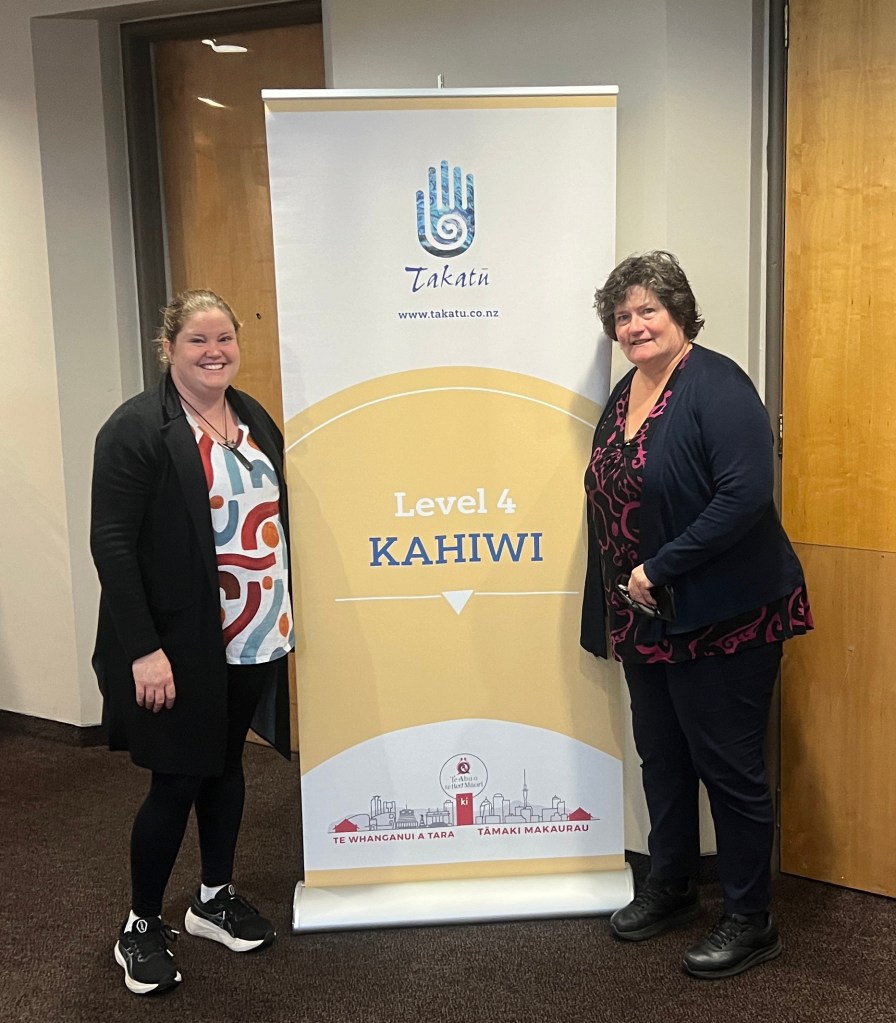
There are numerous online platforms, apps, and websites offering Māori language lessons. Teachers have had access to Te Ahu o te Reo Māori Learning free since 2021. I am currently using Takatu, a leading provider of Māori language learning programs, offering various levels of proficiency focussing on Māori language. Takatu has an innovative approach that suits me really well. It employs modern teaching methods and technology to make learning engaging and accessible. Takatu delivers programs aligned with the Ministry of Education’s Te Ahu o te Reo Māori curriculum. I especially love the structured learning because it provides me with a solid foundation and introduces me to grammar and vocabulary.
The waiting list was massive this year and unfortunately most of our teachers missed out. Just four from our school were accepted. The demand is there and I sincerely hope the current New Zealand government continues with Te Ahu o te Reo Māori Learning.
Tips for Learning Māori
Understanding Māori culture will enrich your language learning experience so embrace the culture. In my class this year I have used all my learning about culture to share with my students on a daily basis.
Everyone makes mistakes when learning a new language, but feel the fear and do it anyway. As teachers we know that mistakes are the only way to learn.
Consistency is key to mastering any language and identify any window that allows you to use force output to practise. These include learning a karakia, a whakatauki, a waiata and a kiwaha.
Celebrate small wins with all those little steps learning new vocabulary. This year my goal is to use kīwaha which is a colloquial saying or idiom. I play the guitar for our school kapa haka and songs are a great way to learn vocabulary.
Join a Māori Language Community and there are several on facebook. Connect with other learners for support and encouragement. I have also joined communities that share skills such as traditional navigation, or weaving or Rongoā or gardening.
Conclusion
Learning Māori is not merely an academic pursuit but a vital step towards reconciliation, cultural enrichment, and the preservation of a unique heritage. By embracing the taonga of the Māori language, we honour the past, build stronger communities, and create a more inclusive future for Aotearoa New Zealand.
Let us commit to nurturing the seeds of language revitalization, to sharing our knowledge with others, and to advocating for the continued support of Māori language initiatives. Together, we can ensure that te reo Māori thrives for generations to come.
Mā te whakapau ka whakatutuki. Through perseverance, we will succeed.
 Sonya @VanSchaijik