Innovative Learning

Innovative Learning

Pam (1)

Background

Last term I attended an Educafe session run by Emma Kingston.

Emma is a firm believer in privileging opportunities for face to face communication. She creates regular face to face events to enable educators to talk together.

What was particularly interesting at the Educafe evening was a chance to meet Professor Jane Gilbert. My virtual buddy Danielle Myburgh told me she had brought her professor along and would I like to meet her. Of course I jumped at the chance. After being introduced, Jane asked me some probing questions about the TeachMeetNZ project that I coordinate. I proudly told her that I have been gathering data since I began the project. The question Jane fired back at me was:

“How can you prove that what you do makes a difference to student learning?”

This is a great question – quite possibly the one question to rule them all. It is the provocation that comes from Thomas Guskey’s work on professional development (Guskey 200 p 85) and sits at the heart of John Hatties work on “know thy impact’ (Hattie 2012 p.169).

It is a question that encourage us to inquire into the effect of our actions on the learning of others.  Virginia Kung, Deputy Principal at Newmarket School, asked me something similar during my initial appraisal conversation around this year’s inquiry. She suggested I turn my teacher inquiry on its head and reflect on what it is I do that does make a difference.

I believe that one of the most influential elements to raising academic achievement over the past eight years at Newmarket School, is my and other teachers’ understanding of SOLO taxonomy and its focus on the student learning outcome. I have experienced this personally as I have used SOLO to drive my own learning to greater depth. When we as  teachers understand the importance of designing appropriately challenging (cognitively and physically) learning activities then that is when applied learning proficiency develops. SOLO has made me so much better at deeper or higher order thinking – linking my thinking with what I know, or knowing where to go to clarify what I need to know, or who to have a learning conversation with.  I recognise that unless I can make explicit links with my own pedagogy and my student’s learning then I am likely distracted from  the things that matter most.

I have used SOLO Taxonomy as the framework for what I do with all my various adult and student learners. My own reflective writing has deepened as a result. The overall outcome of my teacher inquiry is deeper in a number of significant ways.

Thinking about how I make a difference for the learning of English Language Learners

Thinking about learning and models of learning like SOLO taxonomy has deepened my understanding of the learning needs of my English Language Learners.

I am in the final stages of co-authoring a book with Pam Hook about my inquiry into effective pedagogies with English Language Learners. I join a group of incredible educators who have co-authored a book with her framing their pedagogy inquiry around SOLO Taxonomy. Pam has challenged several of my ideas around learning, so much so that a couple of times I have had to slink into a turtle shell and hide because I do not want to have further discussions. But that is what learning is all about.

Is this innovative?

I believe it is because I am being stretched to think about teaching and learning of L2 in new ways – to think at an extended abstract level. And my thinking has resulted in the design of learning experiences that have shown real gains in academic language acquisition for my ELLs students at Newmarket school.

Thinking about how I make a difference for the learning of teachers taking part in EdBookNZ

Thinking about learning and models of learning like SOLO Taxonomy has deepened my understanding of the learning needs of teachers in online collaborative environments  

As part of Connected Educator month I set up a learning environment for teachers. I wanted to see if  I could push boundaries on teacher’s learning. Could I make a difference to the ways teachers learn? This project has been ongoing as part of my personal inquiry that was selected as part of my Core Education efellowship.

I believe innovative learning is an iterative process.  It is not a series of over-hyped launches of the latest “new thing” – innovative learning is going back and finding out what changed, what worked, what didn’t  and then repeating the process until you find the real innovation – something that improves learning – something that endures.

Last year I had 10 educators agree to collaboratively co author a book around educator terms. The trial was so successful that this year I scaled the project to over 30 educators and coordinated them to work together in teams to co construct their understanding.

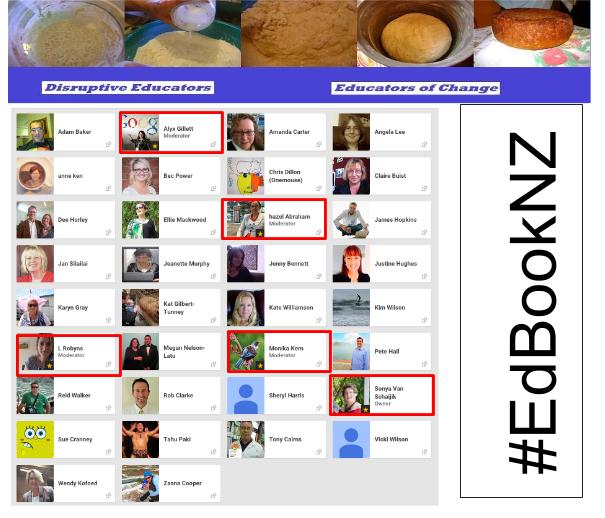
This year when I sent out digital feelers via Twitter I had the following fabulous educators respond.

prods

In this iteration I have 5x “prods” working in teams of 6x educators each. I am a prod for one team. Scaling a project is a real way to test the tightness of my thinking about effective online environments.

The teacher “prods” in the EdBookNZ project have had to learn, unlearn and re-learn knowledge and skills and they have to think independently and interdependently. I have not led something on this scale before and I am learning alongside all the members. I have had fabulous cognitively challenging learning conversations with the prods as they look to me for guidance and I frame our next steps for collaboration and challenging existing thinking using SOLO Taxonomy.

Is this innovative?

I believe it is – scaling up (rather than adopting the latest new thing) means the new idea or innovative thinking I have gained from this project is that developing deeper teacher learning comes from having clarity  about the purpose of the project.  The number of participants is not  necessarily a barrier if the learning design is clear.  Much like clarity of learning intentions helps in  a classroom so clarity over the purpose of an online collaboration is a prerequisite for deep learning outcomes. Using SOLO taxonomy to design the learning environment has helped ensure clarity – learning is visible. And this has made a difference to the depth of teacher learning as evidenced in the teacher’s dialogue and written texts.

Thinking about how I make a difference for my learning.

Thinking about learning and models of learning like SOLO Taxonomy has deepened my understanding of who I am as a teacher and a learner working with students and with teachers across New Zealand and around the world.  

I selected “Innovative Learning” because I wanted to see if I could define it. Do I even know what it is? Could I say what it is in a way that was deeper than shouting edu-slogans.

“Innovative” is commonly understood to involve novelty or creating something new that is worthy to the culture it is created in.  With respect to SOLO Taxonomy it would be learning at the extended abstract level.

As educators we love adding descriptors to highlight our in-vogue education terminology. I suspect we need to be wary of the need for descriptors – to ask why we need “innovative” inserted. So I would like to start by rephrasing the challenge and ask instead “what is learning?

The dictionary would have us think that learning is
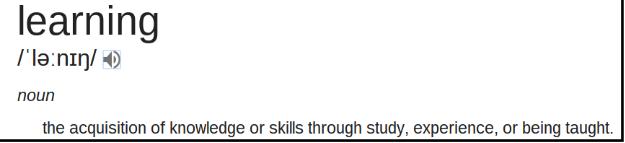
Learning

John Hattie defines it with more flair.

“Learning is spontaneous, individualistic and often earned through effort.  It is a timeworn, slow and gradual, fits and starts kind of process, which can have a flow of its own, but requires passion, patience and attention to detail (from the teacher and the student).” John Hattie 2009 p2

My understanding at its most simple level is that learning is about building on.

When I work with learners I liken learning to building blocks and I use SOLO Taxonomy to identify the gaps between the blocks. Part of those learning blocks are study, experience, and being taught using a variety of strategies. Other components include self effort, other learners, the teacher, whānau and community.

I love my learning tools and digital environments so I have to claim a place for the tools and the type of learning environment in my definition.  

Then there is the stuff you cannot see that affects learning – learner attitude, background, language spoken at home.

So where does innovation fit into all this?

I believe the conditions for “innovative learning” are most likely to occur when the framework that surrounds the learning makes it visible to students and teachers. For if you cannot clearly see what the learning is – how will you ever know if it is innovative or not.

For me the framework for “innovative” learning is a model of learning called SOLO Taxonomy (Biggs and Collis 1982).

Simply put, SOLO Taxonomy is a model for learning that looks at the structural complexity of learning outcomes as learning progresses from surface to deep to conceptual levels – SOLO –  Structure of Observed Learning Outcome. Refer HookED.

I believe SOLO lies behind the pedagogy that effective teachers bring to learning that makes the greatest difference as has been highlighted by John Hattie, 2003. In particular the part about ‘how they will organise and structure learning in the context of their particular students and their circumstances.’

Did I make a difference for me?

For this section I focus on changes in my learning when I was designing opportunities to encourage teacher collaboration and prompt deeper learning outcomes in the #EdBookNZ project that is part of Connected Educator Month.

When I listened to Jane Gilbert’s Educating for an Unknown Future  podcast I found myself nodding in agreement at some of the ideas raised. I made links between the podcast and what I have witnessed with teachers in the #EdBookNZ learning community.

In designing the teacher learning community for #EdBookNZ I wondered – to paraphrase Hattie – how to ‘organise and structure learning in the context of the particular [teacher] participants and their circumstances.’ so that they would engage in cognitively challenging discussions.

My intent was to challenge the teachers to think deeply and in doing so increase the likelihood they would provide opportunities and challenge for  their students’ learning. Those of you who know me well often hear me say, “We should focus on the teachers and the learners will benefit.

I believe professional conversation should be about how we can do things better. That is what the #edBookNZ collaborative and co constructions project is all about.

Last year the #EdBookNZ project was quite individualised because educators got together and wrote a blog post each debunking current educational jargon. The feedback from the educators was that they had more fun learning when their disruptive friend probed their thinking than they experienced writing the actual product.

When I use SOLO to frame my learning I understood that my design task activity was multistructural because I simply encouraged a list of educators to write down their ideas. Don’t get me wrong – the educators themselves are thinking relationally and at extended abstract levels because they are reflecting on their learning and technically we are creating a product. However the activity itself is multistructural from a design perspective because I have created the conditions for simply bringing in ideas – a list of educators reflecting on their learning.

This year I wanted to move the learning design away from bringing in the individual writers and create one to enable linking of ideas – a more collective writing experience or force to create a single piece of work. I wanted to design a space to be more cognitively challenging.

I know that the space was cognitively challenging for teachers because I used SOLO levels as a framework for the set up and prompting the ongoing dialogue needed to stretch their thinking. I did this with prodding questions designed to drive teachers thinking using the SOLO Taxonomy  Question Generator . You can view these driving questions under each week’s activity in the Google+ community. And I needed reflective questions as prods to help keep that cognitive dialogue momentum going.
Team

The focus of this year’s collaborative project is a discussion around the Practicing Teacher’s Criteria (PTC) framed with Tataiako.  It is a work in progress. The real learning will surface when the teachers reflect about the process they went through. In all cases I made all dialogue visible so that observers could see the ‘messy thinking.’ However as a prod, I still had hidden dialogue available through the direct messaging of twitter.

I believe in lowering barriers to participation by simplifying access – to do this I amped up the teacher’s learning by asking my prod volunteers to create the artefact for all the discussion. For example I have chosen to use popplet with my team because I just love the way the Describe ++ SOLO maps created by HookED prompt for deeper and conceptual thinking.  I intend to use my understanding to guide ours.

Is this innovative?

Learning and pedagogy go together. So has designing and sustaining the various and varied collaborative #EdBookNZ learning spaces using SOLO Taxonomy had an impact on my pedagogy?  I believe it has.

What has come through strongly in my thinking about “innovative learning” is the need for co-construction using a common language or framework for learning conversations.  When I look at all the learning happening in schools using “Modern Learning Environments” or “Innovative Learning Pedagogy”, I look for evidence of co-construction. Are the children collaborating and co-constructing their learning or is the learning still individualised? Are our teachers working across schools or even more challenging across countries, time zones and cultures to co-construct learning? How visible is all this learning?

Conclusion

What am I still wondering about?

I am wondering:

  • if the #EdBookNZ space has been sufficiently cognitively challenging?
  • if I will see a shift in our teacher’s pedagogy at Newmarket School who are involved in the Flat Connections Global Project.
  • if you will find new learning in Pam’s and mine “awesome as” collaborative book.
  • if the environment I design has encouraged and enabled all voices to be heard?

The last question is the most interesting and ongoing.  This year several educators with Maori backgrounds and Pasifika backgrounds have joined the #EdBookNZ project. I encouraged a rural voice asking educators to look at sustainability from a rural New Zealand perspective and even managed to persuade a student to take time off exam revision to design a provocative cover. These are people whose voices are often not heard in the spaces we design for online dialogue.

Authours

We learn more through cognitively challenged dialogue. The most important part of learning is asking for feedback.  Those of you who are learning with me please see this piece as a request for ongoing dialogue.

References

Biggs, J.B., & Collis, K.F. (1982). Evaluating the quality of learning: The SOLO taxonomy.

New York: Academic Press.

Gilbert, J. (2015). On educating for an Unknown Future. Pddcasrt URL: https://www.pond.co.nz/detail/679500/007-jane-gilbert-on-educating-for-an-unknown-future

Guskey, T. R. (2000) Evaluating Professional Development. Corwin Press Inc.

Hattie, J.A.C. (2003). Teachers make a difference: What is the research evidence? Paper presented at the Australian Council for Educational Research Annual Conference on Building Teacher Quality, Melbourne. URL:

http://www.educationalleaders.govt.nz/Pedagogy-and-assessment/Building-effective-learning-environments/Teachers-Make-a-Difference-What-is-the-Research-Evidence

Hattie, J.A.C. (2011). Visible learning: A synthesis of over 800 meta-analyses relating to achievement. London and New York: Routledge, Taylor and Francis Group.

Hattie, J.A.C. (2012). Visible learning for teachers. Maximising impact on learning. London: Routledge.

HookED Functioning Knowledge Rubric Generator URL:

http://pamhook.com/solo-apps/functioning-knowledge-rubric-generator/

HookED Question Generator iTunes App URL:  https://itunes.apple.com/us/app/question-generator/id989670360
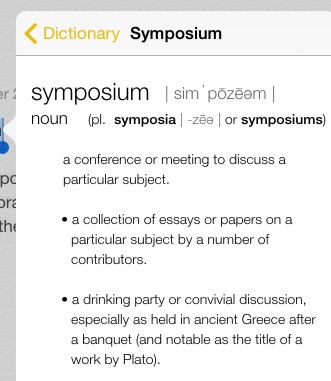
PaCT Symposium

PaCT

Symposium

On Tuesday the 28th of September, I attended the PaCT Symposium held at Ellerslie Event Centre. With me was Virginia, Veni, Nola and Wendy.  I attended the day because I wanted to see how the tool was evolving and to see if it would deliver results as indicated. The agenda for the day was highlighted for us.

  • To help support the roll out of the PaCT to NZ schools.
  • To provide practical assistance to schools using the PaCT.
  • To support the first end of year OTJ using the PaCT.,

We heard several speakers including

Dr Gill Thomas from New Zealand Maths.

Her session was particularly interesting and she covered the following sections.

  • The literacy of New Zealanders
  • Teaching knowledge
  • Teaching practice

Some of the numbers she shared with us included alerting us to the statistical information that general population needed level 3 and above to operate in life.

At this stage approximately 20% of our population does not achieve this level.

Some of the messages reiterated for us as teachers is to make sure that students are on track with national standard data.

She shared with us how to use the framework to strengthen teachers knowledge about numeracy.

She also expressed her thoughts on us to think about the key ideas not the curriculum level.

The number project allowed educators to identify the steps that the learner progresses through

Not the next step. The general learning direction is linear but the learning is not necessarily next steps.

Gill  highlighted the importance of knowing what to look for when assessing students.

Just looking at a piece of work, without giving instructions of what to can affect the overall score given.

The framework provide a comprehensive view of what reading and writing and maths in the NZC. The PaCT illustrations provide examples of rich teaching and learning in everyday programmes. But the importance of reflecting on the learning is crucial for understanding.

The PaCT illustrations prompt teachers to notice what their students know and can do.

She asked us to consider the following questions

  • What opportunities do I  give students in my class to reflect on their learning?
  • Think about ranking the students, identify where they are at?

Identify the boundaries of where the chin are sit as a group.

Use the judgement tool to identify where the chin are at.

We must never forget where the children are aiming for. Teachers were continually amazed that they were not teaching enough of certain aspects of mathematics.

I followed up Gill’s session by attending The PaCT and standardised assessment tools.

We were asked to identify the differences between PaCT and other standardised tests.

  • Accuracy
  • Scaled scores gives a range
  • Over a range of information
  • Then teacher accepts and gives an otj
  • Descriptors scales gives a range.
  • It takes more and more to give the next levels.
  • Tests normally have norms.
  • easTTle has norms

Pact does not yet have norms. The framework looks at how the chin are progressing.

Over 10,000 judgements have been made so norms are developing.

pact2

We were also asked, Why would you use an assessment tool beside the Pact?

  • Allows me to drill down as a teacher.
  • What am I not doing as a teacher.
  • School identified large areas of maths that needed teaching.
  • Impact on the teaching and learning programme.

We were shown graphs that indicated a close correlation between easttle and PaCT when students use them. PaCT allows us to see different assessment results together.

What kind of information am I using this tool for?

Lynmore school from Rotorua shared their journey.

  • Students can cross two year levels.
  • Can go directly to the report.
  • The teacher can see the areas that need addressing.
  • Can I see what is missing in our teaching.
  • Teachers need to look at the tool first.
  • From the class report teachers can drill down to the individual reports.
  • Individual – drill.
  • Go back to the child’s evidence.
  • The PaCT tool has given the confidence to confirm the OTJ
  • Moderate all judgements against all data.
  • PaCT has a greater variety of exemplars.

Dialogue from the learner is the most important aspect of learning.

Can they tell you how and why.

Hekia Parata spoke about her support for us to use PaCT.

  • The system rationed success through school certificate.
  • Locally educated and globally connected.
  • Identify language and culture
  • We still have too much streaming in New Zealand
  • Every year counts for the learner.
  • There is a progression in the curriculum.
  • How do we ensure that they are getting a full year’s learning.
  • Our job is to ensure that the chin are getting a full year’s learning.
  • Ensure you are doing it in a consistent way.
  • The most potent resource is what is between the ears of the learner.

Community of learners.

PaCT helps you dig deeper into the curriculum.

Assessing for learning and capturing the progress.

The core business of schools is to know learning is happening and how to capture it.

Agreeing on common achievement challenges.

Embedding local content in the curriculum.

Daniel Kahneman: Thinking fast and slow

Each set provides different illustrations

What’s the big idea.

You can delete a judgement for 30 days and so judgement

Discussion around the framework.

There are always 2x surprises.

– conservative or the student is further along

 Overall I learnt a lot from the sessions. The biggest takeaway is

“In what format are we sharing reliable student data.” 

Wearable Technology

IMG_5403fitbit

Last year  as part of Flat Connection Certification, I learnt about wearable technology and how it impacted on social and global community and its impact on education at all levels.

My initial understanding at that time was that wearable technology was about augmented wearable headsets that are worn as part of gaming to enact a make believe scenario or those google glasses that were making a big noise on social media. I wonder what happened to those glasses. I haven’t heard about them for a while.

Some of the young teachers at my school came to me to see if I would be interested in joining them to purchase a Fitbit Heart Rate Monitor. Of course I said yes because I was interested in personal tracking and I wondered if there would be implications in teaching and learning by wearing a tracking device. I was particularly interested in tracking my own sleep patterns and in tracking my own activity.

My Fitbit arrived but I was sick and then procrastinated starting. The girls asked me daily, ” Where is your Fitbit?” On Thursday night I read the manual, charged the device and downloaded the Fitbit iPhone app

On Friday I activated my Fitbit. This involved syncing the device with the Fitbit app. On the app some of the extra tracking involved calorie intake, water intake and ‘GAH‘ weight.

So on the Fitbit app I set my first goal of 10,000 daily steps, 1500 mls of water and 8 hours of sleep.

Those of you who have known me for a long time will know that over the past decade, I have gained a few extra kilos and more. I have been concerned at the speed of gain and have been worried about diabetes as I am carrying weight around my middle. I had recently watched videos of myself in my thirties and can hardly believe the difference this past 15 years has been on my physical health.

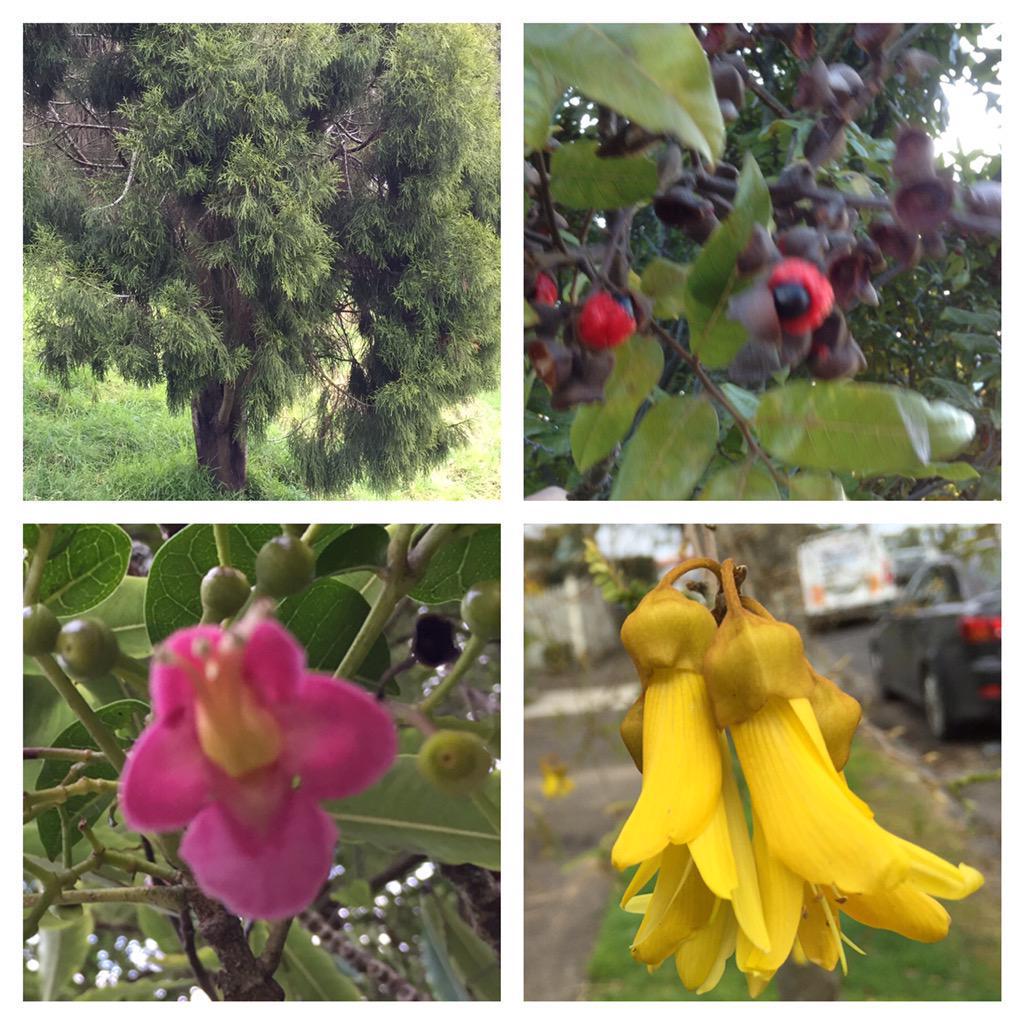
Well the first day was marvelous. I walked to school and noticed all the native trees in flower. I love our native trees and stopped several times to watch the tuis.

At school I spoke with the girls and found out that over the past few days they were doing more jump jam with their children and this boosts their steps. As I said, I wondered what impact the Fitbit would have on teaching and learning, The children had to find all the teachers who wore one. Our children took ages to identify me. I am not sure if that was a good thing or not. But that is good too because throughout my first day the children would come to me and inquire where I was up to on my steps. See already I can see a maths activity happening here with graphing. That and motivation. I am competitive by nature and they kept telling me I had the most numbers. Let’s see if that lasts.

At morning tea discussion I said that the app had badges and who was up for a weekend warrior challenge. We set a date for that too. The app allows you to use social networking to find friends so that communities can be formed. At this stage I am not too keen on the bare all to the world idea but am happy to have a step competition.

After school I had a meeting at the university. The weather changed and it poured with rain and I caught a ride with one of the teachers heading home. On the way I thought, “Humph, well this is a great start.”  

When my community meeting finished it was still raining and by now it was dark. I thought I would grab an Uber taxi home. While waiting for the taxi my phone died. That was it. I just had to suck it up and walk home and in the rain. On the way the Fitbit alerted me that I had achieved my steps goal but I did not care.  It was late and I still had my geriatric kids to feed. I was grumpy, wet, hungry and tired. I got home and threw dinner together, hopped in the shower and got ready for bed.

After dinner with my parents  I sat down and played with the calorie intake part of the app. I ended up using the computer as there were several food not in the system such as our Molenburg bread. I guess I could keep up that part of the Fitbit up. But the thought of tracking everything I eat is daunting, particularly the crackers and cheese part. Overnight I wore the Fitbit and saw that I had two broken patches of sleep. I reflected on my first days progress the following morning. I identified that I really need to drink more water. I usually drink about a litre at night but really I do not drink enough during the day. Therefore I will wake to having a glass before I get out of bed and cut back the coffee at school.

Where to next, I feel committed to physical improvement and am particularly keen at tracking how much I walk. I like the device and think it is easy to use. I love how it syncs with the phone and I can track my progress there too. I used to have a steps tracker. But that was useless because I kept losing the device. Being a gadget girl I wondered if I should have bought the iWatch. I will continue to observe the effects on our teachers and observe the impact on class programmes.

Already I am visualising a wearable device that tracks learning. The Fitbit device has a silent vibrator that alerts you to achieved goals. Imagine if as a teacher you send an alert signal to students wearing one about being on task. I know that some teachers are doing something similar with class Dojo and sending messages home to parents. I can image children completing learning goals and a device alerting them. Some wearable devices have a GPS tracking system. Tracking our children in real time has implications for us as educators. For example for school trips.

I can identify the negatives because I do believe that sometimes we need to be device free.

My questions to educators out there:

  1. Have you had experience with wearable devices?
  2. What sorts of learning can you identify?
  3. What pros and cons can you see for wearing a trackable device?  

My inquiry update.

“ E tumau le fa’avae, ae fesuia’i le faiga”

(the foundations remain the same, but the ways of doing it change).

‘If I am not doing anything new then I am not doing inquiry but am just reflecting on pedagogy.’ Say what?

OK After much discussion with my mentor, I basically said, “meh, there is not much more I can do for my inquiry because I already am a skilled teacher and get results from my target ELL children. I am a bit over this target student idea.” Her response was, “Well turn your inquiry on its head and reflect on what it is you do that does make a difference.”

So I have been reflecting heaps. Those of you who follow my blog will see a spike in my writing. But as I gathered my RTC’s and specifically chose only one tag, I can see that I have fabulous strengths in professional development and leadership RTCs but shy away from pedagogy. I have been following #edblognz reflections with great interests and a sense of pride in our outstanding education community. A recent spate of blogs around ‘Inquiry’ caught my eye. To be specific, Rachel Burgess recent post on inquiry.

I reflected back on the success I have had with my ELL students this year and I realised that I have been trialling new strategies and they are making a difference. So here they are.

Listing my new strategies

  • Virginia Kung recently threw at me the new NZCER Spellwrite site so I have been working my way through using the site as part of reading and writing. Our learning is still new but already results are looking promising. The site is well set up with great bones. Do check it out and share what you think.
  • The regular blog reflections allows me to dig a little deeper into what I do. I have been practicing my own writing using SOLO Taxonomy and this has made a difference to how I teach writing. Pam Hook reminded me about digging deeper with writing especially when I blog.
  • Having the children verbalise their learning and their next steps, record it and play it back to them using QR codes.
  • Create a visual display of key words to help writing. Wendy Kofoed my principal put pressure on me to showcase my students writing as a process. Seeing the wall in front of me has been marvelous for self reflection and as digital as I am, there really is nothing like the children’s face light up when they see their work displayed proudly.
  • Contact home when the children make exceptional progress. I had let that one fall away but a reminder from Virginia Kung of its importance had me revisiting that important school communication.
  • Speed writing to get volume from the students. If there is nothing to mark then what sort of feedback could I give the children.  I also used two books for the children’s writing. One was to keep all their plans and the other was for just writing. This was so they could always see their writing plans without needing to turn pages. Anne Girven stressed both strategies as part of our literacy focus last year.

My TeachMeetNZ project is fabulous for me as a learner and I garner so many amazing ideas. My principal wrote about teachers hacking their professional learning as part of her inquiry. Together with teachers around New Zealand we have been hacking our learning over a number of years. I did not realise that I have been subconsciously using what I have seen and heard and implemented them in my own lessons with the children.

  • Some of the strategies I have used include using minecraft and disney characters to motivate writing. I ninjaed that idea from Steve Katene.
  • Children choosing their own texts even if it is well above their reading levels. I ninjaed that idea from Caro Bush.
  • Continue to monitor the children’s progress in reading and don’t let them suffer from holiday slide. That idea I ninjaed from Fuatino Leaupepe.
  • Show them where they are in relation to their peers. I ninjaed that idea from my learning last year as part of my Flat Connections Global certification. Julie Lindsay gave us the the task of making connections with gaming and education.

Making links

In my inquiry folder I have gathered pre data on my students and I am comparing their progress with post data. I have agreed to share my inquiry with our Board of Trustees and I am really excited especially now that I can explain some of the changes I have made to my programme and show the process.

I am conscious that what I implement is only a small part of the child’s learning. We all know that it isn’t just up to me, or the classroom teacher, or the extra reading mileage, or the Steps programme or the management team or the parents to make that difference. Our children’s learning is all our responsibility.

The foundations remain the same in teaching in learning such as:

  • building relationships with our children and their families;
  • taking the time to identify their interests and use this to motivate their learning;
  • phone calls home to celebrate learning;
  • exchanges and pleasantries when I see parents;
  • knowing our parents and knowing our children.

Where to next:

I will continue to trial spellwrite with my current groups and incorporate it as part of reading.

I want to trial using the chromes to gather easTTle writing samples. Some teachers queried the validity of using devices for writing rather than a handwritten sample. However I believe that because our senior children do most of their writing using devices I cannot see the argument. I would just expect a greater sample than what we see when we ask them to handwrite an easTTle test. Even if our children have all spelling correct because they used google to help correct. Surely with history we can go back and identify editing.

I will prepare my presentation for our BOT and will let you know how I get on.

#youngerteacherself

Joanna Malefaki has created an amazingblog challenge, where teachers write to their younger selves, called the #YoungerTeacherSelf blog challenge. I have added the hashtag to our #edblognz site. I found the link on my twitter buddy Vicky Loras blog.

I started teaching the year I was married. I won a position in my local area and in my local parish. A decade later I shifted cities and returned to teaching and my studies as a single mother with my two pre school boys. Here is my letter to my younger teacher and single mother self. 

Dear young me.

Upgrade your teaching diploma to a degree as soon as you can and do it before you become a mother.

You will have an amazing teaching life. Later on you will focus more on the teachers and you will still want to work with children. An opportunity will come where you are asked to teach in a Samoan bilingual unit well before you are ready. Take this chance and put your own children through a Samoan aoga. That way your sons will be bilingual like you.

A chance will come to lead a school so take it. All your studies will pay off as really you are the best person for this position.

Learn to stand up for yourself a lot earlier and focus on teachers who are keen to learn with you. You know instinctively that technology is here to stay so continue to focus on being a change maker in education.

Choose your schools carefully. Do not work in a school that has no infrastructure in place. You will just waste years where you could be learning with your learners. Trust your first impressions of your head teachers. That instinct will prove to be accurate.

Your later years of teaching will bring you much joy. Start blogging a lot earlier for reflection. As fabulous as your class blog is, it really is only fleeting. Personal blogging will clarify your thinking and allow you to develop as a writer. As your personal writing develops so will your teaching of writing.

Do not let your training teachers borrow your hand drawn song charts. You will not get those back. Give your novels away. Lending them is just heart breaking as you will not get them back. Don’t waste your precious money buying teaching books. Soon a phenomena called the internet will make all that expense collect dust. Stop collecting old calendars to create number cards for your students. Soon you can photocopy them. You know that pile of music you did photocopy? Don’t, because copyright laws will come into force and you will end up burning them all.

You will meet some incredible educators all your life. So start collecting those selfies early. Take lots of photos of your class displays. Even if photos are expensive, just do it. It will be great to show what your first classroom looked like. Also write down some of the hilarious and honest things that children say.

As you shift houses for the third time, do not throw out those early teaching plans. They will make a great comparison of what is now expected of teachers today. You can also prove that you had neat handwriting and that yes planning was handwritten every week.

Start learning Chinese earlier and work harder to maintain your Japanese and your French. Another chance will come to teach overseas, take it and take your boys. They will adapt.

Get your life and work balance in order early. Take better care of your physical health because you will face greater challenges that will make taking care of yourself a low priority.

Celebrate your successes and be proud of what you have achieved. Don’t forget to smile and use a gentle voice. Remember to tell your sisters how amazing they are because you can not get to your future life without them.

Alofa atu

Sonya 50+

Birds of a feather

 “O Manu o le lauamanu e felelei mamao” ‘Birds that fly together go far.’ #edchatNZ

— Sonya (@vanschaijik) August 13, 2015

Each goose flaps its wings creates an uplift for the birds that follow. By flying in this formation whole flock adds 70% greater flying range then if each bird flew alone.

  • Educators who share a common sense of direction can get where they are going quicker and easier because they are travelling on the thrust of one another. Making links to this week I had this experience when by talking with Nathaniel Louwrens , we were both on the same track about tracking New Zealand educators blogs. I was watching how the the RSS feeds change as educators update their blogs. When the RSS feed changes a new blogger takes the lead. site. That is what gave me the idea for this reflection. My opening quote came from the #EdchatNZ session that took place this week on Authentic Learning. I thought how amazing the conversation had been and how thinking was deepened with the discussion closely guided by leading questions from Danielle Myburgh.

When a goose flies out of formation it feels the drag and resistance of flying alone. It then quickly moves back into formation to take advantage of the lifting power of the bird flying in front of it.

  • That is what I thought of the carefully challenged devil’s advocate role. Someone who comes in and drags the conversation by challenging the discussion. We can feel the drag in the conversation and then justify why we think the way we do as we move to the speed of keeping up. Stephen Lethbridge was the Devil’s Advocate for the #edchatnz twitter chat.

When the lead goose tires it rotates back into the formation and another goose flies to the point position.

  • As educators it is important to take turns sharing the load and take turns leading as we are interdependent on each other. I often see this when I see the same names leading events. A classic one is TeachMeetNZ. I am often grateful when an educator approaches me to host a session. I see this too with the educamp events that take place around New Zealand when different lead educators step up and coordinate an EducampNZ event in their own neighbourhood. We are all interdependent on each other and by taking turns to share the load of leading free professional learning  for educators across New Zealand.

The geese flying in formation honk to encourage those up front to keep up their speed.

  • As educators we need to ensure that our honking from behind like on social media is encouraging. But also ensure that our voice can be heard if we think those leading need to hear a change in direction. As we continue to embrace social media for our own professional learning it is important to celebrate what we do here in New Zealand. We have stunning educators and I love seeing and hearing their stories. At the same time I am conscious of not too much enthusiastic praise and remember to include some kind of feedback and to celebrate those educators who are our devil’s advocate. It takes courage and broad shoulders to have a voice of constructive criticism.

When a goose gets sick or wounded and falls, two geese follow it down to help and protect it. They stay with it until it dies or is able to fly again then they catch up with the flock or launch with another formation.

  • As educators we can launch a new formation or join with those who are headed the same way we want to travel. We can look out and encourage one of us to step forward in the lead roles and always help each other in times of self doubt by being there to talk through ideas. We can stand beside and support each other  even if we are unsure of new ideas.

I thought about this part as I reflected on my involvement on the EELWebinar. I thought about how I became involved because Tessa Grey believed in the work that I do and encouraged me and motivated my ideas using Google+ hangout. I thought of how Ewan McIntosh did not hesitate to say yes when I asked to use some of the ideas to develop for TeachMeet. I thought of Virginia Kung giving me some analogies to think about for my presentation and how she was willing to help me clarify my own thinking for my presentation. You can check out my slides below.

I also thought about how we take turns at Newmarket School to host others schools visiting. On Friday we had several visitors come in and Wendy Kofoed reminded me of how many of our ideas develop through the generosity of schools we have visited sharing their ideas and systems.

Finally I think about learning on the thrust of one another. By learning in this formation, can we add 70% greater range than if we learnt alone?

I think about how we are all interdependent on each other. I had a conversation with Pete Hall. ‘Leading Teachers to share their practice.’ First I agreed to be the trial teacher for his new initiative and in turn he agreed to step in and present virtually with me at the recent GAFE conference. You can hear the podcast on the POND.

I can really see this learning thrust happening on the EdblogNZ site. I believe that by making the blogs visible teachers have come together and are now flying like geese. Each educator is prepared to move into the leader position by updating their blog.

Reference

Lessons from the geese”, was written in 1972 by Dr Robert F McNeish of Baltimore.

#EdBlogNZ

The educator blog list began with a Meme in January of 2014. As the concept took off, I identified who in New Zealand was blogging as an educational practitioner. I had been observing class blogs for a couple of years and identified the odd educator blogging, but the Meme task really helped as edubloggers in New Zealand tagged their educator friends.

One key element was who was being tagged. From there, Helen Prescott set up a doc to eliminate the same educators being spammed and directed traffic to the doc to check out first who has been tagged. We hoped that this would eliminate double ups. From that doc I set up an educator’s spreadsheet list of edubloggers in March 2014.

Then I added all educators I knew who had taken part in a TeachMeetNZ and had reflected on the process. I also identified educators who were commenting on fellow educator blogs. As the list grew, I pulled out principals to see who was blogging and was surprised at the low number. So I gave my own principal the blogging challenge and reminded her about asking our teachers to reflect but where was her reflection. She took on the challenge and with her on board, this made the task easier of encouraging our teachers to reflect on their practice via blogs.

After that the list kind of grew on its own as educators added other educators.

Later on in the year, I was tagged on twitter with Nathaniel @nlouwrens who was aiming to build a list and a fellow tweep knew that there was already a list. That is how the #EdblogNZ hashtag was born. Nathaniel was encouraging educators to use the hashtag so that he could identify who was blogging.

The next stage of the curation happened by chance conversation with Nathaniel for the VLN #eelwebinar. I showed Nathaniel our school staff site and how this has accelerated staff learning just by making what they do visible using RSS feeds. I had ninjaed the staff blog idea from St Andrew’s college staff blog site via my connection with Matt @mattynicoll. The staff rss feed I had seen on @maurieabraham principal’s blog.

I showed Nathaniel what I was doing and he was totally enthusiastic and supportive. He agreed to come on board in this space to help with monitoring. He shared what he was doing with encouraging educators to blog and told me he was working with Alex @ariaporo22 at Ulearn. We all know what a beast sites and blogs can be once created. So by using RSS feeds, we want the space to run itself. That is what this curated site will do.

Where to next, the curated site is live at www.edblognz.blogspot.co.nz and it will be driven by the hashtag. As educators fall off the blogging space they will be replaced by regular bloggers. That is what we three will do. We will monitor who blogs and who falls off. The RSS feed highlights the latest blog by date. The twitter feed alerts us to who is using the hashtag. So if you want your blog featured do remember to use the #edblognz hashtag and do remember to reflect actively and visibly.

Update

The edblognz site has been live for a few hours and already we have had some great discussion on twitter. It is also fabulous to see how others are taking up the challenge to update their posts. I think we need a blog badge and some blogging challenges. Already I can see that the educator list has bloomed and needs a trim. But for now I need to concentrate on my VLN presentation for Wednesday. If you are around, do join the session hosted by Nathaniel. Danielle is also presenting and we are discussion Personalising PLD using social networks

Spelling, Handwriting, Untidy desk, Never Motionless- you know those students?

These ‘kinds’ of students I love and can relate to. Because I am one of them.

At the moment, I have tidied my desk and one staff member jokingly said, we should have sweepstakes to see how long that lasts. My staff know me well. My modelling books are a highlight and I am always the first to share them. I often look back and think, oh my goodness how did I let that page slip through with my learners? But what I do is effective, because I would never judge my learners on what I see immediately but what I see over time and with evidence. I also say, ‘If my handwriting, spelling and desk looked ‘normal’ then I would not be doing what I do.’ Those of you who know me, know exactly what I mean. I am creative and inventive. I can problem solve most technical problems both hardware and software. I can bring a group of learners to work together and I get results.

Technology was invented for a learner like me. Suddenly spelling, and handwriting are no longer as important and modern learning environments have taken away desks for creating nests. So I am almost normal. But I like being different and I embrace being different.

I am the teacher who loves wiggle woggle chairs, and reminds children to tidy their desks, when I tidy mine.  Tidying desks would be a class activity or someone ends up doing it out of total eyesore. I am an early technology adopter and was the child who took apart the family radio, stereo, iron and computers to see how they work. And I still like to do this.

I often say, I am not the one with the problem with my untidy desk or my spelling. Yes I can be judged on what can be seen, often an untidy desk, but I can close the door and receive visitors elsewhere. Who do they often come to see but some one like me?  I go to my editor to proof read any writing that will be published or could be read by our school community.

The point of all this, embrace your challenging learners. One day they will grow up and surprise you. They might even be the ones employing learners who are different.

Te Reo and EdBookNZ project 2015

Ko te manu e kai āna i te miro nona te ngahere.

Ko te manu e kai āna i te mātauranga, nona te ao.

The bird that consumes the berry his is the forest. The bird that consumes knowledge his is the world.

“E fafaga tama a manu i fuga o la’au, ‘ae fafaga tama a tagata i upu ma tala”

Language and Culture are sustenance for our children”.

In the early 1980s, I trained as a Māori language teacher under the guidance of Wiremu Hohepa. When I attended Christchurch Teacher’s college I met someone who was like me with a passion for language. Her name was Aroha and she was a member of the Māori Woman’s welfare league. So those early years  of my education journey to become a teacher, I was immersed in Māori language and tikana.

I am fluent in Samoan so I took to Māori language like duck to water. I was the Kapahaka leader because I had excellent pronunciation and under Aroha’s skilled leadership, she brought me up to speed with waiata and dance.

I always believed that I would teach Māori and over the years Te Reo has always been part of my classroom programme.

When I graduated from teacher’s college I joined a Catholic school and Māori is part of the special character teaching. Therefore teaching Māori has always been part of whom I am. Later as my own understanding of bilingualism developed I taught Samoan and even in my bilingual unit we worked closely with our Māori whanau as between us we had a similar goal and that was academic success for our tamaiti.

In my ongoing research to better understand the registered teacher criteria I have been reading around Tātaiako and have been learning more about the meaning of Tangata Whenuatanga which is the affirming of Māori learners as Māori, providing contexts for learning where the language, identity, and culture of Māori learners and their whānau is affirmed.

At Newmarket school we already have a lead teacher for Māori and that is our deputy principal, Eilleen. However for me, I am also a resource person for pronounciation and also for our local stories. Since I have been at this school I have made it a mission to find out as much as I can about our local iwi and history. Matariki allows me the luxury of paying closer attention to the natural environment and each year I add to the ongoing research I have been gathering in regards to who we are and where we come from as a school.

Because this is the month for Matariki, it is also the time to learn a new skill and to revisit Māori language. It is a time of achnowledging those who have come before us and to pave the way for those coming after us.

I have always believed in leaving a legacy both for school and as an educator. As July fast approaches I will soon be working extensively with educators from around New Zealand as part of Connected Educator Month. This year my focus is on the registered teachers criteria and this year the outcome is Tangata Whenuatanga. I have taken the document, Tātaiako: Cultural Competencies for Teachers of Māori and have used this to underpin the registered teachers criteria. I have built the leadership coordinators and soon will be calling for other educators to take part. By undertaking this project, I want to raise awareness of several values that underpin the document and by understanding these values our educators will be better able to affirm Māori learners as Māori through providing contexts for learning where the language, identity, and culture of Māori learners and their whānau is affirmed.

Relevant RTC Kupu Meaning
RTC5, RTC11, Wānanga participating with learners and communities in robust dialogue for the benefit of Māori learners’ achievement
RTC1, Whānaungatanga actively engaging in respectful working relationships with Māori learners, parents, whānau, hapū, and iwi
RTC2, RTC7, Manaakitanga showing integrity, sincerity, and respect towards Māori beliefs, language, and culture
RTC3, RTC9, RTC10, Tangata Whenuatanga affirming Māori learners as Māori, providing contexts for learning where the language, identity, and culture of Māori learners and their whānau is affirmed
RTC4, RTC6, RTC8, RTC12 Ako taking responsibility for their own learning and that of Māori learners.

If you would like to join us in the edbooknz 2015 project, I will be calling for interested participants in July. Here are my confirmed team coordinators, Stephanie , Lavinia , Hazel , Alyx confirmed Team coordinators for 2015 project.

I wonder how the collaborative project will evolve. I have an idea but implementing it will require a team effort.

Data and ELL children

Its that time of the year when most of our data has been entered into our Learning management system and I have a chance to look at the total picture of my children who are eligible for ESOL funding.

These are some of my heart stopping moments.

I have a year 4 student with a 3P in reading and a 2P in writing. She has been in New Zealand for 3 full years and came to us with no English but is fluent at speaking in her first language. She had no literacy in her first language. In three years she has surpassed a year 6 in reading and can match a year 5 in writing. That is what the data tells me. As I have a quiet chuckle. I hope that the teacher makes a teacher judgement and adjusts these marks for feeding back to parents because I know for a fact that these scores are not realistically possible, YET.

I have another student who is a year 4 and has a 2A for reading and a 1B for writing. His probe score matches the reading asttle, so does this mean he is above for reading? Again I don’t think so. The scores do not align. How can he be reading at a year 5 level and writing at a year 1 level? I remind our teachers to lay out the scores and see how they align. Personally either the writing has not been pushed or the reading is far too high.

I have another student. She is year 6. Her scores indicate that she is reading as well as a year 9 student with comprehension. But she her written work shows that she is writing at an early year 5 level. Sooo? What do you think? She came to us as a five year old with no English and had no schooling in her first language.

I know that by year 6 if we have worked really hard, our English Language Learning children will be beginning to meet national standard data.

When I see them surpassing national standard data in the earlier years I know from my vast experience that these same children will fall dramatically by year 4. The teachers have to work really hard to continue to meet the earlier year’s gathering of data and this takes time.

If you are an junior school teacher and have never taught in any other area of the school, then this would be my recommendation to you. Spend some time teaching in other levels so that you have a more realistic grasp of what data should look like.

Myself, I always work in class as much as I can so that my understanding of data remains realistic. I really like teams who come together to moderate their data and even better if this can be spread across schools so that moderation between schools gives us a clearer picture of what we should be expecting and looking for in our data. I wonder what our intermediate teachers would say when they see our student’s data being levelled and benchmarked the same as theirs. These questions I continually have with our teachers as they write their reports.

As for the rest of New Zealand, what do your data tables read? How do the scores align across curriculum areas and across year levels? I have a staff meeting coming up where I will be sharing some of what I see with our staff. I ask them these same questions and ask them to justify their teacher judgements when levelling our students against National Standards. Scoring our children academically is a small part of the total child and I ask them how well do they know the  children. Our parents want to know how their children are aligned with the rest of their peers. However the most important question they usually ask is, ‘Is my child happy at school and do they have any friends?’

I also hope that there are no surprises for our parents because I know that most of our teachers communicate regularly through out the year as to how the children are doing in class.