Each goose flaps its wings creates an uplift for the birds that follow. By flying in this formation whole flock adds 70% greater flying range then if each bird flew alone.
Educators who share a common sense of direction can get where they are going quicker and easier because they are travelling on the thrust of one another. Making links to this week I had this experience when by talking with Nathaniel Louwrens , we were both on the same track about tracking New Zealand educators blogs. I was watching how the the RSS feeds change as educators update their blogs. When the RSS feed changes a new blogger takes the lead. site. That is what gave me the idea for this reflection. My opening quote came from the #EdchatNZ session that took place this week on Authentic Learning. I thought how amazing the conversation had been and how thinking was deepened with the discussion closely guided by leading questions from Danielle Myburgh.
When a goose flies out of formation it feels the drag and resistance of flying alone. It then quickly moves back into formation to take advantage of the lifting power of the bird flying in front of it.
That is what I thought of the carefully challenged devil’s advocate role. Someone who comes in and drags the conversation by challenging the discussion. We can feel the drag in the conversation and then justify why we think the way we do as we move to the speed of keeping up. Stephen Lethbridge was the Devil’s Advocate for the #edchatnz twitter chat.
When the lead goose tires it rotates back into the formation and another goose flies to the point position.
As educators it is important to take turns sharing the load and take turns leading as we are interdependent on each other. I often see this when I see the same names leading events. A classic one is TeachMeetNZ. I am often grateful when an educator approaches me to host a session. I see this too with the educamp events that take place around New Zealand when different lead educators step up and coordinate an EducampNZ event in their own neighbourhood. We are all interdependent on each other and by taking turns to share the load of leading free professional learning for educators across New Zealand.
The geese flying in formation honk to encourage those up front to keep up their speed.
As educators we need to ensure that our honking from behind like on social media is encouraging. But also ensure that our voice can be heard if we think those leading need to hear a change in direction. As we continue to embrace social media for our own professional learning it is important to celebrate what we do here in New Zealand. We have stunning educators and I love seeing and hearing their stories. At the same time I am conscious of not too much enthusiastic praise and remember to include some kind of feedback and to celebrate those educators who are our devil’s advocate. It takes courage and broad shoulders to have a voice of constructive criticism.
When a goose gets sick or wounded and falls, two geese follow it down to help and protect it. They stay with it until it dies or is able to fly again then they catch up with the flock or launch with another formation.
As educators we can launch a new formation or join with those who are headed the same way we want to travel. We can look out and encourage one of us to step forward in the lead roles and always help each other in times of self doubt by being there to talk through ideas. We can stand beside and support each other even if we are unsure of new ideas.
I thought about this part as I reflected on my involvement on the EELWebinar. I thought about how I became involved because Tessa Grey believed in the work that I do and encouraged me and motivated my ideas using Google+ hangout. I thought of how Ewan McIntosh did not hesitate to say yes when I asked to use some of the ideas to develop for TeachMeet. I thought of Virginia Kung giving me some analogies to think about for my presentation and how she was willing to help me clarify my own thinking for my presentation. You can check out my slides below.
I also thought about how we take turns at Newmarket School to host others schools visiting. On Friday we had several visitors come in and Wendy Kofoed reminded me of how many of our ideas develop through the generosity of schools we have visited sharing their ideas and systems.
Finally I think about learning on the thrust of one another. By learning in this formation, can we add 70% greater range than if we learnt alone?
I think about how we are all interdependent on each other. I had a conversation with Pete Hall. ‘Leading Teachers to share their practice.’ First I agreed to be the trial teacher for his new initiative and in turn he agreed to step in and present virtually with me at the recent GAFE conference. You can hear the podcast on the POND.
I can really see this learning thrust happening on the EdblogNZ site. I believe that by making the blogs visible teachers have come together and are now flying like geese. Each educator is prepared to move into the leader position by updating their blog.
Reference
Lessons from the geese”, was written in 1972 by Dr Robert F McNeish of Baltimore.
The educator blog list began with a Meme in January of 2014. As the concept took off, I identified who in New Zealand was blogging as an educational practitioner. I had been observing class blogs for a couple of years and identified the odd educator blogging, but the Meme task really helped as edubloggers in New Zealand tagged their educator friends.
One key element was who was being tagged. From there, Helen Prescott set up a doc to eliminate the same educators being spammed and directed traffic to the doc to check out first who has been tagged. We hoped that this would eliminate double ups. From that doc I set up an educator’s spreadsheet list of edubloggers in March 2014.
Then I added all educators I knew who had taken part in a TeachMeetNZ and had reflected on the process. I also identified educators who were commenting on fellow educator blogs. As the list grew, I pulled out principals to see who was blogging and was surprised at the low number. So I gave my own principal the blogging challenge and reminded her about asking our teachers to reflect but where was her reflection. She took on the challenge and with her on board, this made the task easier of encouraging our teachers to reflect on their practice via blogs.
After that the list kind of grew on its own as educators added other educators.
Later on in the year, I was tagged on twitter with Nathaniel @nlouwrens who was aiming to build a list and a fellow tweep knew that there was already a list. That is how the #EdblogNZ hashtag was born. Nathaniel was encouraging educators to use the hashtag so that he could identify who was blogging.
The next stage of the curation happened by chance conversation with Nathaniel for the VLN #eelwebinar. I showed Nathaniel our school staff site and how this has accelerated staff learning just by making what they do visible using RSS feeds. I had ninjaed the staff blog idea from St Andrew’s college staff blog site via my connection with Matt @mattynicoll. The staff rss feed I had seen on @maurieabraham principal’s blog.
I showed Nathaniel what I was doing and he was totally enthusiastic and supportive. He agreed to come on board in this space to help with monitoring. He shared what he was doing with encouraging educators to blog and told me he was working with Alex @ariaporo22 at Ulearn. We all know what a beast sites and blogs can be once created. So by using RSS feeds, we want the space to run itself. That is what this curated site will do.
Where to next, the curated site is live at www.edblognz.blogspot.co.nz and it will be driven by the hashtag. As educators fall off the blogging space they will be replaced by regular bloggers. That is what we three will do. We will monitor who blogs and who falls off. The RSS feed highlights the latest blog by date. The twitter feed alerts us to who is using the hashtag. So if you want your blog featured do remember to use the #edblognz hashtag and do remember to reflect actively and visibly.
Update
The edblognz site has been live for a few hours and already we have had some great discussion on twitter. It is also fabulous to see how others are taking up the challenge to update their posts. I think we need a blog badge and some blogging challenges. Already I can see that the educator list has bloomed and needs a trim. But for now I need to concentrate on my VLN presentation for Wednesday. If you are around, do join the session hosted by Nathaniel. Danielle is also presenting and we are discussion Personalising PLD using social networks.
I have been working on my pepeha for quite a while now. Once I recorded it, I wondered if it was totally accurate. I am a fluent speaker of Samoan and often I can hear a sentence in Māori and know that it makes sense because of the familiarity of sounds and word order.
However with my pepeha, I was a little hesitant. I turned to my twitter buddies and put the word out there. Straight away help was on hand and @temihinga responded immediately and helped with a final proof read. Yes I had several corrections to make. She also explained why and this helped me immensely. I had recently met Te Mihinga at Nethui face to face and had heard her speak.@ariaporo22Alex also responded. She had presented with me on TeachMeetNZ.
In my Samoan culture we do not have a Pepeha but we do have a faalupega. I know when I was teaching in a Samoan bilingual unit, I had the children learn their Faalupega. In Samoa when reciting our Faalupega, we must know where we come from and who the chief and the talking chiefs are in our family. If we are really clever we will know all the titles of our chiefs and we will also know all the different villages we associate with because of family connections. My training in Faalupega was it was like a ripple in the pond. I am like the centre of the ripple and then I move out. As I learn more about myself, I add that. It is like reciting genealogy. Place markers are also part of Faalupega. At the same time the chiefs are place markers too because they are associated with families and places.
With Māori it is knowing where you come from. At our school, we teach our children our school pepeha and have been relearning it each year during Matariki. This year I wanted to add a little extra and see if I can say my pepeha and include my Samoan markers. My next step is to memorise our school whakataukī. The neat thing about recording yourself is that you can listen and rewind your learning. By hearing our own voice often enough the flow of the words stick in our memories and soon they are part of our active oral schema.
By learning my pepeha, it reminds me of the challenges of learning another language. In the registered teacher’s criteria learning my pepeha covers cultural responsiveness and language maintenance. But it also covers acknowledging the place of Te Reo in our curriculum. Samoan language and who we are are indescribably linked. Just like Te Reo and the people of this land. There is such a connection to the land it almost comes across as one. The people are the land and the land is the people.
In order to learn our school pepeha, I needed to learn our areas history. I visited the maunga mentioned and I visited the awa. I researched our local history. Over the years I have worked with the children on both our school’s history, its surrounding area and our pepeha. As a school we visit our local marae of Ōrākei and we reconnect with Ngāti Whātua every two years.
My challenge to all educators is learn your school’s pepeha and teach your children how to say it too. Use Matariki as a time to revisit your pepeha and to learn a little more about the area that your school is in. Use Māori language week as a celebration of how much reo you have learnt over the past year and a commitment to how much more you will learn in the coming year.
EducampAkl is amazing professional learning for teachers. This years session was coordinated by Fiona Grant and team. The hosting school was Tamaki college so we got the chance to see inside a different school.
The incredible part is that it is free and you have the opportunity to find out more about a burning question or issue that has been a little difficult to answer. You spend a day on your own professional learning and learn about edu stuff that you want to know more about. Technically the day is about you as a learner. You say what you want to learn and someone helps you learn it. I was really excited to have Belinda and Waveney join me from Newmarket School so they could see what I rave on about every year.
Saturday 25th of July was fabulous and I got to meet and make connections with lots of new people and reconnect with many virtual acquaintances. One reason I attend #educampakl sessions is to put the face behind the twitter handle.
SmackDown
During the SmackDown educators are given the opportunity to share. You can access the slides from here with link,
Photo by Fiona
I shared the upcoming #edchatnz project that I created to bring teachers together for virtual collaboration. Therefore free PD in your PJ’s.
I shared about a twitter app called Periscope that has the facility to live stream. I have added a summary to my slide and embedded the short demonstration clip I took during Fiona Grant’s introduction.
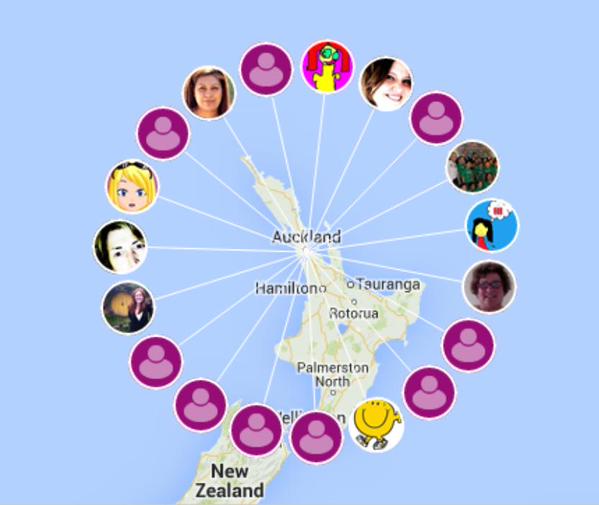
Gerard spent time with me and a few other visiting Pond. One of my burning questions was how easy would it be to set up a Newmarket School group in the POND. He showed us how to activate the Geo map and see our teachers and I really like this image that was generated in regards to Newmarket School.
I had another lesson in curating and sharing content. He was patient and awesome but I still had the feeling that our teachers have when they work with me and tell me you are going too fast. POND as a tool is amazing and I will continue to put in some hours to learn it because it is worth it.
Hapara Workspace
Lenva from Hapara covered Hapara Workspace. The workspace comes live on Monday.
I believe we should upgrade our package to include Hapara interact. This costs a little extra on the package and is something I will recommend we do for when we renew our license as this will allows us to help keep our students safer. We already love Hapara and the extra facility will support teachers in their work too. Anything that helps our children and teachers is worth a little extra.
TeachMeetNZ
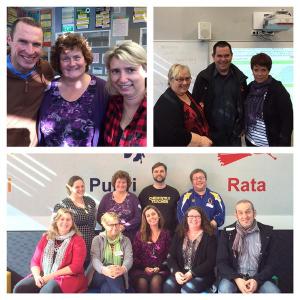
I called together any presenters who have been on TeachMeetNZ to come for an obligatory photo, the task was like trying to herd puppies, so in the end I created a montage. Even then I still missed James. The exciting part of Educamps is meeting up again and having a bit of a catch up. I pulled in Fiona too to this one because she is presenting on the TMSydney combined with TeachMeetNZ in October. Here they all are so do follow them on twitter.
I give a shoutout here for the upcoming Virtual Learning Network Webinair ‘Personalising PLD using social networks’. So pop along and register. I will be sharing TeachMeetNZ and Danielle Myburgh is sharing Edchatnz.
When: 15:45 – 16:45, 12 Aug 2015
Venue: Adobe Connect
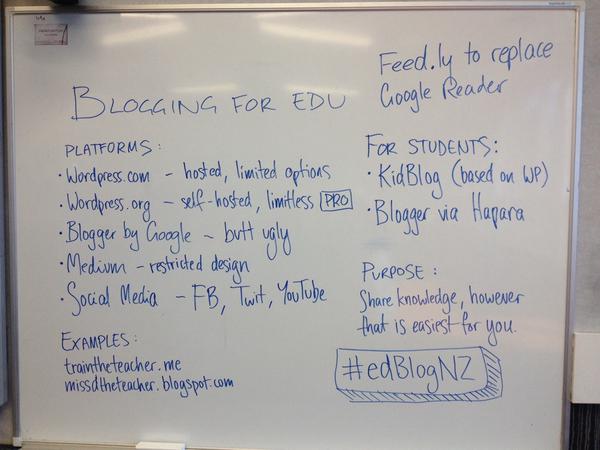
Blogging for Educators
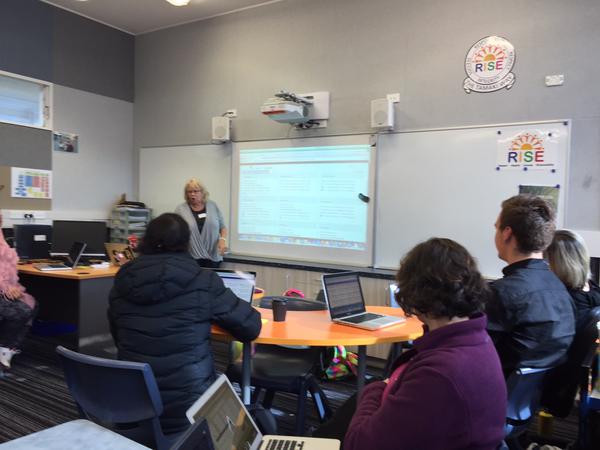
Tanya was running a session so I popped in and had a listen. I ninjaed her notes.
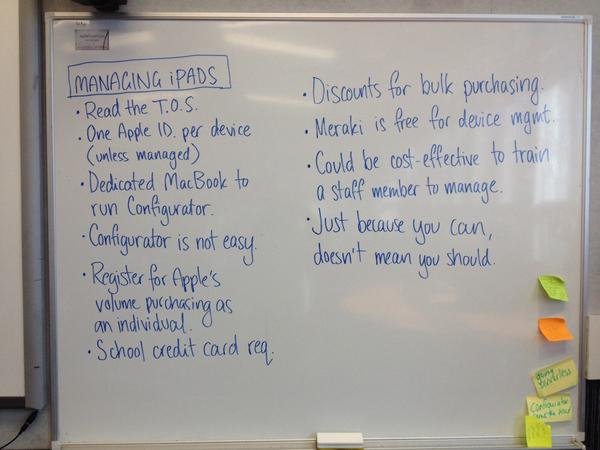
After Tanya, I listened to Clinton sharing about Configurator and Meraki. I really like the way he speaks, as in the practicalities and how to save school money. I have found configurator a real challenge especially with purchased apps. When a teacher asks me about adding new apps to the system I now totally ignore them. However from now one I will put across to them to trial the app first on their teacher iPad using their class budget to buy the app, test it with a group of students and then write me a proposal of the value of purchasing the app for the ipads. If they can be bothered to do all that, then I can be bothered to spend hours fighting configurator to install it. The last holidays I just could not face spending another full week updating the system. There must be a better way. I wonder if there are schools who could do with a refresher and together we fly him up for a day’s training. Clinton said that he would create self help videos so I look forward to those. Again notes are from Tanya. I also found out that iPad 2 system charges for apple apps but these are given with later models. Clinton also cautioned against giving children printing rights on a chrome. I agree with him. I still cannot understand teachers who want children to be able to print from the chrome. As we move more and more digital, are they not aware that the doc can be shared?
Now that the session is over I still need to clip videos and add them to the wikipages. Then I will add the pages to the Pinterest list. If you were a presenter and are visiting thank you again for taking part.
I give a shout out here to Monika Kern who did a fabulous job with broadcasting. We trended on twitter so that was really exciting and I give a shout out here to all the teachers who joined in on the session virtually. Thank you because having an active audience really helps make the session. Monika created a storify of the session.
I also acknowledge Virginia Kung from Newmarket School. She is our assistant principal and for this session she agreed to be timekeeper. She gave feedback and covered for me when I stepped away at the start of the session to collect the team.
Where to next for TeachMeetNZ, well we will be steaming live from Ulearn and I will have Matt Esterman from TMSydney with me as co-host. We will run a combined Australia and New Zealand TeachMeet virtually.
Finally, I was not all nervous this time. The changes I have made included creating slides and broadcasting them before each practice session. We also had questions happening on the Hangout and I will push this more next time.
Now if you are interested in taking part, please do not hesitate to contact me on twitter. If there is space I do bring in educators from outside New Zealand however the time difference for you does suck.
These ‘kinds’ of students I love and can relate to. Because I am one of them.
At the moment, I have tidied my desk and one staff member jokingly said, we should have sweepstakes to see how long that lasts. My staff know me well. My modelling books are a highlight and I am always the first to share them. I often look back and think, oh my goodness how did I let that page slip through with my learners? But what I do is effective, because I would never judge my learners on what I see immediately but what I see over time and with evidence. I also say, ‘If my handwriting, spelling and desk looked ‘normal’ then I would not be doing what I do.’ Those of you who know me, know exactly what I mean. I am creative and inventive. I can problem solve most technical problems both hardware and software. I can bring a group of learners to work together and I get results.
Technology was invented for a learner like me. Suddenly spelling, and handwriting are no longer as important and modern learning environments have taken away desks for creating nests. So I am almost normal. But I like being different and I embrace being different.
I am the teacher who loves wiggle woggle chairs, and reminds children to tidy their desks, when I tidy mine. Tidying desks would be a class activity or someone ends up doing it out of total eyesore. I am an early technology adopter and was the child who took apart the family radio, stereo, iron and computers to see how they work. And I still like to do this.
I often say, I am not the one with the problem with my untidy desk or my spelling. Yes I can be judged on what can be seen, often an untidy desk, but I can close the door and receive visitors elsewhere. Who do they often come to see but some one like me? I go to my editor to proof read any writing that will be published or could be read by our school community.
The point of all this, embrace your challenging learners. One day they will grow up and surprise you. They might even be the ones employing learners who are different.
The bird that consumes the berry his is the forest. The bird that consumes knowledge his is the world.
“E fafaga tama a manu i fuga o la’au, ‘ae fafaga tama a tagata i upu ma tala”
Language and Culture are sustenance for our children”.
In the early 1980s, I trained as a Māori language teacher under the guidance of Wiremu Hohepa. When I attended Christchurch Teacher’s college I met someone who was like me with a passion for language. Her name was Aroha and she was a member of the Māori Woman’s welfare league. So those early years of my education journey to become a teacher, I was immersed in Māori language and tikana.
I am fluent in Samoan so I took to Māori language like duck to water. I was the Kapahaka leader because I had excellent pronunciation and under Aroha’s skilled leadership, she brought me up to speed with waiata and dance.
I always believed that I would teach Māori and over the years Te Reo has always been part of my classroom programme.
When I graduated from teacher’s college I joined a Catholic school and Māori is part of the special character teaching. Therefore teaching Māori has always been part of whom I am. Later as my own understanding of bilingualism developed I taught Samoan and even in my bilingual unit we worked closely with our Māori whanau as between us we had a similar goal and that was academic success for our tamaiti.
In my ongoing research to better understand the registered teacher criteria I have been reading around Tātaiako and have been learning more about the meaning of Tangata Whenuatanga which is the affirming of Māori learners as Māori, providing contexts for learning where the language, identity, and culture of Māori learners and their whānau is affirmed.
At Newmarket school we already have a lead teacher for Māori and that is our deputy principal, Eilleen. However for me, I am also a resource person for pronounciation and also for our local stories. Since I have been at this school I have made it a mission to find out as much as I can about our local iwi and history. Matariki allows me the luxury of paying closer attention to the natural environment and each year I add to the ongoing research I have been gathering in regards to who we are and where we come from as a school.
Because this is the month for Matariki, it is also the time to learn a new skill and to revisit Māori language. It is a time of achnowledging those who have come before us and to pave the way for those coming after us.
I have always believed in leaving a legacy both for school and as an educator. As July fast approaches I will soon be working extensively with educators from around New Zealand as part of Connected Educator Month. This year my focus is on the registered teachers criteria and this year the outcome is Tangata Whenuatanga. I have taken the document, Tātaiako: Cultural Competencies for Teachers of Māori and have used this to underpin the registered teachers criteria. I have built the leadership coordinators and soon will be calling for other educators to take part. By undertaking this project, I want to raise awareness of several values that underpin the document and by understanding these values our educators will be better able to affirmMāori learners as Māori through providing contexts for learning where the language, identity, and culture of Māori learners and their whānau is affirmed.
Relevant RTC
Kupu
Meaning
RTC5, RTC11,
Wānanga
participating with learners and communities in robust dialogue for the benefit of Māori learners’ achievement
RTC1,
Whānaungatanga
actively engaging in respectful working relationships with Māori learners, parents, whānau, hapū, and iwi
RTC2, RTC7,
Manaakitanga
showing integrity, sincerity, and respect towards Māori beliefs, language, and culture
RTC3, RTC9, RTC10,
Tangata Whenuatanga
affirming Māori learners as Māori, providing contexts for learning where the language, identity, and culture of Māori learners and their whānau is affirmed
RTC4, RTC6, RTC8, RTC12
Ako
taking responsibility for their own learning and that of Māori learners.
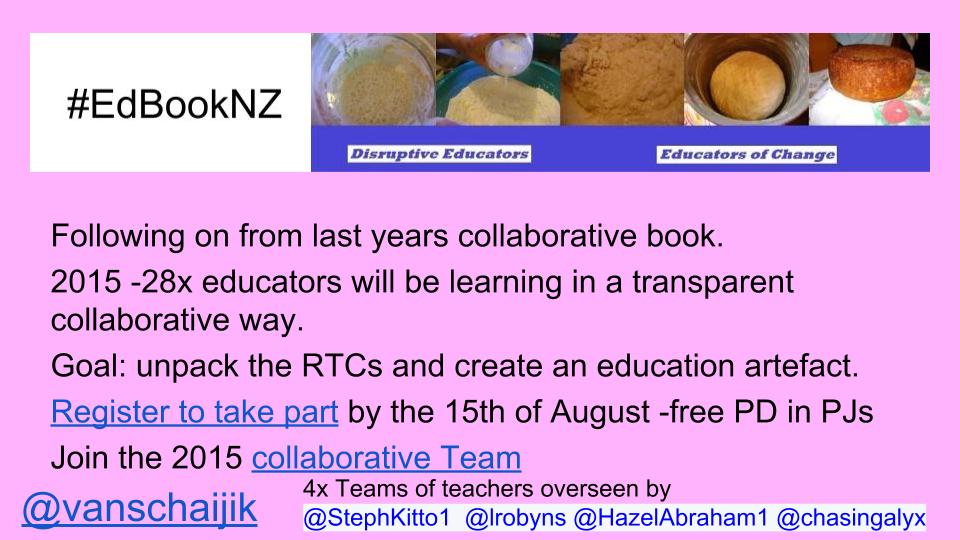
If you would like to join us in the edbooknz 2015 project, I will be calling for interested participants in July. Here are my confirmed team coordinators, Stephanie @StephKitto1, Lavinia @lrobyns, Hazel @HazelAbraham1, Alyx @chasingalyx confirmed Team coordinators for #edbooknz 2015 project.
I wonder how the collaborative project will evolve. I have an idea but implementing it will require a team effort.
The language is the life force of the mana Māori.’ Sir James Henare, 1985.
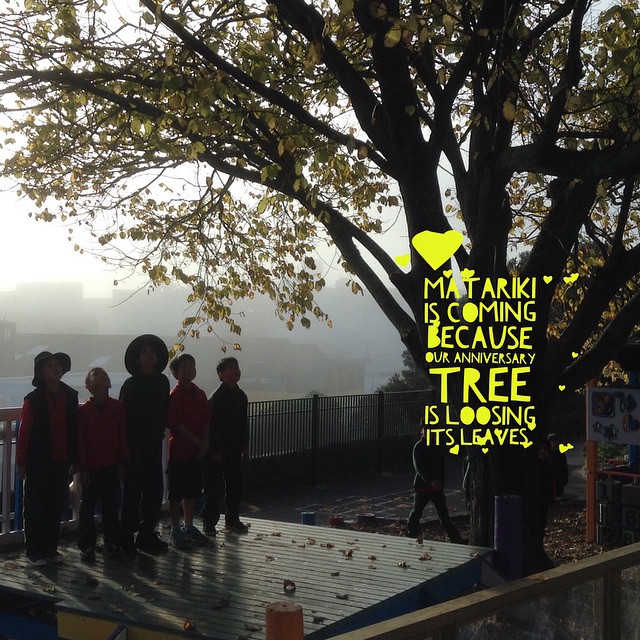
Matariki signals the dawn of the Maori New Year and this year begins 20 June and ends on the 19th of July. Matariki is a time for reflection and where we are up to on our learning journey. Matariki is about whanaungatanga and the chance for our school community to come together to plan, collaborate and celebrate this important event. Matariki is a time to retell stories and to revisit traditional games and crafts. Matariki is a time to set new goals and make new connections. Matariki is a time to focus on Te Reo and the upcoming Maori Language week that begins on the 29th of June. I can tell Matariki is close in season when our school centenary tree loses its leaves. I see Tui making a regular appearance around school. They come for the black whauwhaupaku berries and for the the ripe Puriri fruit. At our school the rainbow is a regular sight and we get the torrential rains just like when it rains in Samoa. Often the mornings are misty and our grounds become soggy so we have to look for alternative lunchtime activities for the children. Our school gardens are in the last stages of harvest and the gardening club plan for the next cycle of planting. The children are usually excited because it is also at this time that they prepare for our annual Matariki disco.
Sometimes events can suddenly happen to make you sit up and take notice.
Friday was no exception. We had an interesting day as a flow of speakers came through our school as part of early Matariki celebrations.
While the school was at assembly the first groups arrived and were greeted by our principal and deputy principal in a whakatau because our speakers and workshop presenters were immediate and extended family members of our school and local community.
Eilleen our deputy principal and of Te Rarawa descent organised the day as part of the Te Whanau Kotahitanga Maori enrichment programme and we were given a shared doc to choose activities that we could take some of our children to. Two relievers were brought in to tag teachers in and out of class so that they could take part and they could take some children from their class to attend the planned sessions.
During this same time our senior school had their Friday Discovery day where several children were part of the planned Masterchef cook off and today was their semifinals. At lunch time I had my usual Travelwise lunchtime group meeting where I had aimed to complete work for an upcoming global sharing celebration that my group are involved in as part of the ‘Week in the Life Project.’ We have worked towards this event for nearly two terms as part of preparation for an experience for learning student project I have planned to launch in terms 3 & 4.
The challenge I had is that several of my Travelwise children were involved in all three events. Sometimes events like this can throw all planning out the window. So after speaking with the children in the morning I readjusted on the day and worked with only one Travelwise student instead of my ten to get a model up for the rest of my group. Over the next week I will find time to support the others as they complete their part to share with our global audience via skype over the next few week.
As I worked with my usual English Language groups to complete work the computer system played up. I wanted to complete a piece of digital art with a few children but did not finish this. In between children I attended a few sections of the Matariki activities. I attended three activities in the middle block. In the afternoon, I had agreed to share my journey about receiving my malu and missed seeing the other Matariki activities then too. I made sure that I finished a little earlier so that guests who had come to hear me would be back in time for the whaikōrero with Eilleen.
Our Maori students and teacher need acknowledgement of who they are and under the Treaty of Waitangi, they have the right to come together to celebrate their uniqueness with role models and senior members of their community. Friday was no exception because at our school we had a range of powerful role models join us for the day to mentor, guide and share their gifts with some of our students. On Friday our Maori teacher and students took charge of the day. They had their voices heard and had the opportunity to influence others.
So on reflection Matariki is about whanaungatanga and the chance for the whole school to come together to plan, collaborate and celebrate this important event on the Maori calendar. We have focussed on whanaungatanga in the past with great success as can be seen shared on our school Matariki wiki. I also believe that an event like this allows us to reflect where we are up to on our commitment to the Treaty of Waitangi.
Its that time of the year when most of our data has been entered into our Learning management system and I have a chance to look at the total picture of my children who are eligible for ESOL funding.
These are some of my heart stopping moments.
I have a year 4 student with a 3P in reading and a 2P in writing. She has been in New Zealand for 3 full years and came to us with no English but is fluent at speaking in her first language. She had no literacy in her first language. In three years she has surpassed a year 6 in reading and can match a year 5 in writing. That is what the data tells me. As I have a quiet chuckle. I hope that the teacher makes a teacher judgement and adjusts these marks for feeding back to parents because I know for a fact that these scores are not realistically possible, YET.
I have another student who is a year 4 and has a 2A for reading and a 1B for writing. His probe score matches the reading asttle, so does this mean he is above for reading? Again I don’t think so. The scores do not align. How can he be reading at a year 5 level and writing at a year 1 level? I remind our teachers to lay out the scores and see how they align. Personally either the writing has not been pushed or the reading is far too high.
I have another student. She is year 6. Her scores indicate that she is reading as well as a year 9 student with comprehension. But she her written work shows that she is writing at an early year 5 level. Sooo? What do you think? She came to us as a five year old with no English and had no schooling in her first language.
I know that by year 6 if we have worked really hard, our English Language Learning children will be beginning to meet national standard data.
When I see them surpassing national standard data in the earlier years I know from my vast experience that these same children will fall dramatically by year 4. The teachers have to work really hard to continue to meet the earlier year’s gathering of data and this takes time.
If you are an junior school teacher and have never taught in any other area of the school, then this would be my recommendation to you. Spend some time teaching in other levels so that you have a more realistic grasp of what data should look like.
Myself, I always work in class as much as I can so that my understanding of data remains realistic. I really like teams who come together to moderate their data and even better if this can be spread across schools so that moderation between schools gives us a clearer picture of what we should be expecting and looking for in our data. I wonder what our intermediate teachers would say when they see our student’s data being levelled and benchmarked the same as theirs. These questions I continually have with our teachers as they write their reports.
As for the rest of New Zealand, what do your data tables read? How do the scores align across curriculum areas and across year levels? I have a staff meeting coming up where I will be sharing some of what I see with our staff. I ask them these same questions and ask them to justify their teacher judgements when levelling our students against National Standards. Scoring our children academically is a small part of the total child and I ask them how well do they know the children. Our parents want to know how their children are aligned with the rest of their peers. However the most important question they usually ask is, ‘Is my child happy at school and do they have any friends?’
I also hope that there are no surprises for our parents because I know that most of our teachers communicate regularly through out the year as to how the children are doing in class.
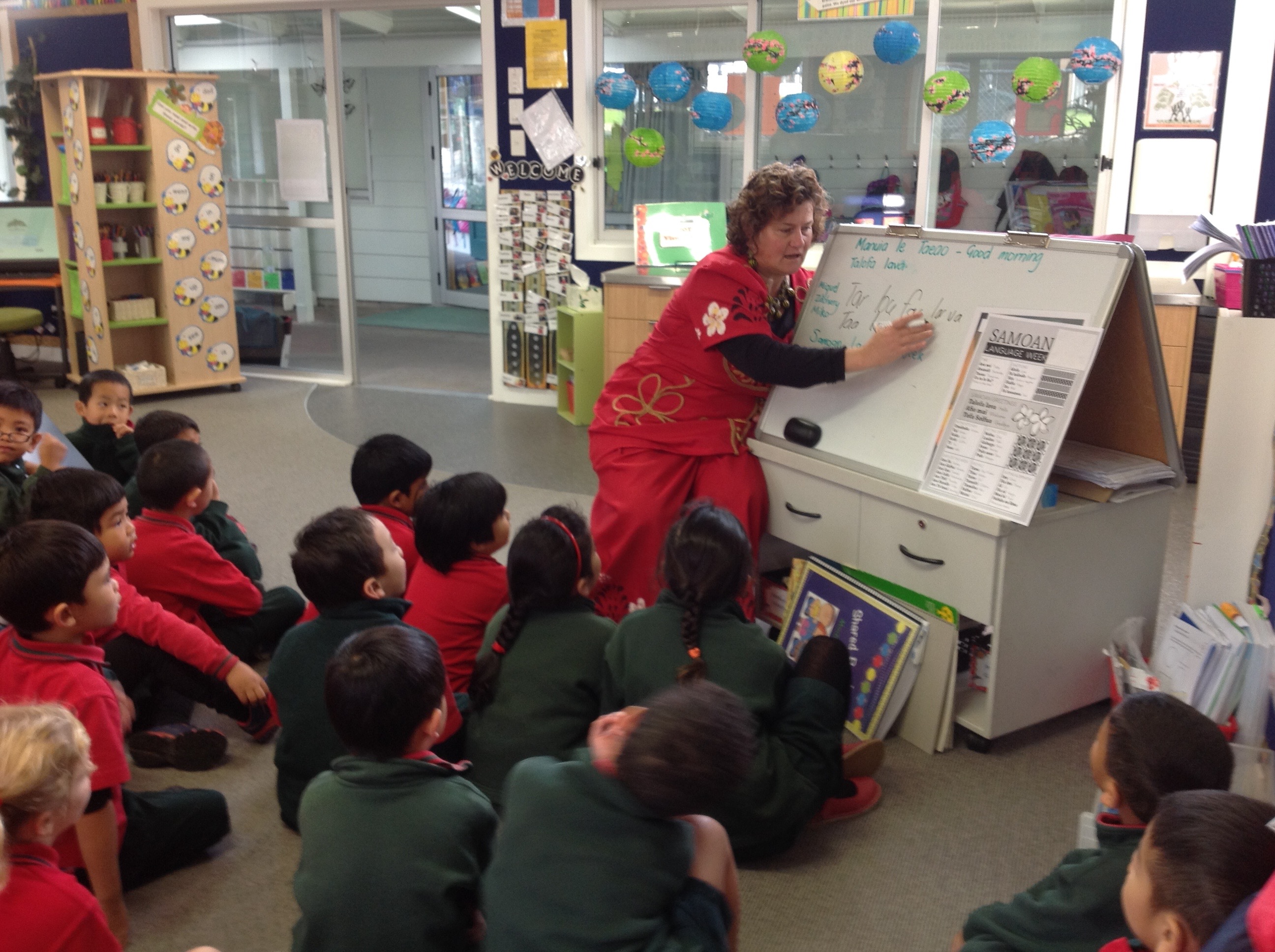
First of all it was Samoan Language week and to celebrate I highlighted the event at my school.
Andrea took this photo
The theme for ‘Le Gagana Samoa’ was “Tautua nei mo sou manuia a taeao” -“Serve now for a better tomorrow.” The theme also aligns with Newmarket School’s Historic Motto of ‘ Not self but service and with my favourite Samoan saying, ‘O le ala o le pule o le Tautua’ meaning ‘The path to leadership is through service.’ I loved the theme because it aligns well with my personal inquiry. That is growing Teacher Leadership. One way I know that teachers can grow leadership is by sharing their learning. The term ‘professional learning community’ is one that implies a commitment of teacher sharing and also the expectation of collaboration and I will share more on collaboration in this post.
On the first day I wore my puletasi and many children commented on how beautiful I looked and asked why was I wearing my dress. An event like ‘Samoan Language Week’ opens dialogue so I explained why I was wearing my national costume. In Samoa though I would not have worn my long johns underneath but the day in Auckland was freezing. Te Ako Kowhai invited me to share how to say ‘Hello’ in Samoan and so I did and for the rest of the week the children would come up and greet me in Samoan. Online I shared a little about my culture and my language and made connections with other Samoans too virtually.
I give a shoutout here to @AndreaDesForges. She put together the fab video on her teams site about Samoan Language Week. I would love to take credit for the song. However it is all the effort from Te Ako Kowhai.
Taku Tāmaki
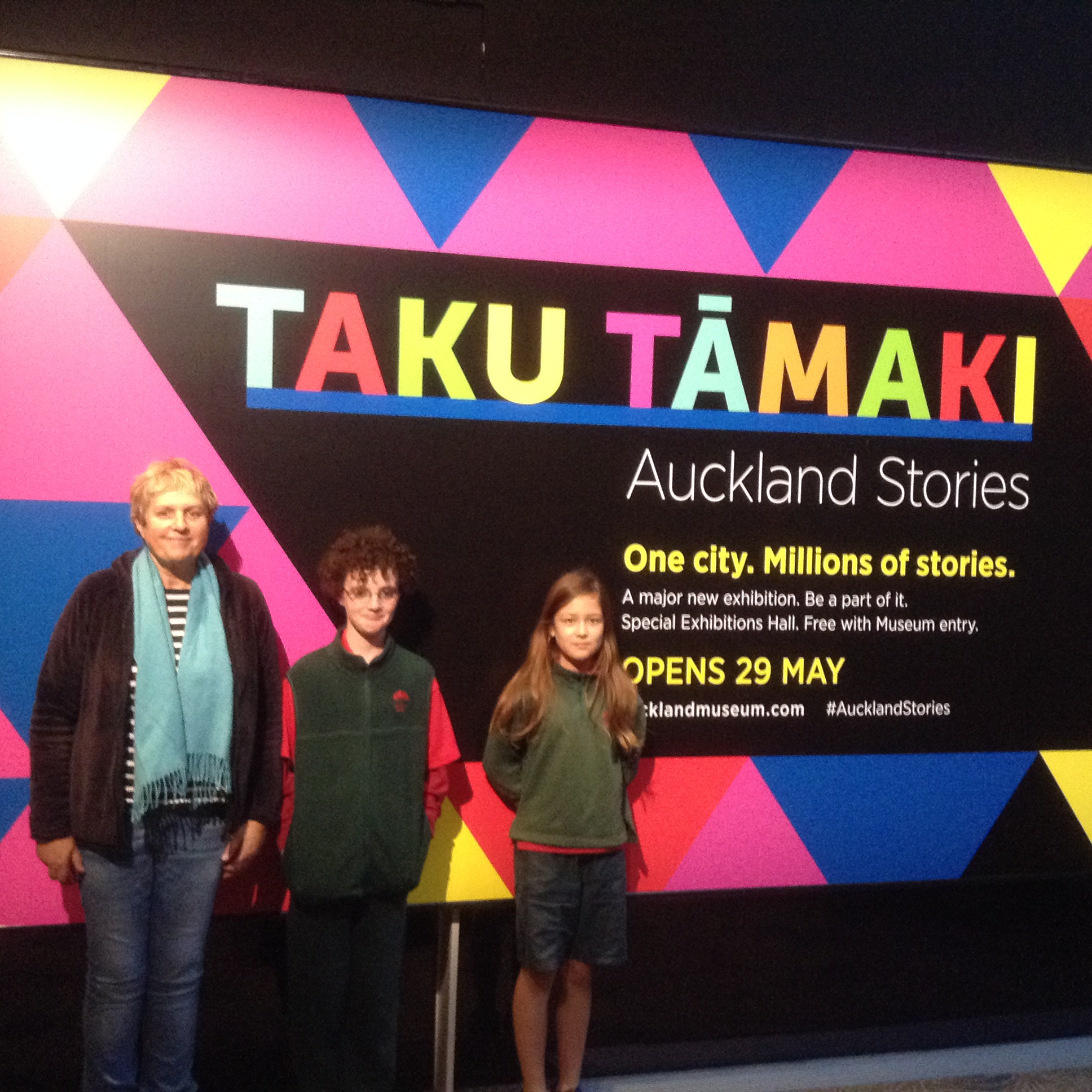
On this first day too I was invited to attend the celebration of Taku Tāmaki or Auckland Stories where several of our children had taken part in the display for Auckland Museum to celebrate 175 years. I went along with Belinda from school because two of her students had been selected from 134 children throughout Auckland to have their story created into a movie. While we were looking at the displays, I saw many of our other children who had taken part in a variety of ways and were featured in the overall display too. I had gone with Belinda as a support person because she is an amazing teacher and because she has been visibly stepping out of her comfort zone and trialling many new innovative ideas in her teaching this year and reflecting on them with her usual critical thinking.
On Tuesday Wendy, Waveney and I attended the Auckland Rotary get together at AUT to view their 3Dprinter and to have a look around the engineering department. We were asked by Rotary Newmarket to share our journey and Waveney and I co-presented a Pecha Kucha that you can view here. I have been working with Waveney and guiding her as she learns how to use the 3Dprinter with her class. I have been particularly excited at the way she has been using Edmodo as a reflective writing tool with her children. The children learn how to use the 3Dprinter and as they move through the process from design to creation, they have been reflecting on the process. Waveney has also been building an online community and learning how to harness the power of collaborative learning to guide her. I know that one big learning for her has been co-construction and she has taken this on board with great enthusiasm and was able to transfer this knowledge to her class because they are co-constructing designs for 3D printing. I am particularly excited by this shift and can’t wait to see the designs in reality.
Family night making Dumplings
I agreed to attend our PTFA fundraiser where tickets had been sold and one of our parents showed us how to make dumplings. I love these events as it gives me a chance to chat with our parents and make connections. This nights event also gave me the chance to eat home made Chinese dumplings which I love. Mrs Li, one of our grandmothers, gave instructions on how to make the dumpling and of course I had a try at making dumplings and had her grand daughter show me how. Virginia and several other staff members were there too. I watched Virginia help with the cooking and Mrs Li chatted to her in Mandarin. Virginia is a fluent Cantonese speaker and understands some Mandarin so it was great to watch her make connections with the parents running the event. Virginia is another teacher who has been embracing technology to reflect on her learning in a visible way through her blog. You can read what she had to say here about the community evening.
I give a shout out to Davina who has a flower shop called Vida Flores. Its parents like her who are incredibly supportive to us as a school and the event was hosted there.
Flat Connection
My Travelwise team met and finalised their contribution for our Global Project. I was really excited to see how the project was finally coming together. You can read a little more about the project here. The children took a screen dump and they will write a summary as they prepare to share their learning via voice thread. I have loved being part of ‘The week in the life project’spearheaded by Julie Lindsay as I have been working collaboratively with teachers and children globally. My biggest learning has been using Edmodo and how to use this tool for reflection with the children. From my own learning, our teachers have benefitted too as I have introduced them to Edmodo and have watched in delight and amazement at the way they have used the tool like a reflection forum.
Te Ako Kahikatea
On Friday I was in and out of Te Ako Kahikatea as they worked on their discovery learning. I love the way the teachers have worked collaboratively to create Discovery Friday. They have set up the system so that the children are guided to direct their own learning. The teachers have moved cautiously, innovatively and creatively with input from the children. They have conducted research about the process and then adapted it to their own learning and skills. The teachers have front loaded a variety of ideas to give the children a taste of the process and are now at the stage where the children will take a passion and use it to frame their learning.
The day I watched, I saw Belinda have the students create a soundscape to go with an image. She used Garageband. Anna has been pushing her own learning with the children and they are exploring google sites because she quickly discovered that slides does not have enough space to share a full curation of the children’s learning. Veni has been exploring slides and created an artefact to support the children’s learning. As these teachers have a few technical hitches I am called to offer guidance and support them with just in time learning. This is the learning I know is the most effective. ‘Don’t tell me what I don’t need but be there when I have a question.’ If our Newmarket School teacher’s read this, just a reminder about blogging about the process of learning.
I watch Discovery Friday learning space with great interest.
Using Blogger
One teacher who has taken blogger on board to curate learning has been Eilleen. She oversees our Maori learners and our Maori Learning. She also oversees our Student Leadership project. I have been excited to see her implement the many lessons I have had with her in regards to blogging, youtube and twitter. Together we have worked collaboratively to co-construct both learning sites. She has taken on board suggestions and I have been thrilled with the results. I am able to see at a glance where all our children are at in the different activities and even more exciting is seeing the learning artefacts developing. In addition the children have been reflecting on Edmodo and their teachers are giving them feedback. Eilleen often sits with me for a korero about what she has been up on the sites and we chat about some ideas about where to next.
Where to next?
I believe that with the teachers embracing technology and in particular to provide opportunities for collaboration, co-construction and for reflection our children’s learning benefits. I have watched our teacher’s progress in making their own learning visible. When they talk to me about creating a site with the children, I say, ‘Show me your site’. When they talk about creating a video with the children I say, ‘Show me your video.’ When they talk about using Edmodo for reflection and feedback I say, ‘Show me your reflection and feedback.’ This year, I have stood back much more and watched and prodded where I can. When they come to me for just in time learning I ask, ‘Who have you asked before me?’ Probably the biggest change I have made is to make all their learning as visible as I can. This can be seen on our teacher blogsite which has RSS feeds from all their blogs and online activity. I have just added a twitter feed too. I think this has enabled the greatest shift in our growth mindset than anything I have previously undertaken. I linked the teacher blog to our staff site that has all planning visible across the school. Both sites are developing and evolving and proving to be highly successful at making our learning, as a staff, visible.
SOLO taxonomy
I continually use SOLO to frame my understanding and I can see our teachers shifting from making connections online to begin to collaborate for their learning. Last year I encouraged them to create accounts in online spaces and made this visible. From those connections I have seen a shift from lurking and observing to online discussion happening in visible ways. If you follow our twitter stream of #NPSfab you can see this happening. I have also seen a gradual uptake of visible reflections both from their personal blogs and from their team blogs. By monitoring the RSS feeds I can pop in and give feedback and feedforward on their reflections. I also send an email out to all staff when the site updates with staff presenting their learning. As much as I am able I support learning by creating and maintaining the hidden infrastructure that enables learning to take place for staff and students. I mentor them in building their own learning communities by encouraging and celebrating each step that they take. I am their biggest voice and their biggest fan.
How do you grow Teacher Leadership? How far are you in your own journey to make your own learning visible? Have you tried any co-constructed online activities with educators outside your school bubble? Do share and tag me on twitter.






 Sonya @VanSchaijik