(This post is one of several that were collated into #EdBookNZ for 2017.)
In response to the Right Honourable Curran, New Zealand’s new minister of Government Digital Services recent call for “algorithmic transparency”.
“Let us remember to forget” Viktor Mayer-Schönberger (2009, 2011)
Teachers as evaluators
New Zealand schools gather and store data about their learners. They do this in an attempt to make meaning of the school based learning processes – to determine the extent of their influence on changing the learners’ knowledge, skills, attitudes and behaviours over time. This data gathering and storage activity assumes that the infinite complexities of human understanding can be reliably and validly represented by a simplified set of statistical profiles and continuums.
Effective teachers think of themselves as “evaluators”. Teachers who want to make a difference are exhorted to adopt certain mind frames about what they do – “most critically a mind frame within which they ask themselves about the effect they are having on student learning.” (Hattie 2011 p14).
My fundamental task is to evaluate the effect of my teaching on students’ learning and achievement. Hattie in Visible Learning for Teachers (2011 p159)
When teachers are evaluators then schools become places where to paraphrase Schama (1995) “measurement is the absolute arbiter of value”.
Technologies have enormously enhanced the ability of schools to gather and store this data. As a consequence of the facility with which we can gather and store student data – the focus of school administrators shifts to monitoring the management and exchange of student data as the student moves through the school system. For example – the New Zealand Ministry of Education’s recently released report on the Student Information Sharing Initiative (SISI) is intended to improve the management and exchange of student data.
Balance: Good intentions and unintended consequences
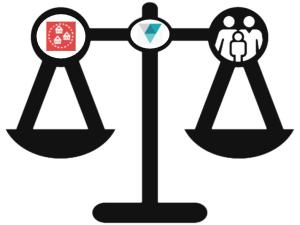
Postman (1998) reminds us of five things we need to know about technological change. His first idea is about balance. He reminds us that “for every advantage a new technology offers, there is always a corresponding disadvantage”. The advantages of using technologies to make learning progress visible are commonly described and experienced. Even the most temporary of visitors find that signing in at the front office is transformed into an expensive data collection process where they find themselves – bar coded – time-stamped, stickered and photographed – their names (first and surname) and signature recorded along with their intentions and details of their car model and registration.
I would like to explore this balance between advantage and disadvantage. What is the corresponding disadvantage to students when schools have a mandate to gather and to store their achievement data. To ask just because we can gather and store student data – should we? (Van Schaijik, 2011).
My question asks:
What rights does the learner (and or their family) hold over the gathering and storage of their personal and achievement data by schools and institutions?
Does the learner have the right to ask for the sharing of their data to be restricted?
Does the learner have the right to ask for their data to be forgotten?
Calls for data transparency versus the right to forget data.
Schools collect large amounts of varied data on students including their medicals records, academic scores, and character traits. They are expected to share student data in ways that keep parents informed on matters of their child’s academic and social well being. The shift to Kāhui Ako identifies that schools also sharing student data with other schools within their Community of Learners.
Sharing individual and collective student data can help build community and pedagogical content knowledge. However, when others control and share your data it compromises the rights of children and families to make their own decisions about the data – their rights to privacy and autonomy.
Mayer-Schönberger (2009) identifies three concerns about providing information to others who then store and share this information online. In school settings I would describe them as follows – concerns over:
- Power and control
Students and their families lose power and control of the data that educators put online in digital platforms like Kāhui Ako. Sharing the narratives, history, culture and creativity of students online comes with some important responsibilities. It seems to me that the use of digital platforms like Kāhui Ako for communicating and storing information about young children should raise many more questions than it does about the nature and ownership of our students’ digital memories.
Who is advantaged and who is disadvantaged when others own and control access to our memories and our data?
- Surveillance across space and time
Technology enables the collecting and storing of unlimited quantities of data and artefacts of student learning on digital platforms in ways that massively extends the surveillance available in the past. This surveillance of student data extends over time and across all learning spaces.
Who is advantaged and who is disadvantaged by this surveillance of learning outcomes?
Who is disadvantaged when learning outcomes from the past are as easily accessed as learning outcomes from the present?
- Information overload and impaired reasoning
When we can gather unlimited quantities of information – and nothing is forgotten it makes it hard for us to discern the data that matters most. We let detail and data from the past that has long since lost any relevance influence our interpretation of data from the present.
Who is advantaged and who is disadvantaged when our past is so easily conflated with our present?
Building community
One of the aims of Kāhui Ako is to build connectivity between schools through transparency, collaboration and participation. Currently this is being carried out at teacher level and some student level. One area that has been identified for further focus is agency. As learners develop in understanding they will see that autonomy – personal control – is an important facet of being an agentic learner.
When does personal control over individual student data and information become part of the learners journey?
Transitioning data
Previously data has been drilled down at school and individual year levels, making school data transparent across classes. With the advancement of the New Zealand Ministry of Education data collection processes, student data can be seen across schools and across Kāhui Ako. Now each learner has a National Student Number so with a click of a button and a bit of importing and exporting, data is shared across management systems. The system is not perfect we still ask feeder schools for manually collected data and information about their learners. However, the NZ MoE is active in devising better ways of sharing information across management systems as is seen from the SISI initiative.
The questions asked about this data collection all assume that collecting and sharing data more efficiently within and across schools as students transition will be advantageous. There seems little interest or appetite to ask about the disadvantages of student data sharing.
What breeches of privacy and autonomy are built into the architecture of institutional platforms like Kāhui Ako?
What rights do/will individual students and their families have over ownership and control of their data in Kāhui Ako?
Do students and their families have the right for student data to be forgotten?
Forgiveness and understanding
Privacy and autonomy are too easily undervalued when building an online community of learners. Therefore school must maintain a sense of responsibility and balance between the legal space of the internet and the ethical space of schools.
The internet has amplified the ideals of freedom of expression as well as the importance of privacy. Along with the advancement of cloud technology it has enabled ease of data storage in ways that have raised questions over the legalities of who owns the rights to control the data collected – its use and how long it should be stored.
Thinking about this in the context of schools makes it apparent that we must think past issues of data ownership and consider the collection and storage of student data in the context of forgiveness and understanding of what it is to be a young learner.
What limitations should we put on the storage of student data in the context of forgiveness and understanding?
What should we remember to forget?
The right to forget data
As children move between levels historical academic data can now be accessed to give a clearer understanding of the progress of learning which gives a clearer learning picture than benchmarking against National Standards. As learners move sectors other information is also asked for and again the question is asked ‘What needs to stay out of the data gathering and might be better forgotten?’ Some schools believe that all information helps give a better picture of the child. Yet surely there needs to be a balance to include new beginnings. Therefore ‘How much and what gets passed on?’ As is often heard, ‘if a child is in the banana’s reading group they will stay in the banana’s reading group.’
Hook, (2010) reminds us that “When the control remains with the producer of the content, and we shift the default back from retaining information forever to forgetting it after different time periods we restore something of what it is to live well with technology, we restore what it is to be human.”
I urge that all members of Kāhui Ako to find a positive balance between our communities desire for transparency and our students right to privacy so that each child and their families can be involved in the decision making over what happens to their personal details and data.
I would like all school communities to discuss how their student data is gathered and shared. We must ensure that any data gathering has a purpose and any data sharing is done with fully informed consent – respecting fundamental rights and liberties of students and families over the use of their data – including decisions on how long student data can be stored or when it should be forgotten and deleted.
Note: Thanks to Pam Hook who as usual can really challenge my beliefs and thinking especially around using Digital Tools.
References
Curran, C., Hon. (2017, November 9). Address to Nethui 2017, Aotea Centre, Auckland. Retrieved November 10, 2017, from https://www.beehive.govt.nz/speech/address-nethui-2017-aotea-centre-auckland
Hattie, JAC. (2012). Visible Learning for Teachers: Maximising impact on learning. London: Routledge.
Hook, P. (2010, May 16). A giant romance of primitive life and unfettered love. Retrieved November 10, 2017, from http://artichoke.typepad.com/artichoke/2010/05/a-giant-romance-of-primitive-life-and-unfettered-love.html
Mayer-Schönberger, V. (2009 , October 22). Delete: the virtue of forgetting in the digital age. The Berkman Klein Center for Internet & Society. . Retrieved November 10, 2017, from https://youtu.be/XwxVA0UMwLY
Mayer-Schönberger, V. (2011) Delete The Virtue of Forgetting in the Digital Age. Princeton University Press.
Ministry of Education. (n.d.). Communities of Learning | Kāhui Ako. Retrieved November 10, 2017, from https://www.education.govt.nz/further-education/communities-of-learning-kahui-ako-information-for-postsecondary-education-and-training-providers/
Ministry of Education. (n.d.). Data Services. Retrieved November 10, 2017, from https://www.educationcounts.govt.nz/data-services
Ministry of Education. (2016, June 22). Student Information Sharing Initiative Report. Retrieved November 11, 2017, from https://education.govt.nz/assets/Documents/Ministry/consultations/SISI-Report-FINAL.pdf
Ministry of Education. (n.d.). Student Information Sharing Initiative (SISI). Retrieved November 10, 2017, from https://www.education.govt.nz/ministry-of-education/specific-initiatives/integrated-education-data-ied-programme/student-information-sharing-initiative-sisi/
Ministry of Education. (n.d.). Managing Student Data. Retrieved November 10, 2017, from http://elearning.tki.org.nz/Connected-Learning-Advisory/Resources/Managing-student-data
Ministry of Education. (n.d.). National Student Number. Retrieved November 10, 2017, from https://www.education.govt.nz/school/managing-and-supporting-students/national-student-number-nsn-for-schools/
Postman, N. (1998, 28 March). Five Things We Need to Know About Technological Change. Talk delivered in Denver Colorado. Retrieved November 10, 2017, from https://en.wikiversity.org/wiki/Neil_Postman:_Five_Things_We_Need_to_Know_About_Technological_Change
Schama, S. (1995). Landscape and memory. London: HarperCollins. Retrieved November 10, 2017, from http://www.amazon.com/Landscape-Memory-Simon-Schama/dp/0679735127
Van Schaijik, S. (2011, August 14). How young is too young to have an email? Retrieved November 10, 2017, from https://sonyavanschaijik.com/2011/08/14/how-young-is-too-young-to-have-an-email/



 Sonya @VanSchaijik