
Completing Unteach Racism & completing Te Ahu o te Reo Māori Level 4

Whāia te mātauranga hei oranga mō koutou

Seek after learning for the sake of your wellbeing. This whakatauki refers to the importance of learning for it is key to your wellbeing. If you follow the path of learning, the world will be your oyster.

I am committed to the values and expectations in Ngā Tikanga Matatika | Code of Professional Responsibility and one way of showing this commitment was by completing the Unteach Racism modules designed by the New Zealand Teacher’s Council.
Racism is a complex and systemic issue that has been embedded in New Zealand society for centuries. It is important to remember that racism is not just about individual prejudice or discrimination; it is also about the systems and structures that uphold white supremacy and privilege.

The Unteach Racism initiative in New Zealand is a valuable resource for teachers and educators who are committed to dismantling racism in education. The initiative is based on the understanding that racism is something that is learned, and therefore can be unlearned.

The Unteach Racism link provides teachers with a range of tools and resources to support them in their own learning about racism, as well as in creating more equitable and inclusive classrooms. There are videos such as Taika Waititi’s unteach racism story which sets the scene for our learning.

The learning modules equip teachers with tools to identify, confront and dismantle bias and prejudice so that education is free from racism. Once on the site, an app can be downloaded to a mobile device which includes an introduction and then nine modules to work on with topics such as the history of racism in New Zealand, the different forms of racism, and how to identify and challenge racism in education.
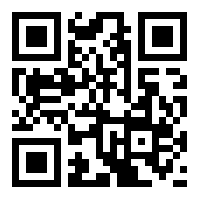
Scan the QR code to begin the modules.

These are the nine modules and the whole process takes approximately two hours to complete.

  1. Unteach Racism
  2. Low Self Belief
  3. Low Expectations
  4. Harmful Assumptions
  5. Racist Exchanges
  6. Exclusion
  7. Assume Superiority
  8. Equal Treatment as Equality
  9. What’s next?

In addition to the app, the Unteach Racism initiative also provides teachers with access to a range of other resources, such as professional learning workshops, teaching resources, and a community of practice. An education sector login is required to take part in the conversations.

The Unteach Racism initiative is an important step towards creating a more equitable and inclusive education system in New Zealand. By supporting teachers to unteach racism, the initiative is helping to create a future where all students can thrive. I particularly liked the link to the Race Unity Speech Awards that shared the winning speeches on racism given by Rangatahi. The senior high school students express their ideas on how we can improve race relations in Aotearoa.

Some ways that teachers can use the Unteach Racism initiative in their classrooms include:

  • Reflecting on their own biases and privilege. All teachers have biases, whether they are aware of them or not. It is important for teachers to be honest with themselves about their biases and to work to challenge them. The Unteach Racism app provides teachers with resources to support them in this process.
  • Creating an inclusive classroom environment. This means creating a classroom where all students feel welcome and respected. It is important to have a clear code of conduct that prohibits racism and discrimination. It is also important to create opportunities for students to learn about and celebrate diversity.
  • Teaching students about racism. Students need to learn about racism in order to challenge it. Teachers can teach students about the different forms of racism, the history of racism in New Zealand, and the impact of racism on individuals and society. Teachers can use resources from the Unteach Racism initiative to support them in this teaching.
  • Challenging racism in the classroom. When teachers see or hear racism in the classroom, they need to challenge it immediately. This can be difficult, but it is important to send a clear message that racism is not tolerated. The Unteach Racism app provides teachers with strategies for challenging racism in the classroom.
  • Engaging in professional respectful and collaborative relationships. We have an obligation and the power to challenge all forms of interpersonal racism, and signal that they are not ok in our settings. A way of doing this is by calling people in and challenging their racism in a way that makes the encounter safe, productive, and more likely to unteach it in them.

The Unteach Racism initiative is a valuable resource for teachers and educators who are committed to dismantling racism in education. By using the resources provided by the initiative, teachers can help to create a more equitable and inclusive future for all students.

I am committed to develop and practice te reo me ngā tikanga Māori throughout my teaching career.

This year I undertook Te Ahu o Te Reo Māori course and have just completed and passed Level 4.
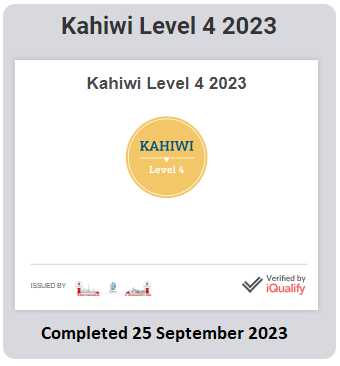
I often wonder how school leaders pass these expectations as part of section 387 (6) of the Education Act, which is binding on all teachers.

As an update, this turned up from an amazing twitter buddy. There is even more that was sent to her. I find it incredibly sad that another human can be treated this way.

Curriculum design in schools

Hosted by Nina Hood – Education Counts

Date: 05/09/23

Variable in/by design: The variable nature of curriculum design & instructional materials in Aotearoa New Zealand schools  

The panel

  • Associate Professor Bronwyn Wood – Victoria University of Wellington
  • Pauline Waiti – Education consultant at Ahu Whakamua Limited
  • Barbara Ala’alatoa – past principal of Sylvia Park School
  • Christine Parkinson & Seth Davies – Rangitoto College Auckland

Link to the Report

The variable nature of curriculum design and instructional materials in Aotearoa New Zealand schools refers to the fact that there is a significant degree of variation in how the curriculum is interpreted and implemented by teachers across the country, and in the selection and use of instructional materials.

This variability is influenced by a range of factors, including:

  • Teacher autonomy: Teachers in New Zealand have a high degree of autonomy in how they design and implement the curriculum. This means that there is no single “correct” way to teach the curriculum, and teachers are free to adapt it to meet the needs of their students and their own teaching styles.
  • School context: Schools in New Zealand vary widely in terms of their size, location, student demographics, and resources. This means that what works well in one school may not work well in another. There are also continuous challenges around professional development and workload.
  • Teacher expertise: Teachers have different levels of expertise and experience in curriculum design and instructional materials. This can lead to variability in the quality and effectiveness of rich curriculum implementation across schools. Are our school leaders up for this challenge? Leadership does matter by providing direction for their schools. Teachers are teaching but have not been involved in curriculum design. How many have even studied curriculum design in training programmes let alone have capability in quality planning?
  • Availability of resources: Schools in New Zealand have varying levels of access to resources, such as textbooks, digital technologies, and professional development opportunities. This can also contribute to variability in curriculum design and implementation. Any resource brought in must enhance the curriculum and not replace it.

The variability in curriculum design and instructional materials has both positive and negative implications. On the one hand, it allows teachers to be responsive to the needs of their students and to develop innovative and engaging teaching approaches. On the other hand, it can lead to inequity in student outcomes, as students in some schools may have access to a more rigorous and high-quality curriculum than students in other schools.

The New Zealand Ministry of Education is working to address the issue of variability in curriculum design and instructional materials. For example, the Ministry has developed a new curriculum document, The New Zealand Curriculum, Te Mataiaho, which provides clearer guidance to teachers on what to teach and how to teach it. The Ministry is also investing in professional development opportunities to help teachers improve their curriculum design and instructional skills. These include the ‘Common Practice Model’ They also include four teacher only days in 2023 and in 2024 and have asked schools within the same areas to coordinate the same dates so that there are minimal disruptions for parents and whānau. In addition there is now a National Curriculum Centre with Karen Spence as Chief Advisor, Strategy & Integration in Te Poutāhū National Curriculum Centre. Te Mataiaho draws deliberate attention to its histories and across the learning areas, and it is no longer appropriate to teach bits of knowledge.

Despite the efforts of the Ministry, variability in curriculum design and instructional materials is likely to remain a feature of the New Zealand education system. Teachers and leaders must know curriculum design because curriculum design must be carried out by knowledgeable practitioners. One key way of doing this is ensuring an understanding of the Common Practice Model. The school leader’s key job is to lead learning. The curriculum does not operate on its own. We must continue to share our teaching practice with a focus on explicit teaching. Schools must ensure optimal conditions for learning with availability of resources.However, by understanding the factors that contribute to this variability, schools and teachers can work together to take steps to mitigate its negative effects and ensure that students have access to a high-quality rich curriculum that reaches all students.

Within our curriculum design continually ask:

  • Whose voice can we not hear? As a multicultural nation sometimes there is excessive emphasis across all learning areas on one form of traditional knowledge. The excessive emphasis also includes too much content available in that one form of knowledge.
  • How do we ensure that everyone in our community feels a sense of ownership for our local curriculum?
  • How do we build partnerships with parents, whänau, iwi and hapu, and the wider community?
  • How do we ensure that we are being inclusive and culturally responsive to our tamariki/mokopuna, parents and whanau?
  • How do we make use of local and community resources and connections? Examples of this are cultural connections, businesses, community resources, professional relationships, and service providers
  • Is the design pushing analogue thinking in a digital world? A good example of this is downloaded work from “busywork.com”  and the “Twinklification” of our classrooms.

From this webinar I spent time reading around the ‘Common Practice Model’ and strongly suggest all educators do the same.

Thank you Nina for providing this resource and webinar to keep the kórero alive.

Te Ao Māori: A holistic worldview

Te Ao Māori is the Māori worldview, a holistic approach to life that emphasises the interconnectedness of all things. It is a way of understanding the world that is grounded in tikanga (customary values and lore) and mātauranga (knowledge).

Te Ao Māori is not just a culture or a set of beliefs; it is a way of life. It shapes the way Māori people view themselves, their relationships with others, and their responsibilities to the environment.

Key principles of Te Ao Māori

There are four key principles of Te Ao Māori:

  • Wairuatanga: Spirituality is at the core of Te Ao Māori. Māori believe that all things have a wairua (spirit), including people, places, and natural objects.
  • Pātuitanga: Kinship is another important concept in Te Ao Māori. Māori people are connected to each other through their whānau (extended family), hapū (subtribe), and iwi (tribe). They are also connected to the land and their ancestors.
  • Rangatiratanga: Rangatiratanga is the principle of self-determination. Māori people have the right to govern themselves and to make their own decisions about their future.
  • Whānau: Whānau is the Māori word for family. It is the most important social unit in Te Ao Māori. Whānau provide support and guidance to their members, and they play a vital role in the Māori community.

How Te Ao Māori can benefit us all

Te Ao Māori has a lot to offer us all. It provides a holistic and interconnected view of the world that can help us to live more sustainably and harmoniously.

Here are a few examples of how Te Ao Māori can benefit us all:

  • Wairuatanga: A sense of spirituality can give us meaning and purpose in life. It can also help us to connect with something larger than ourselves. Wairuatanga is enhanced in expressions and practice of tikanga (culture), kawa (traditions) and mātauranga Māori (traditional Māori knowledge).
  • Pātuitanga: Strong social connections are essential for our well-being. Whānau and other social groups can provide us with support, love, and a sense of belonging.
  • Rangatiratanga: Having a sense of self-determination is important for our mental and emotional health. It means that we feel in control of our own lives and that we have the power to make our own choices.
  • Whānau: Strong family relationships are important for our well-being. Whānau can provide us with support, love, and guidance.

How to learn more about Te Ao Māori

There are many ways to learn more about Te Ao Māori. Here are a few ideas:

  • Learn te reo Māori: Te reo Māori is the Māori language. It is a beautiful and expressive language that is at the heart of Māori culture. There are many resources available to help you learn te reo Māori, including online courses, such as Joining the waitlist for Te Ahu o te Reo Māori.
  • Read books and articles about Te Ao Māori: There is a wealth of information available about Te Ao Māori, including books, articles, and websites. You can learn about Māori history, culture, and values by reading and researching this material. Start with the narratives of your local rohe.
  • Build knowledge in Tikanga and one way of doing this is undertaking the NZ Certificate in Tikanga (Mātauranga Māori)
  • Connect with Māori people: The best way to learn about Te Ao Māori is to connect with Māori people. Attend Māori events and webinars, talk to Māori people, and learn from their experiences. Have you checked out the amazing Maori TV on demand resource that is available to all New Zealanders? 
  • There are also apps that are available to help in your journey such as KŌRA MBIE or listening to  Taringa Podcast.

Te Ao Māori is a rich and complex worldview that has a lot to offer us all. By learning more about Te Ao Māori, we can gain a deeper understanding of ourselves and the world around us. Do check out Tangata Whenua place name digital maps now available for download. Tangata whenua place names | Toitū Te Whenua – Land Information New Zealand (linz.govt.nz)

These maps can be ordered from Down the Back of the Chair. You can find them by  searching for ‘Te Waipounamu and Te Ika-a-Maui set of posters’ or its product code ‘MOEA0021’.

Determining the implications for education from the hype of AI 

Mā tērā ka aha? What will come of that.

Recently I have been reading and watching a series of articles focused on the arrival of Artificial Intelligence (AI) and reading around what this means for education. 

This week I attended an education hub webinar hosted by Nina Hood with Dr Sarah Bickerton and Mandy Henk who shared the recent developments in AI, what they may mean for education, and importantly, what some strategies might be that teachers and schools can use to engage effectively with AI.

Mandy Henk is the chief executive of Tohatoha, a charity that supports New Zealand to become a digital nation with a digitally sophisticated population. 

Sarah Hendrica Bickerton is the research and policy lead at Tohatoha.

To watch the webinar, check out the link on the Education Hub.


Artificial intelligence (AI) is one of the most transformative technologies of our time. It is already having a major impact on our lives, and its importance is only going to grow in the years to come.

What is AI?

AI is the field of computer science that deals with the creation of intelligent agents, which are systems that can reason, learn, and act autonomously. AI research has been highly successful in developing effective techniques for solving a wide range of problems, from game playing to medical diagnosis.

Students are already using AI tools that are already integrated into tools.

These include:

  • ChatGPT 
  • Snapchat: My AI
  • Google Bard- Help me write 

How is AI used today?

AI is used in a wide variety of applications today, including:

  • Self-driving cars: AI is used to power the self-driving features in cars, such as lane keeping and adaptive cruise control.
  • Virtual assistants: AI is used to power virtual assistants like Siri and Alexa, which can answer questions, control smart home devices, and more.
  • Recommendation systems: AI is used to power recommendation systems on websites like Amazon and Netflix, which suggest products and movies that you might like.
  • Fraud detection: AI is used to detect fraudulent transactions in banking and other industries.
  • Medical diagnosis: AI is used to help doctors diagnose diseases and recommend treatments.

The future of AI

AI is still in its early stages of development, but it has the potential to revolutionise many industries and aspects of our lives. For example, AI could be used to:

  • Develop new drugs and treatments for diseases.
  • Create personalised educational programs for students.
  • Automate tasks in the workplace, freeing up humans to focus on more creative and strategic work.
  • Develop new forms of entertainment and art.

Challenges of AI

While AI has the potential to do a lot of good, there are also some challenges that need to be addressed. For example, it is important to ensure that AI systems are fair and unbiased. It is also important to develop safeguards or guardrails  to prevent AI systems from being used for malicious purposes.

As teachers we can treat things differently such as creating assignments to gear towards the learning using a much more analytical approach. Teachers must understand the ways these tools can help or fabulate. Teachers need to be thinking and focussing on their pedagogy. Teachers need to be teaching about AI and how to use it discerningly.

Some learning can include students fixing 5x sentences that are evidence based.

The limitations 

Student Limitations of using ChatGPT is creating answers without knowledge.

Learners will not have gained the knowledge so no learning has taken place.

Bots cannot perform citations. Bots cannot do maths.

AI should not be used as search engines. Does not use a large language model to answer the question. Do not put students’ work through ChatGPT as it is not as private as it should be. Disciplines that require critical analysis are currently more challenging to be created by a BOT.

Ethical Implications in Schools.

Problematic ethical issues that must be avoided include the way the the data is collated and raised copyright challenges. Plagiarism and cheating is undermined when using AI.

Encouraging AI to form emotional connections is an issue such as ‘My AI’ from Snapchat.

Midjourney using Getty Images with a watermark.

Maybe the AI will lower the scale and target individual artists.

Ethical Concerns, what’s the ethical implications of what I am doing. 

The tools can appear to be authoritative so it is always plausible to fact check AI and the question of bias. Dominant perspectives become the norm and the less dominant perspectives are less likely to occur. Inbuilt biases in society are more likely to be generated.

The more you interact with them, the nuttier the bots become. This is why guardrails are imperative. Propaganda, sexual, racist comments can explode.

Conclusion

AI is a powerful technology with the potential to transform our world. It is important to understand what AI is and how it is used today, so that we can be prepared for the changes that it will bring in the future.

Here are some additional thoughts on the future of AI:

  • AI could lead to the creation of new industries and jobs.
  • AI could help us to solve some of the world’s most pressing problems, such as climate change and poverty.
  • AI could also pose new challenges, such as job displacement and the potential for misuse of AI systems.

It is important to be aware of both the potential benefits and risks of AI, so that we can develop and use this technology in a responsible and ethical way.

Do not use AI uncritically, use it as a prompt rather than as a final product. Finally AI is here and what will come of that in education is really up to us teachers. We cannot ban it, but we can work with it and ensure we teach our students to be discerning in what they read and write.

For people who want to learn more about AI and education, Mandy and Sarah suggested looking up the following people, shared via the Education Hub.

Note to readers: I activated Google Bard on my personal Google account and created this blogpost prompt and then edited around the discussion heard. What was clear to me was the limitation of citations and how multistructural in creation was the outcome. I could take those lists and elaborate more on them but for now this is me checking out how a student might use the large language tools to assist with writing.