Aufaga Faimai Tuimauga

Ua ta le logo o le aogoa i luga. Ua valaau lenei faiaoga e sauini i lana aoga fou. Faimai, ia manuia lou malaga ma e fetaui i le Pule muamua. Alofaaatu uso.faimai
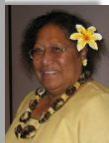
I was sad to hear of the passing of a dear colleague from many years ago. My friend Pati emailed me the news this morning.

What I know about Faimai is from the years we worked together as part of the Ulimasao Bilingual Education Association.

I located this page that she helped create and you can see even then, she was keen to learn how to use the tools for broadcasting. This page was was first created in early 2000 and each year the steering committee had to update their own page, which she did.

What I remember of Faimai was laughter. As in a belly roar that was totally infectious. In addition she was a doting grandmother, a fabulous dancer, connected and knew everyone. She was able to fill a hall with people if we were fundraising.

She was fiercely proud of her grandchildren and proud that they were bilingual. She would correct my Samoan if it needed correcting but would do it in a positive way and usually with one of her belly laughs. She adored her husband Toleafoa and he adored her. This could be seen by the way they treated each other.  Below is the page she maintained for her Ulimasao Profile.

Name: Aufaga Faimai Tuimauga

Employer: (MOE in 2006)

Position:Position: AUSAD Pasifika Bilingual Education Cluster in Mangere

Coordinator/Facilitator

Association: Ulimasao Bilingual Education Assoc. Inc. N.Z.

Office Bearer: Education Advisor

ExperienceOver 20 years of teaching and involvement in education both in Western Samoa and Aotearoa/NZ. Taught at Viscount School Mangere, Redoubt North Manukau, Mangere Central Primary, Aorere College,

Part time Lecturer – Auckland College of Education

Language Advisor: AUSAID Project with Macquarie University Sydney Australia- Project between the Government of Australia and the Government of Samoa, key supporter and assistant facilitator for Schooling in Mangere project 1995, initiator of the community development towards Ulimasao development, organiser of the Samoan teachers’ educational trip to Western Samoa in 1993,

MOE project: Know How Resource: Implementing the Technology Curriculum,

Director: Pacific Island Auckland Initiative [Participation in Early Childhood]

Member of the Pacific Island Advisory Group in the Ministry of Education, involved with the development of Unit Standard and NCEA, Coordinator: Secondary Teachers Professional Development project, Manager & Presenter: MOE Radio Education programmes in Auckland

Education/Qualification:

  • MA (Applied Linguistics) [Hons]
  • Dip in Education of Students with Special Teaching Needs (STN)
  • Dip. English Language Teaching (ELT)
  • Adv. Dip. Teaching
  • Higher Dip. Teaching

Sports/Interest: Dancing, Socialising, Being a doting Grandmother


Teacher Only Day Part 2 #SOLOtaxonomy

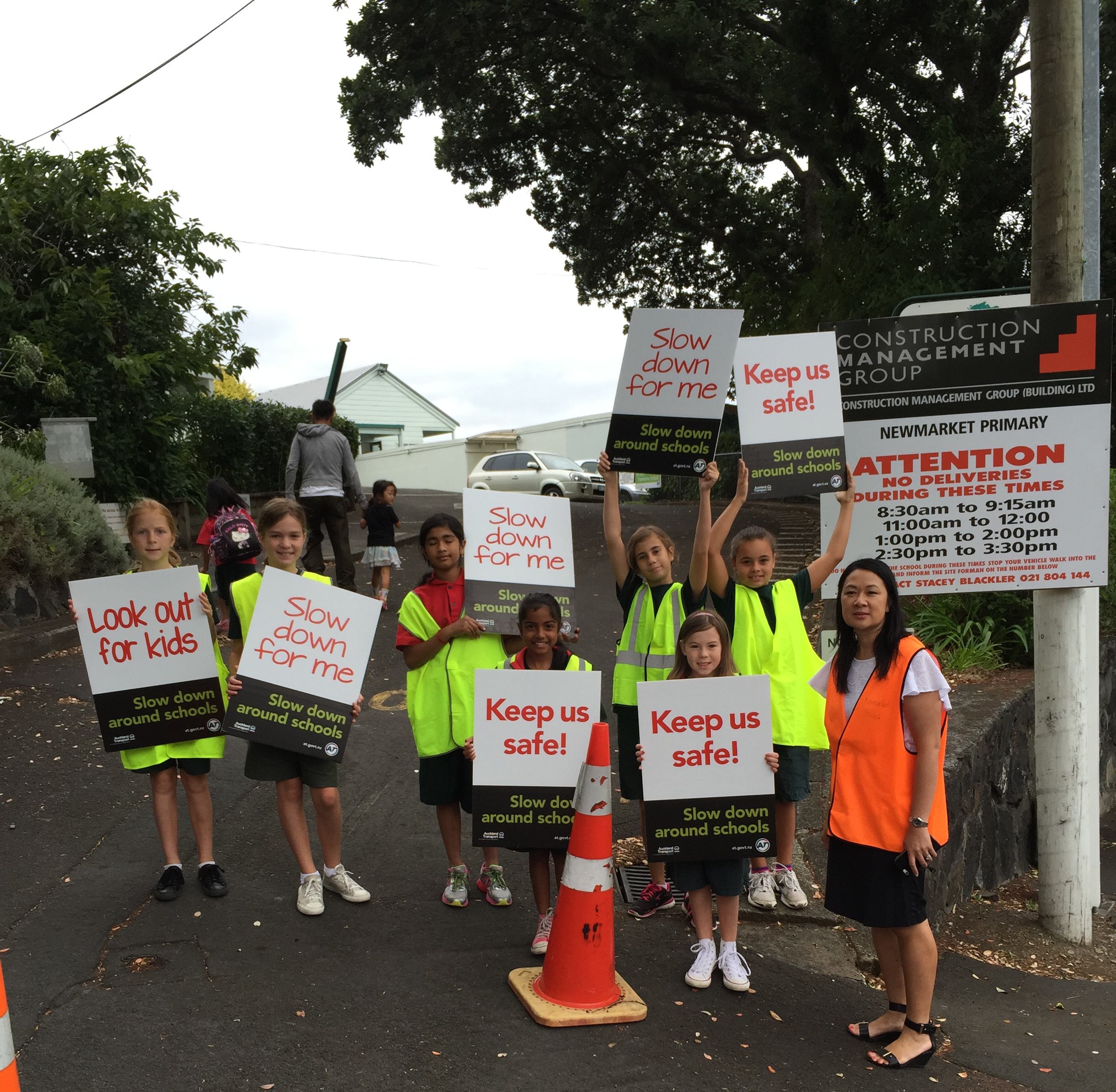
travelwiseUnder the leadership of Virginia Kung, our assistant principal, Newmarket School are trialling the New Zealand Transport Agency Resource Road Safety, Everyone is a Road User.

According to Pam Hook, “Students need a context where they have a voice and feel like they belong, matter and can make a difference. These road safety education resources are designed to enable students’ agency as active citizens so that they contribute to a safe road network. Students are encouraged to seek community-based solutions to help road users experience safer journeys. This focus aligns with the New Zealand Curriculum vision for young people to be active participants who contribute to the well-being of New Zealand.

Just from this paragraph alone I am excited because I am Newmarket School’s Travelwise Lead Teacher. It is like a whole pile of events are aligning. Pam Hook came to school and ran a teacher only day for us about the resource and refreshed our thinking around the use of SOLO Taxonomy.

artichoke

Pam, aka @arti_choke, began our session by explaining the use of SOLO Taxonomy in our teaching and learning. If you are looking for resources or a definition on SOLO Taxonomy, then visit her site  http://www.pamhook.com/.

Pam reminded us about loose ideas, connected ideas, extended ideas.

The tool is agnostic in any curriculum area.

Single strips for SOLO is a great way of clarifying understanding and use of SOLOTaxonomy.

Single SOLO line

See, Think, Wonder

http://www.canterbury.ac.nz/spark/researcher.aspx?researcherid=1104322

Pam then shared the New Zealand Transport Agency Resource Road Safety, Everyone is a Road User.

We discussed some learning ideas such as:

  • How much space is taken up by parking.
  • Compare parking spaces with the space for learning
  • Sequence morphing from a driver to a pedestrian. (Typical Pam approach- thinking outside the square.)
  • Wicked problems map (Already in the project)
  • Use google maps to take a snapshot of the area (I am using this idea.)
  • What would happen if the road was not there? (Never thought about this)
  • What does it make you wonder?
  • What questions would you ask Gillies Ave? (Personalise the road, love this idea)
  • Invent the design of the new road. (this idea I am already using)

Situational Awareness is when you are aware of all that is around you and this is one concept I will add to my global project proposal. For me situational awareness happens when Pam Hook runs professional development at our school. Our senses are heightened and our professional discussion and learning deepens. The following weeks has a hive of SOLO based learning happening. One of the challenges is sustaining the buzz that always follows Pam Hook sessions.

Where to Next:

Newmarket School would benefit from exploring what we mean by ‘student voice’. Is student voice a gathering of student views through surveys or focus groups, or is student voice when students actively participate in school decision making. How well do we as a school promote student leadership and students being in charge of their learning? How do we as a school explicitly show that our students have a voice?

This year I wish to investigate what student voice is and the impact that this might have on learning.

One way of doing this is via a planned Flat Connections global project led by our Travelwise leadership team where we are focus on on being Participatory Citizens.

The plan for this project is that the Travelwise student focus group will be actively involved in decision making. They will practise self efficacy by being in charge of their own learning. They will gather student views through surveys and communicate their findings school wide, nationally and globally. They will think critically about information and ideas and reflect on their learning.

They will do this by investigating a wicked problem in our community.

Through this our student will collaborate with other student focussed groups nationally and internationally and devise a solution that benefits future generations. By using the New Zealand Transport Agency resource I will refine the global project further.

Basically our global project is about our students being involved in local council planning decisions that affect their health and wellbeing. Students will have  opportunities to develop leadership, self efficacy, and resourcefulness while participating with others within a high‑trust culture and through a stimulating curriculum.

Through carrying out this inquiry I want to further strengthen my understandings about student partnership and students’ ability to make and take accountability for their own choices so they can actively contribute to school life and their education experiences. This learning aligns against the Registered Teacher Criteria, RTC 08: teachers demonstrate in knowledge and practice their understanding of how ākonga learn.

Reading Eggs

eggs

http://readingeggs.co.nz/

Reading Eggs Class Management

Date:Thursday 19th February @ 3:30pm

Today I attended a webinar on Reading Eggs Class Management. The session was valuable as it allowed me to see reading eggs fuller features because we were led through the system.

The webinar showed us how to manage classes, monitor student progress and how to access teacher resources.

Some of the learning I experienced included monitoring student data and how this can be exported into a spreadsheet and used as part of data gathering. I liked seeing the teacher resources and a whole world opened up for teaching reading. I was particularly interested  in reading express and saw 1700 ebooks available in the Library which is perfect for our chromebook chromebooks and the iPads. Here you can search for titles and authors.

http://student.readingeggspress.com/library/landing

At the beginning of the year resitting a placement test is advised if you are a little hesitant at the previous years data.

Reading eggs Ages: 4-7

 Reading express Ages: 7-13 years

Assignments can be set so that students must complete the set task before they can complete any online activities. The children can compete with their friends using Reading Express.

Gathering of data

The system also gives you your student data so this is another tool to monitor progress with.

So what is Reading Eggs?

Reading Eggs as a unique online world where children learn to read. Self efficacy develops as each child learns through one-on-one lessons that allow children to progress at their own rate. Motivation is increased as the students enjoy learning using the competitive tool. The children enjoy learning how to read using reading eggs.Second language learners particularly enjoy the programme as the tool is intuitive to their ability.

However the greatest learning happens when the teacher is monitoring and using the tool more than just as a filler activity while they are teaching reading.

Where to next: I think I would like to trial an intervention strategy using reading eggs with my ESOL children to see if this learning system makes an accelerated difference in my student’s literacy achievement.

Teacher Only Day Part A

Below the visuals show how our professional learning day evolved.

TOD1

First of all Wendy showed us around the school and explained some of the changes that had taken place over the holidays.

Then Roger took us through some sample fitness activities that also developed team spirits.

We had Charlotte Rawcliffe demonstrate the PaCT Tool, Maths Model.

http://assessment.tki.org.nz/Progress-and-Consistency-Tool/The-PaCT-frameworks/PaCT-aspects

The session was an introduction to the PaCT tool. We were shown how the tool can give a clearer idea of identifying where the children at at with mathematics.
We had a session with Belinda who explained to us how to teach empathy.
She had curated a range of sites for us to look through.
Then Ginny and Eileen took us through the expectations for our school.
I spoke about citizenship and had the teachers contribute their ideas via a padlet.
After lunch, we had Erica Soman from Fine Young Artists teach us a workshop about colour.
Workshop Two: Discover Colour

We learnt about mixing colours using chalk pastels. Then we drew a cube and used colour to accentuate depth, use of light and the horizon line.

I enjoy teaching art and I hope to have the opportunity to use the chromes or iPads for creating art.

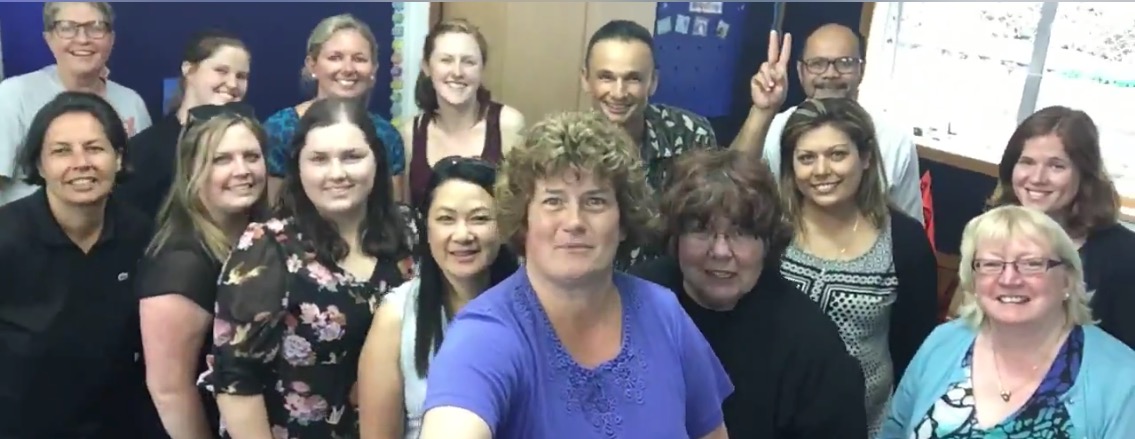
Probably the highlight for me today was learning with an amazing group of people.