
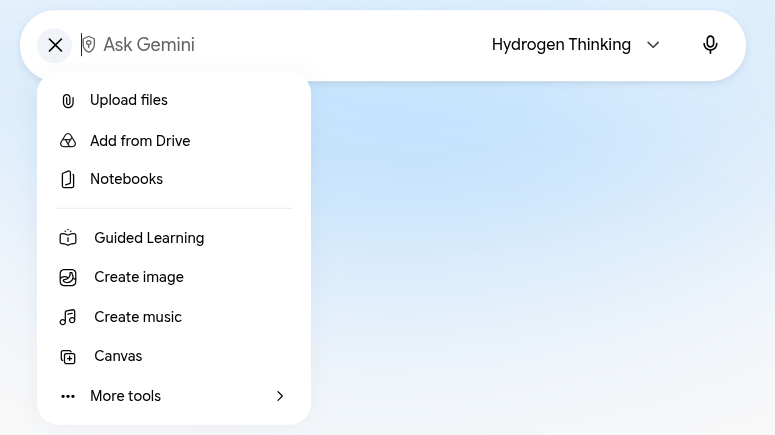
My Gemini Deep Research AI Prompt was recently developed while learning online with Phil Carew from Deploy Learning. A homework suggestion was to use one of the Gemini tools to create something that would be useful in my work. So I chose the Deep Research Tool under More tools. I have been pondering the changes to our programme next year with mixed aprehensions and often queried if this is a budgeting decision rather than a pedagogically based decision. Below this is what was developed.
I include a link to a website that was also created as part of the process.
As primary classroom teachers in Aotearoa New Zealand, we are navigating a decisive shift away from open-ended classroom screen use toward stricter, age-graded boundaries. Updated Ministry of Education (MOE) health and safety guidance (4 May 2026) reminds school boards of their legal obligation to manage digital device risks, pairing the Paediatric Society of New Zealand’s precautionary 2025 recommendations—which cap classroom screen learning for ages 6 to 12 at no more than one-third of the school day in 20-minute sessions—with September 2026 National Party re-election pledges to ban screen use in early childhood education (ECE), tighten limits in Years 1 to 3, and require paper completion for the writing component of twice-yearly primary assessments. This recalibration rests on converging international evidence: meta-analyses show print outperforming screens for informational reading comprehension, electroencephalography (EEG) studies link handwriting to stronger learning connectivity than typing, international assessments highlight widespread classroom device distraction, and observational health studies connect extended daily screen exposure to elevated myopia and mental health risks.
Yet retreating uncritically from classroom technology carries serious pedagogical and equity risks. UNESCO’s 2023 Global Education Monitoring (GEM) Report and 2024 AI Competency Frameworks validate scepticism toward unproven commercial EdTech and classroom smartphone distraction, but warn equally plainly that digital and information literacy have become core components of foundational learning. If primary schools respond to screen limits by stripping away structured digital creation rather than eliminating passive consumption, ākonga from lower-income and digitally underserved households face a widening “digital use divide”—encountering recreational screens outside school without gaining the critical, creative, and technical capabilities needed for full civic and economic participation.
Honouring Te Tiriti o Waitangi in this environment requires a disciplined middle path: protecting foundational analogue literacy and physical wellbeing while guaranteeing every ākonga equitable access to purposeful digital creation, culturally grounded Te Ao Māori contexts, and Universal Design for Learning (UDL) assistive exemptions. Below is an examination of the global evidence behind the MOE’s shift, an assessment of UNESCO’s digital literacy research alongside the likely learning impacts of current policy, a Te Tiriti-aligned primary implementation framework, a comparative pedagogical synthesis, five non-negotiable classroom principles, and three empirical case examples—explicitly noting where school-level evidence is robust and where independent data remains limited.
The Global Evidence Base Behind the Ministry’s Precautionary Turn
New Zealand’s updated stance is explicitly framed around a “precautionary principle”2. While the MOE’s 2025 recommendations acknowledge that further research is required before rigid national rules are finalized, school and kura boards already hold statutory responsibility for managing ergonomic, visual, and behavioural risks associated with student device use1. Across age bands, the current MOE guidance recommends zero screen use under age two and minimal 10- to 15-minute teacher-approved sessions in ECE; no more than a third of the school day on screens in 20-minute maximum bursts, teacher approval for all screen tasks, and no classroom smartphone or smartwatch access for ages 6 to 12; and 20-minute eye breaks alongside restricted personal devices for ages 13 to 182. In September 2026, a National Party re-election policy announcement signalled a potential further tightening toward ending ECE screen use entirely, setting explicit primary limits focused on Years 1 to 3, and mandating paper-based writing in twice-yearly primary assessments.
The strongest educational pillar supporting this pivot comes from reading comprehension research. A 2018 meta-analysis by Pablo Delgado and colleagues—pooling 54 studies and over 171,000 participants from 2000 to 2017, as reported in both peer-reviewed reviews and research summaries—identified a consistent comprehension advantage for reading informational texts on paper rather than screens. Notably, this “screen inferiority effect” grew stronger rather than weaker over time as younger cohorts with high digital familiarity entered studies. Subsequent primary-level evidence cited in research summaries reinforces this concern: in a 2020 study of 1,139 Norwegian fifth-grade students (around age 10) reported from Computers & Education, children scored significantly higher on paper comprehension tests than on identical digital tests, with high-performing girls exhibiting the largest drop despite near-universal home device access. Similarly, a 2023 meta-analysis by Altamura, Vargas, and Salmerón across 40 studies (469,564 participants) reported that leisure print reading produces medium-sized comprehension gains, whereas leisure digital reading yields only a small overall effect and a negative association for primary and middle school readers.
Cognitive researchers attribute much of this disparity to “shallowing” and impaired metacomprehension. Meta-analytic and experimental studies show that screen inferiority widens when readers work under time pressure or navigate texts via continuous scrolling rather than discrete pages. Furthermore, adolescents and children consistently underestimate the difficulty of digital texts and exhibit inflated overconfidence in their on-screen comprehension compared with paper15. Classroom teachers must nonetheless weigh important nuances in this literature: Delgado and colleagues’ 2018 meta-analysis included only nine studies of younger readers with mixed individual outcomes15, narrative fiction has not shown the same consistent paper advantage as dense expository text, and targeted on-screen adjustments—such as widened line spacing—have helped students with low sustained attention or ADHD outperform print.
Writing and system-level data echo this caution against unmoderated device use. High-density EEG studies by Ruud van der Weel and Audrey van der Meer (2020; 2024) indicate that handwriting engages broader, stronger brain connectivity patterns associated with memory and learning than keyboard typing. At the system level, the MOE’s 2025 evidence base draws on OECD PISA analyses—including New Zealand PISA 2018 findings by Sutcliffe and Webber (2021)—alongside Hattie and Hamilton (2021) to note that high classroom device frequency is associated with adverse learning outcomes, and that moderate, task-specific use is critical. Similarly, a 2024 OECD analysis of PISA 2022 data cited in research summaries found that 30% of students across OECD countries reported digital device distractions in every or most mathematics lessons, and 59% reported distraction in at least some lessons.
Health and wellbeing studies add further weight to the Ministry’s caution, though much of the underlying evidence is observational rather than experimental. A 2025 meta-analysis in JAMA Network Open by Ha and colleagues reported that each additional hour of daily screen time is associated with a 21% increase in myopia risk, roughly doubling risk at four hours per day and suggesting a potential safety threshold below one hour daily. A 2024 longitudinal cohort study by Nagata and colleagues in BMC Public Health found higher childhood screen time predicted depressive symptoms two years later5. The MOE additionally cites clinical evidence linking prolonged or unergonomic device use to dry eye disease, noise-induced hearing loss from earbuds, back and neck pain, headaches, repetitive strain injury, reduced exercise tolerance, and melatonin suppression that delays and fragments sleep2. Across comparable jurisdictions, Sweden has cut back classroom tablets in favour of textbooks and handwriting following literacy declines21, media reports note over 90% of schools in England have banned mobile phones alongside new classroom phone legislation in South Korea21, and New Zealand’s MOE specifically reviewed regulatory models from China, Denmark, New South Wales, Maryland, and Virginia2.
UNESCO’s Digital Literacy Research and the Impact of Current Ministry Policy
While screen-limit advocates frequently cite UNESCO’s 2023 GEM Report (Technology in education: A tool on whose terms?), UNESCO’s conclusions challenge both uncritical EdTech expansion and simplistic device bans. On one hand, UNESCO strongly validates the Ministry’s scepticism toward EdTech hype: because educational technology products change every 36 months on average, independent evaluation lags behind marketing. UNESCO documents that fewer than 2% of interventions reviewed by the US What Works Clearinghouse demonstrated strong or moderate evidence of effectiveness, only 11% of surveyed educators in 17 US states requested peer-reviewed evidence before adoption, fewer than one in five of the top 100 classroom EdTech tools met US statutory evidence standards, and roughly two-thirds of US software licences went unused. Equally alarming for primary duty-of-care obligations, only 16% of countries guarantee educational data privacy by law, 89% of 163 EdTech tools recommended during COVID-19 were capable of surveilling children, and mere proximity to mobile devices impaired learning across 14 countries, even though fewer than one in four countries had banned smartphones in schools.
On the other hand, UNESCO insists that technology must serve as “a means, never an end” because digital competencies and information literacy have become foundational capabilities alongside reading and numeracy. Without guided digital education, UNESCO warns, individuals cannot participate responsibly or effectively in civic, social, and economic life. Through its Digital Literacy Global Framework (adapted from DigComp 2.0) and its 2024 AI Competency Frameworks for Teachers and Students, UNESCO argues that schools must cultivate human-centred judgement, AI ethics, technical literacy, and system design rather than leaving young people to navigate commercial algorithms unassisted10. Its student AI framework maps 12 competencies across four dimensions—a human-centred mindset, ethics of AI, AI techniques and applications, and AI system design—across Understand, Apply, and Create levels (though public summaries do not prescribe detailed year-by-year primary school progressions)10. Yet a UNESCO global survey of over 450 institutions found fewer than 10% had internal AI policies, prompting UNESCO’s 2024 Youth Report (#TechOnOurTerms) to call for early, equitable, universal-design blended learning combining on- and off-line resources11.
Assessed against UNESCO’s framework, New Zealand’s current MOE policy direction is likely to have four distinct effects on children’s learning. First, capping primary screen sessions at 20 minutes and protecting paper reading and handwriting can meaningfully strengthen deep comprehension, cognitive calibration, and classroom attention—particularly if consistent school-wide rules close existing enforcement gaps. According to School News reporting on an Education Review Office (ERO) 2025 study, while 94% of schools banned mobile phones all day and 79% of secondary teachers observed improved student attention, only 53% of secondary students reported never using their phones in class27. Second, however, if public rhetoric around “banning screens” blurs the crucial distinction between passive screen time and purposeful digital creation28, primary ākonga risk losing structured instruction in cybersecurity, source evaluation, and safe AI literacy—competencies young people themselves report needing in 2025 Netsafe and Save the Children polling.
Third, overly blunt caps create friction with Te Mātaiaho, whose refreshed Technology learning area weaves Design, Make, and Innovate through Digital Technologies using balanced “unplugged” (off-screen) and on-device learning13. As UNESCO and practising New Zealand educators emphasize, cutting screen reliance only improves learning when backed by teacher capacity, funded professional learning and development (PLD), and non-screen classroom resources; otherwise, stretched classrooms lack the staffing and materials to replace digital tasks with tailored hands-on alternatives11. Fourth, rigid enforcement without honouring MOE exemptions threatens disabled and neurodiverse learners2. UNESCO notes that 87% of visually impaired adults report accessible digital devices replacing traditional assistive tools, while UDL and meta-analytic literature demonstrates that text-to-speech and adaptive text presentation reduce decoding cognitive load and improve comprehension for students with dyslexia and working-memory deficits29.
Primary School Implementation and Honouring Te Tiriti Through Digital Equity
For primary kaiako (Years 0 to 8), implementing the MOE’s one-third ceiling means treating screen minutes as a strictly budgeted instructional resource. In an illustrative six-hour school day, one-third sets an absolute ceiling of 120 minutes across 20-minute maximum bursts—and the Ministry explicitly directs far lower exposure for younger students, scaling gradually with age and development2. In Years 1 to 3, phonics, handwriting, oral storytelling, and concrete numeracy manipulatives belong off-screen, reserving rare 10- to 20-minute digital bursts for tasks print cannot achieve, such as recording oral language or inspecting an interactive science model. In Years 4 to 8, 20-minute device windows fit cleanly inside structured rotations: ākonga draft plans on paper, open devices for a defined 20-minute creation or coding sprint, and close lids to peer-critique or move outdoors.
Sustainable classroom routines eliminate daily friction. Practical school guidance recommends pairing a consistent “lids-down” verbal cue—making explicit when screens add value and when they are stowed—with the 20-20-20 eye-care habit (looking roughly 6 metres away for 20 seconds every 20 minutes) and five-minute screen breaks between longer blocks to counter reduced blinking27. Classrooms must also uphold MOE ergonomic standards: even, natural lighting to minimize screen glare and contrast, adjustable seating, a minimum 45 cm viewing distance (taught easily via the “closed fist next to the eye, screen no closer than the elbow” check), and strict limits on earbuds or headphones set to the lowest functional volume2. Break periods must remain screen-free and outdoors where possible, and kaiako should never use screen time as a reward for positive behaviour, reinforcing social or physical rewards instead.
Crucially, primary implementation cannot be separated from Te Tiriti o Waitangi and digital equity. MOE-cited research confirms that children in prioritized communities already accumulate higher out-of-school screen exposure, compounding sleep, vision, and wellbeing risks, while Ministry of Business, Innovation and Employment (MBIE) reporting shows Māori and Pasifika households remain over-represented among digitally excluded groups12. When schools impose blanket screen cuts without an equity lens, affluent ākonga still receive coding clubs, robotics, and guided digital mentorship at home, while Māori, Pasifika, and low-income learners risk being restricted to passive entertainment outside school and paper worksheets inside it. Offering paper homework options, as the MOE rightly recommends, removes supervision burdens and home-connectivity barriers2—but it makes guaranteed, teacher-led digital creation during school hours an urgent equity obligation.
With education sector commentary noting recent proposals to remove “giving effect to Te Tiriti” as a primary statutory objective33, primary boards and kaiako must embed Te Tiriti commitments directly into school digital-wellness policies. In practice, this rests on four school-wide pillars. First, kura must protect tino rangatiratanga and Māori data sovereignty: Māori evaluation scholarship (Barnes, 2009) establishes that collecting data without Māori ownership, control, and tikanga is unethical14. Given UNESCO’s finding that 89% of pandemic EdTech tools could surveil children and 92% of global OER Commons resources are in English, primary schools must audit classroom apps rigorously, reject data-extractive free platforms, and partner with whānau on data governance. Second, schools must ground digital learning in Te Ao Māori, local iwi stories, and te reo Māori across both unplugged computational thinking and on-device projects, reflecting Te Mātaiaho‘s call for authentic local contexts13. Third, schools must engage whānau kanohi ki te kanohi (face-to-face) rather than relying solely on digital apps—aligning with both Māori engagement norms and ERO findings that device rules succeed only when families understand their purpose and have reliable school-office channels for urgent daytime contact14. Fourth, kura must actively protect MOE exemptions for neurodiverse and disabled ākonga, normalizing text-to-speech, speech-to-text, and accessible screen formatting as equitable UDL rights rather than reluctant exceptions.
Pedagogical Synthesis: Inquiry vs. Knowledge-Rich vs. Blended Models
No controlled primary-school trial in the available evidence base directly compares Inquiry, Knowledge-Rich, and Blended models under New Zealand’s 2025–2026 screen limits. Nevertheless, synthesizing cognitive reading research, UNESCO’s competency frameworks, and Aotearoa implementation findings clarifies the structural trade-offs each model presents for primary classrooms.
| Dimension | Inquiry-Led Model (High Autonomy) | Knowledge-Rich Model (Analogue-First) | Blended Model (Knowledge Foundation + Structured Inquiry) |
| Role of digital devices | Central hub for student-led research, multimodal publishing, and collaboration from early primary23. | Minimal or excluded in Years 1–6; anchored in explicit instruction, print texts, and handwriting. | Time-boxed tool (under one-third of day) unlocked after analogue pre-work for creation, UDL access, and digital/AI ethics. |
| Alignment with MOE screen limits and cognitive research | High risk of exceeding 20-minute bursts; open browsing heightens distraction, shallowing, and overconfidence effects. | Strongest alignment with print comprehension advantage, handwriting EEG connectivity, myopia reduction, and Year 1–3 limits. | Complies strictly with 20-minute caps and paper writing while retaining brief, purposeful digital creation and assistive access. |
| Alignment with UNESCO and Te Mātaiaho | High tool exposure, yet unstructured inquiry rarely builds systematic AI ethics or source verification. | Risks under-delivering UNESCO’s foundational digital/AI competencies and Te Mātaiaho‘s Design, Make, and Innovate strand. | Directly fulfills UNESCO’s blended on- and off-line mandate and Te Mātaiaho‘s unplugged plus on-device integration. |
| Equity and Te Tiriti o Waitangi impact | Amplifies authentic student voice when paired with Wi-Fi and coaching, but self-directed research can favour high-literacy homes14. | Shields low-income whānau from home connectivity barriers via paper tasks, but risks locking out school-hour digital skill equity. | Combines equitable analogue mastery (closing early decoding/writing gaps) with guaranteed in-school digital creation and UDL equity2. |
| Primary classroom risk and mitigation | Risk: Off-task drift and priority learners lagging behind (seen in early 1:1 writing gaps)36. Mitigation: Tight task scaffolding2. | Risk: Digital exclusion for ākonga lacking home tech mentorship. Mitigation: Unplugged computational logic and scheduled upper-primary labs13. | Risk: Disrupted transitions between paper and screen27. Mitigation: Consistent “lids-down” routines, 20-20-20 breaks, and whole-school coherence27. |
For primary teachers, the evidence favours a Knowledge-First Blended Model. Analogue-first knowledge building secures decoding automaticity, handwriting fluency, and deep expository comprehension, whereas unguided screen inquiry increases cognitive distraction and risks leaving boys and priority learners behind without explicit scaffolding. By establishing core concepts and written plans on paper first—and opening devices strictly for purposeful 20-minute creation, inquiry testing, or assistive access—schools satisfy both the Ministry’s health thresholds and UNESCO’s digital literacy mandate2.
Five Non-Negotiable Principles for Using Devices in Class
- Analogue before digital for foundational literacy: Anchor deep informational reading on paper and early letter formation, drafting, and primary writing assessments by hand, deploying screens only where print cannot replicate the learning function3.
- Time-boxed, teacher-approved intentionality: Keep classroom screen learning within the Ministry’s one-third daily ceiling and 20-minute maximum bursts, enforcing explicit teacher approval, consistent “lids-down” cues, 45 cm viewing ergonomics, and 20-20-20 visual breaks1.
- Creation and critical literacy over passive consumption: Use devices to design, code, narrate, and evaluate—never as digital worksheets, babysitters, or behavioural rewards—while embedding age-appropriate cybersecurity, digital citizenship, and human-centred AI judgment.
- Protected UDL access and Te Tiriti equity: Honour MOE learning-need exemptions unconditionally (including text-to-speech and accessible text formatting), provide paper homework options for whānau equity, and center school-hours digital creation in Te Ao Māori contexts and Māori data governance.
- Independent evidence and privacy before adoption: Vet every platform for independent pedagogical efficacy, child-data privacy safeguards, and adequate teacher PLD before introducing it to ākonga7.
Case Studies: Ensuring Devices Support Equitable Learning in Schools
Publicly available evaluations require candid framing: New Zealand holds unusually rigorous longitudinal primary-school data through the University of Auckland’s Woolf Fisher Research Centre partnership with Manaiakalani14, whereas independent single-school outcome studies globally remain scarce—echoing UNESCO’s finding that EdTech rarely receives impartial long-term evaluation. For instance, while assistive-technology research documents individual schools deploying text-to-speech (such as “School F” in UDL literature)35, detailed student-outcome metrics for those individual schools are not published in the available reports. Consequently, the three examples below pair Aotearoa’s best-documented single-school case with two rigorously evaluated multi-school primary networks—one domestic and one international—demonstrating both why equitable device access matters and what pedagogical safeguards it demands.
Case Study 1: Pt England School, Auckland, Aotearoa New Zealand
Serving a decile 1 community with large Māori and Pasifika rolls in East Auckland, Pt England School demonstrates that equitable 1:1 device access can accelerate foundational literacy when anchored in strong pedagogy12. As a founding school of the Manaiakalani cluster, Pt England paired affordable family-owned Chromebooks and community home Wi-Fi with a shared instructional cycle (“Learn, Create, Share”) and continuous evaluation by the Woolf Fisher Research Centre from 2012 onward14. Rather than using laptops for isolated drill software, kaiako structured tasks so ākonga produced and published authentic work for whānau and wider audiences14.
According to Pt England’s 2022 Charter and Annual Report alongside Woolf Fisher tracking, learners—who typically entered school well below national averages—achieved accelerated gains reported at 1 to 1.5 academic years of progress per school year in targeted literacy areas, and maintained an average of at least one full year’s progress even during severe COVID-19 disruptions36. Just as importantly, Pt England’s self-reviews avoided triumphalism: in 2014, the school openly documented failing to replicate earlier e-asTTle writing shifts40, and cluster data revealed boys scoring 50 e-asTTle writing points below girls—over a full year’s gap36. Those findings drove targeted refinements in teacher coaching rather than abandoning devices, showing that 1:1 equity succeeds only through disciplined pedagogical review36.
Case Study 2: Manaiakalani East Auckland Primary Cluster and Outreach Network, Aotearoa New Zealand
Scaling across Glen Innes, Panmure, and Point England, the Manaiakalani Community of Learning unites primary schools—including Tamaki Primary, Panmure Bridge, Glen Taylor, Glenbrae, Glen Innes Primary, Ruapotaka, St Patrick’s, St Pius X, Stonefields, and Pt England—alongside Kura Kaupapa Māori and special education partners, expanding to roughly 90 schools nationwide across 10 outreach clusters by early 201914. Because comparing decile 1 raw scores directly against national norms misrepresents progress, Woolf Fisher researchers tracked acceleration across twice-yearly standardized assessments (e-asTTle, PAT, STAR, and early literacy surveys)14. Official government evaluation summaries confirm that between 2012 and 2014, Manaiakalani students achieved accelerated e-asTTle writing progress outpacing national progress norms14.
To build the teacher capacity UNESCO identifies as indispensable, Manaiakalani created a Digital Teaching Academy so beginning kaiako learned digital pedagogies alongside skilled mentors23. Yet Woolf Fisher’s cluster-wide data also exposed systemic vulnerabilities directly relevant to current screen-limit debates: evaluators documented a marked Years 7 to 10 achievement slump away from National Standards, slower 2014 reading acceleration for Māori students linked to classroom engagement and secondary retention rather than pedagogy limitations, and an annual “summer slump” between school years (prompting the Summer Learning Journey)36. Manaiakalani’s primary lesson is clear: equitable devices and home connectivity are necessary to close the digital divide, but whole-school coherence, complex cognitive tasks, and whānau partnership are what convert screen access into accelerated achievement14.
Case Study 3: Estonian Primary and Early Childhood Schools Under ProgeTiger
Internationally, Estonia offers an instructive contrast to Sweden’s recent textbook reversion following unstructured classroom digitization21. Building on its Tiger Leap infrastructure drive, Estonia implemented the ProgeTiger programme across ECE centres, primary schools, and secondary schools—documented by the UNESCO 2023 GEM Report, OECD, and World Bank—embedding technological literacy, coding, robotics, and cybersecurity within the national curriculum rather than treating screens as open-ended entertainment24. Early OECD findings note that Estonian lessons leveraging interactive digital tools intentionally to connect prior knowledge with new concepts strengthened digital literacy45.
European Commission and OECD analyses attribute ProgeTiger’s durability to sustained teacher motivation, structured professional preparation, and coherent national curriculum alignment rather than high daily screen volume49. For Aotearoa primary teachers working under new Ministry screen caps, Estonia’s primary implementation confirms a vital principle: restricting passive screen time does not require retreating from digital competence. When primary schools pair unplugged computational logic and handwriting foundations with brief, teacher-scaffolded digital creation, ākonga build genuine technological agency without compromising literacy or wellbeing11.
Works cited
- Health and safety management of digital device use by staff and, https://www.education.govt.nz/education-professionals/schools-year-0-13/health-and-safety/health-and-safety-management-digital-device-use-staff-and-students
- Recommendations for the use of digital technologies: schools, kura, https://web-assets.education.govt.nz/s3fs-public/2025-02/Recommendations-WIP13.pdf?VersionId=xdcyhJjydulbczZpp4v3uDLe8xxSdfLX
- Screen use to end in ECE and limits set in primary | National Party, https://www.national.org.nz/news/260920-screen-use-to-end-in-ece-and-limits-set
- National vows to limit screen time in primary schools … – YouTube, https://www.youtube.com/watch?v=0CFtyfL__sM
- Research – Intentional Tech Bainbridge, https://intentionaltechbi.org/research
- Reading comprehension on handheld devices vs. on paper, https://www.uv.es/lasalgon/papers/Salmeron%202023%20manuscript_tablets.pdf
- Home – 2023 GEM Report – UNESCO, https://gem-report-2023.unesco.org/
- Q&A: How UNESCO is driving digital learning and the, https://www.unesco.org/en/articles/qa-how-unesco-driving-digital-learning-and-transformation-education
- UNESCO issues urgent call for appropriate use of technology in, https://www.unesco.org/en/articles/unesco-issues-urgent-call-appropriate-use-technology-education
- AI competency framework for students – UNESCO, https://www.unesco.org/en/articles/ai-competency-framework-students
- Young people from around the world are calling for #TechOnOurTerms, https://www.unesco.org/gem-report/en/2024youthreport-call-action
- Digital New Zealanders: The Pulse of our Nation, https://www.mbie.govt.nz/assets/218c439f72/digital-new-zealanders-the-pulse-of-our-nation.pdf
- Refreshed NZ Curriculum for Year 9-10 Digital Technologies (Te, https://www.digication.co.nz/curriculum-summary/
- Evaluating digital inclusion initiatives: Examples of good practices, https://dns.govt.nz/dmsdocument/154~evaluating-digital-inclusion-initiatives-examples-of-good-practices.pdf
- Effects of reading medium on the processing, comprehension, and, https://www.researchgate.net/publication/359975438_Effects_of_reading_medium_on_the_processing_comprehension_and_calibration_of_adolescent_readers
- The inattentive on-screen reading: Reading medium affects attention, https://www.researchgate.net/publication/344134701_The_inattentive_on-screen_reading_Reading_medium_affects_attention_and_reading_comprehension_under_time_pressure
- Children’s reading comprehension and metacomprehension on, https://www.researchgate.net/publication/336730225_Children’s_reading_comprehension_and_metacomprehension_on_screen_versus_on_paper
- Paper worksheets vs screen apps: what the evidence says, https://www.learnalice.com/articles/paper-worksheets-vs-screen-apps
- Handwriting vs typing in school: what the evidence says | AutoMarkHQ, https://automarkhq.com/blog/handwriting-vs-typing-evidence/
- Learners in General | Education Counts, https://www.educationcounts.govt.nz/publications/schooling2/learners/learners-in-general
- Why Swedish Schools Are Cutting Back on Digital Learning and, https://mymodernmet.com/sweden-new-technology-regulations-in-schools/
- Should schools ditch screens? – BBC World Service – YouTube, https://www.youtube.com/watch?v=cdJD5qL-31o
- Technology in education – 2023 GEM Report, https://gem-report-2023.unesco.org/technology-in-education/
- Technology in education:, https://www.right-to-education.org/sites/right-to-education.org/files/resource-attachments/GEM%20Report_2023_Technology%20in%20education_July2023_EN.pdf
- AI competency framework for teachers | UNESCO, https://www.unesco.org/en/articles/ai-competency-framework-teachers
- Digital Literacy Global Framework (DLGF) – UNESCO-UNEVOC, https://connect.unevoc.unesco.org/home/Digital+Competence+Frameworks/lang=en/id=5
- Digital wellness policies that work for NZ schools: Moving beyond, https://www.schoolnews.co.nz/2026/10/digital-wellness-policies-that-work-for-nz-schools-moving-beyond-restrictions/
- National vows to limit screen time in primary schools, early … – Reddit, https://www.reddit.com/r/newzealand/comments/1wl0oc7/national_vows_to_limit_screen_time_in_primary/
- Effectiveness of intervention using artificial intelligence for students, https://www.frontiersin.org/journals/public-health/articles/10.3389/fpubh.2026.1936957/full
- (PDF) The Impact of Adaptive Learning Systems on Academic, https://www.researchgate.net/publication/398375843_The_Impact_of_Adaptive_Learning_Systems_on_Academic_Performance_and_Outcomes_of_K-12_Students_with_Executive_Function_Disorders_A_Meta-Analytic_Study
- Enhancing Literacy Outcomes for Students with Disabilities through, https://www.scirp.net/journal/paperinformation?paperid=151741
- Teachers’ Perceptions Towards the Impact of Reading Plus on 10th, https://nsuworks.nova.edu/cgi/viewcontent.cgi?article=2267&context=fse_etd/
- Claire Amos, https://teachingandelearning.blogspot.com/
- Removing cell phones from New Zealand’s classrooms: Four good, https://www.evidence.ero.govt.nz/documents/removing-cell-phones-from-new-zealand-s-classrooms-four-good-practices/
- Neurodiversity and digital inclusion: creating the conditions for, https://wrap2fasd.org/wp-content/uploads/2025/01/Neurodiversity-and-digital-inclusion-creating-the-conditions-for-inclusive-education-through-universal-design-for-learning.pdf
- Manaiakalani Community of Learning – Education Counts, https://www.educationcounts.govt.nz/topics/kahui-ako-community-of-learning/downloads/reports/99031-ACHCHA.pdf
- Student Achievement – Manaiakalani, https://www.manaiakalani.org/about/student-achievement
- Curriculum – Pt England Charter 2022, https://sites.google.com/ptengland.school.nz/ptenglandcharter2022/home/annual-report/curriculum
- Pt England Charter 2022 – Self Review, https://sites.google.com/ptengland.school.nz/ptenglandcharter2022/home/self-review2
- Curriculum – Pt England Charter 2014 – Google Drive: Sign-in, https://sites.google.com/a/ptengland.school.nz/pt-england-charter-2014/pes-charter-2014/annual-report/curriculum
- MIT 2017 – Manaiakalani Innovative Teachers, https://mit.manaiakalani.org/mit-2017
- Woolf Fisher Research – Toki Pounamu, https://www.tokipounamu.org.nz/teachers/research
- (PDF) Evaluation of the Manaiakalani Digital Teaching Academy, https://www.researchgate.net/publication/284464664_Evaluation_of_the_Manaiakalani_Digital_Teaching_Academy
- ANNUAL REPORT TO DONORS| 2019 – University of Auckland, https://cdn.auckland.ac.nz/assets/auckland/giving/donors/AnnualReport2019.pdf
- The impact of digital technologies on students’ learning in Ireland, https://www.oecd.org/en/publications/the-impact-of-digital-technologies-on-students-learning-in-ireland_38f23920-en/full-report/component-5.html
- Preparedness Education – World Bank Documents, https://documents1.worldbank.org/curated/en/099110226141025411/pdf/P512226-542bcb7e-d309-4e63-8887-f0094d61f5da.pdf
- The Critical Role of Science Teachers’ Readiness in Harnessing, https://www.mdpi.com/2227-7102/15/8/1001
- Enhancing Digital Competence – RMIT Vietnam, https://www.rmit.edu.vn/content/dam/rmit/vn/en/assets-for-production/documents/pdfs/ssc-hub/enhancingdigitalcompetence-paper-eng.pdf
- Digital Education Policies in Europe and Beyond – JRC Publications, https://publications.jrc.ec.europa.eu/repository/bitstream/JRC109311/jrc109311_digedupol_2017-12_final.pdf
- Enhancing Learning Through Digital Tools and Practices, https://www.epos-vlaanderen.be/content/uploads/2025/10/enhancing-learning-throuhj-digital-tools-and-practices.pdf

