Strive for your goals by being strong and resilient like a hammerhead shark.
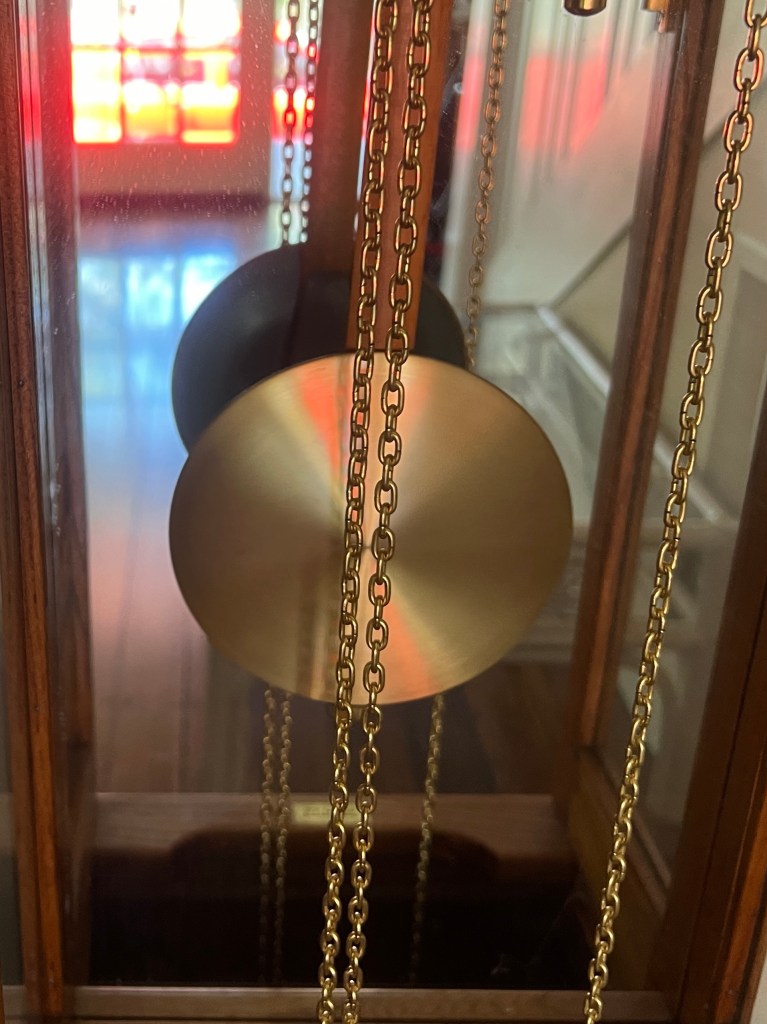
The swinging pendulum of technology in education has swung back and forth for decades, each swing marked by a new innovation or a renewed appreciation for traditional methods. In Aotearoa New Zealand, schools have embraced technology to enhance learning and engagement, but it’s crucial to find a balance that supports both traditional and digital approaches.
Traditional methods, such as teaching face to face, textbooks, and rote learning, have been used for centuries and have proven effective in imparting foundational knowledge. However, they can be less engaging for some students and may not adequately prepare them for the digital age especially including the exponential rate that AI is permeating all platforms.
On the other hand, technology offers a wealth of opportunities to enhance learning. UNESCO continually challenges us to understad why digital innovation in education is important. UNESCO sees digital innovation as a powerful tool for expanding access to education, improving learning quality, and making education systems more inclusive and resilient. It can help bridge the digital divide, personalize learning experiences, and prepare learners for the digital age. Using technology as part of teaching and learning can make lessons more interactive, personalised, and engaging. Digital tools can also provide students with access to a vast array of information and resources. However, excessive screen time can have negative impacts on students’ health and well-being, and not all students have equal access to technology.
The most effective approach is likely a balanced one that combines the best of both worlds. Traditional methods can provide a solid foundation in core subjects, while technology can be used to supplement and enhance learning especially for collaboration.. It is important to use technology thoughtfully and purposefully, focusing on how it can support learning goals rather than simply replacing traditional methods.
There are several reasons why some schools are pushing back on the use of devices in primary schools:
Concerns about screen time: Many educators worry about the potential negative impacts of excessive screen time on young children’s development, including issues with sleep, attention span, and social skills.
Focus on traditional learning: Some argue that devices can distract from traditional learning methods, such as reading books and hands-on activities, which are considered essential for early childhood development.
Lack of teacher training: Not all teachers have the necessary training and resources to effectively integrate technology into their lessons. This can lead to inconsistent implementation and less effective learning outcomes. For example as a digital babysitter.
Digital divide: Access to devices and reliable internet can be unequal, creating a digital divide among students. This can exacerbate existing educational inequalities.
Potential for misuse: Devices can be easily misused for non-educational purposes, such as gaming or social media, which can disrupt the learning environment.
Ultimately, the decision of how to best integrate technology into education should be made on a case-by-case basis, taking into account the specific needs of students and teachers. In this day and age when all our planning is digital, implementing media free does have its challenges and teachers end up repurposing the lack of internet with photocopying. Or my favourite one, looking for an old CD player to share songs. Do schools still have them? Like a lot of teachers coming out of college, there is a lack of teachers who do not know how to play an instrument and rely on a CD player if there is no internet.
Overall the integration of technology into education is a complex issue. While technology offers numerous benefits, such as personalised learning and access to vast resources, it’s essential to use it thoughtfully and in moderation. Excessive screen time can have negative impacts on students’ health and well-being. Traditional methods, like face-to-face instruction and textbooks, provide a solid foundation in core subjects. However, they may not be as engaging for all students and may not adequately prepare them for the digital age.
The most effective approach is a balanced one that combines the best of both worlds. Technology should complement, not replace, quality teaching and learning. Technology should be used to enhance traditional learning. Schools need to carefully consider the potential benefits and drawbacks of implementing media free days and on the other hand continue to monitor how much screen time their children are using in classrooms.
My question to you is this: Is your school implementing a media free day? We have had our first day and our children said it was their favourite day of the week. Go figure!
Now as an aside but still part of the swinging pendulum, have you read the latest?
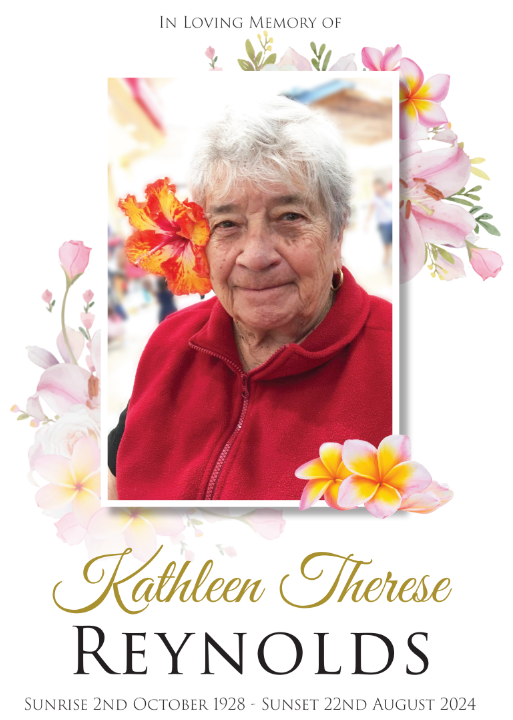
This blog post is in honor Kathleen Therese Reynolds, a beloved mother, grandmother, great-grandmother, sister, aunt, friend, and wife. She was deeply cherished by her husband of 60 years, Ron, her four daughters – Kathie, Astrid, Sonya, and Brigitte – eight grandchildren, and her first great-granddaughter. Her presence brought joy to all who knew her, and she will be deeply missed.
Born on October 2nd, 1928, in Tafitoala, Samoa, Mum was the third child of Ebbe Peter Thompson and Selenia Matalaoa Fonoti. From an early age, she displayed an adventurous spirit that would define much of her life. As one of St. Mary’s renowned Sister Patrick’s girls, and armed with her proficient shorthand and typing skills, Mum embarked on her first big adventure at the tender age of 18, moving to New Zealand.
After working in Wellington for a couple of years, her wanderlust led her to England, drawn partly by its proximity to Denmark – her beloved father’s homeland. To the surprise of her parents, she booked her passage without telling them, sending them a postcard from the Suez Canal.
During her time in England, Mum traveled across the continent, spending cherished moments in Denmark getting to know her Danish uncles and aunts. One of her most memorable experiences was camping out on Pall Mall to secure front-row spots for the coronation of Queen Elizabeth II in June 1953—a testament to her spirited nature.
Mum returned to Samoa in 1956 and began working for The Treasury Department. It was there she met a cheeky young accountant who bore more than a passing resemblance to Mum’s favorite actor, Gregory Peck. After a playful encounter involving a typewriter and a mischievous carriage return, the rest, as they say, is history. Mum and Dad married in 1957 and built a beautiful life together.
Our childhood in Samoa was idyllic. Sundays were special, with Dad cooking breakfast while we attended church, followed by family picnics on the other side of the island. We have fond memories of trips to Salamumu, swimming in the freshwater pools and waterfalls atop Mafa Pass, and frequent visits to Sliding Rocks. Our home in Lotopa was a haven, with Mum’s love for orchids evident in the stunning display of Singapore orchids and gerberas that lined our circular driveway.
We thought our mum was the most beautiful woman in the world. She dressed fashionably, wore bright red lipstick, and had long, dark hair that she would wear in a bun or a French roll. As children, we would squabble for the privilege of combing it and getting all the tangles out while she sat in an armchair reading her favorite magazines. Even when she and Dad would go out to the pictures, she would dress up—often in something she’d sewn that day.
In 1972, we moved to Christchurch for schooling and to be closer to Dad’s aging parents. Mum poured her passion for gardening into cultivating a bountiful vegetable garden, growing everything from apples and grapes to silverbeet, asparagus, tomatoes, lettuces, and her famous Danish potatoes—the seedlings of which she had smuggled into the country in her shoes. She learned the art of pruning apples and roses from our grandad and took great pride in preserving the fruits of her labor by making jams, pickles, and her famous green tomato chutney.
Mum was an exceptional cook who loved nothing more than feeding people. Her shrimp curry and pineapple & lemon meringue pie were legendary, and many a hungry university student would appear just to enjoy staples like chop suey, German potato salad, and pisupo.
Beyond cooking, Mum was also a talented seamstress—entirely self-taught. Inspired by fashion magazine clippings, she sewed beautiful clothes for herself and us on her old Singer treadle machine. Birthdays and Christmases were marked by new dresses, often matching for all of us, showcasing her incredible skill and creativity. She even handmade all our school uniforms, saving pennies wherever she could to fund new adventures and experiences, including taking us to see the latest shows that toured New Zealand, such as “Jesus Christ Superstar.”
Becoming a grandmother was one of Mum’s greatest joys. She adored her grandchildren, showering them with unconditional love, attention, and, of course, delicious food. Her home was always open to them, and she relished every moment spent playing, teaching Suipi, and creating lasting memories with them.
In retirement, Mum explored yet another passion—art. Whether painting on fabric or canvas, she expressed herself by copying the works of other artists and then happily signing her own name to the piece. She and Dad continued their love for travel, exploring Europe, India, the United States, Bali, Australia, and Canada together. They also enjoyed camping holidays, particularly to Totaranui, and later traveled around the South Island in their caravan. Golf became another shared pastime, providing countless hours of enjoyment and camaraderie with friends.
In 1997, Mum and Dad made the move to Auckland from Christchurch to be closer to their grandchildren, settling in Rambler Crescent, Beach Haven. They spent 15 happy years building new memories and friendships.
Mum’s faith was a cornerstone of her life. A devout Catholic, she served the church diligently well into her later years and was proud to have undertaken a pilgrimage to Medjugorje, Bosnia. Her generosity, kindness, and unwavering faith touched the lives of many and left an indelible mark on all who knew her.
Our parents cherished their independence fiercely but finally agreed to live with Sonya. The move in 2013 was not easy for both Dad and Mum because they were so used to their independence. But with Kathie’s gentle determination and Astrid’s help, Sonya returned home from a trip away to find her house taken over by… Parents!!
As the years passed, our mother faced the challenges of dementia with a strength that was nothing short of inspiring. Even as her memories began to fade, the essence of who she was remained clear. She never lost her smile when we walked into her room. Her spirit knew no boundaries with her interactions, and she continued to shine through even in the most difficult times.
We are grateful for the countless memories we shared. She taught us the importance of kindness, of living a life filled with love, and of always finding a reason to smile.
Today, it has been one month since she passed away. While we grieve our loss, we also celebrate the beautiful life she led and the incredible legacy she leaves behind. Her generosity, her love, and her strength will forever be a part of us.
Thank you, Mum, for everything. You will be missed, but your spirit will live on in all of us.
Teaching isn’t just a profession for me; it’s a calling. Reflecting on my four decades in New Zealand schools brings a wave of gratitude, nostalgia, and accomplishment. My journey began in 1984, amidst the veranda of a Catholic school in Canterbury. High walls enclosed my first classroom, filled with the rhythmic creak of wooden desks and the soft thud of textbooks. As a first-generation teacher, I had the privilege of in-class support – a Ministry of Education innovation at the time. Those early days saw classes of 36 or more students, planning meticulously written in paper roll books, and the exciting novelty of a data projector as my sole technological aid.
Learning and Growing Alongside My Students
My first year found me coaching the softball team. The second brought the school choir, thanks to my violin skills (and a quick crash course on the guitar with my colleague and then good friend, Jacinta). My position was temporary, leading to countless weekends spent searching for a permanent role. Forty-five rejection slips later, I finally secured one.
Year three brought a new Catholic school and a leadership role: Director of Religious Education. This involved parent meetings, staff training on religious education, and coordinating school masses. The choir remained under my wing and a dedication to faith-based education that highlighted my first decade.
The next few years brought motherhood. I became a pro at relief teaching, juggling both Catholic and state schools. My guitar and a large ball were my constant companions – planning for relievers wasn’t yet an expectation.
Embracing Change and New Challenges
A move to Auckland with two young sons led to a realisation – further qualifications meant a $5,000 annual raise. So, while raising my boys and working part-time, I pursued additional qualifications and continued to teach in a Catholic school. These were years of personal and intellectual growth, laying a strong foundation for the future.
In 2005, a new chapter unfolded. I transitioned to the state school system. The diversity of experiences and perspectives was refreshing, particularly the opportunity to connect with Samoan students. Two enriching years were spent in a Samoan Bilingual unit, followed by a burnout-induced shift closer to home. Here, I took on a classroom release teacher role, eventually specialising in English Second Language teaching.
Technology, Collaboration, and Back to the Classroom
Having access to decent equipment and Wi-Fi ignited my ICT side. I ran remote teacher training sessions, a period I found incredibly rewarding. This led to working with over 100 teachers, capturing their stories in educational artefacts. Collaboration across schools as an Across School Leader appealed to me, but after eight years, the initial enthusiasm waned. Then came COVID. Training teachers to work remotely brought a new kind of excitement – the challenge was ensuring they didn’t simply replicate traditional lessons online.
Forty years in, I find myself back in the classroom due to unforeseen circumstances. The main one being the shortage of teachers and the promise that it would be for one term. But three terms into the year, I am still here. After fifteen years, I had to rebuild my resource collection. But the core remained – the critical teacher-student relationship that fosters effective learning. Creating a safe and supportive space for exploration, questioning, and discovery has been my focus this year. Building connections with families has been easier thanks to translation tools like Seesaw.
Witnessing Change and the Power of Education
My forty years have seen education transformed by technology and evolving teaching methods. At times, the technology pendulum seems to swing too far, demanding a balance between screen time and traditional learning. However, I believe technology’s potential for global learning remains untapped. The “Flat Connections” era highlighted this very well.
The most rewarding aspect of teaching has been watching students and teachers grow and succeed. I’ve had the privilege of making a lasting impact on countless young lives and teachers, a legacy I deeply cherish.
Looking Back and Moving Forward
As I reflect, I’m filled with gratitude for the countless colleagues, mentors, and students who shaped my journey. Their support, enthusiasm, and encouragement made it interesting and fulfilling.
While my teaching career may be nearing its end, the passion for education burns brightly. I’m excited to see what the future holds and how the next generation of teachers will continue to inspire and shape the minds of tomorrow.
The question “Mā tērā ka aha?” is a powerful challenge to consider the implications of our actions. In the context of learning Māori, it prompts me to ask: What will come of this endeavour?
‘Another language opens up a whole new window on the world. It might be small and difficult to see through at first, but it gives you a different perspective, and it might make you realise that your first window could do with a bit of polishing and even enlarging.’
(Hone Tuwhare, Die Deutsche Sprache und Ich, NZCTE, Goethe Institut, circa 1997)
Why Learn Māori?
Learning Māori, the language of New Zealand’s indigenous people, is a rewarding journey that offers a deeper connection to the country’s rich culture and history. Learning the language is more than just learning words; it’s immersing yourself in a unique worldview and fostering respect for Māori traditions. There is an expectation for all teachers in New Zealand to practise and develop the use of te reo and tikanga Māori.
Demonstrate commitment to tangata whenuatanga and Te Tiriti o Waitangi partnership in Aotearoa New Zealand.
•Understand and recognise of the unique status of tangata whenua in Aotearoa New Zealand. • Understand and acknowledge the histories, heritages, languages and cultures of partners to Te Tiriti o Waitangi.• Practise and develop the use of te reo and tikanga Māori.
Where to Begin?
Māori was declared an official language of NZ under the Māori Language Act of 1987. Therefore as an educator you should be well past the beginning especially if you were born here or have been in New Zealand for several years. School leaders you have a part to play here by ensuring that your teachers show evidence of this standard when undergoing appraisals. This was a recommendation of mātanga (mātauranga and te reo experts) as outlined in He Puna Whakaaro Mō Te Ahu o te Reo Māori me Te Kawa Matakura. While many English-medium school principals acknowledge the importance of te reo Māori, few translate this into concrete actions or initiatives.
The key to growing your language proficiency is to immerse yourself by surrounding yourself with the language. I listen to Māori podcasts, watch Māori television shows, and engage with Māori communities through events.
Practising with a language partner, especially a native speaker can significantly accelerate your learning process. Feedback is really important and finetune your ear to pronunciation. Record yourself and listen to what you sound like. I have Elena, Sarah and Steve who have been prodding me in my journey.
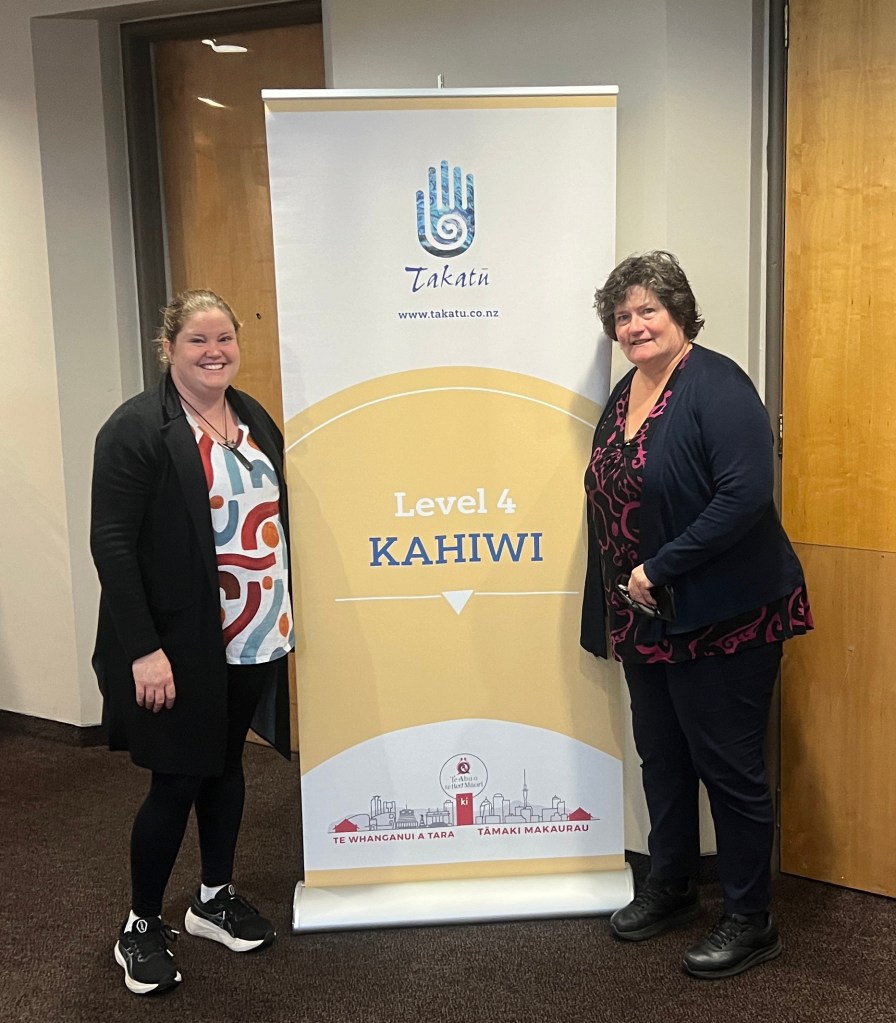
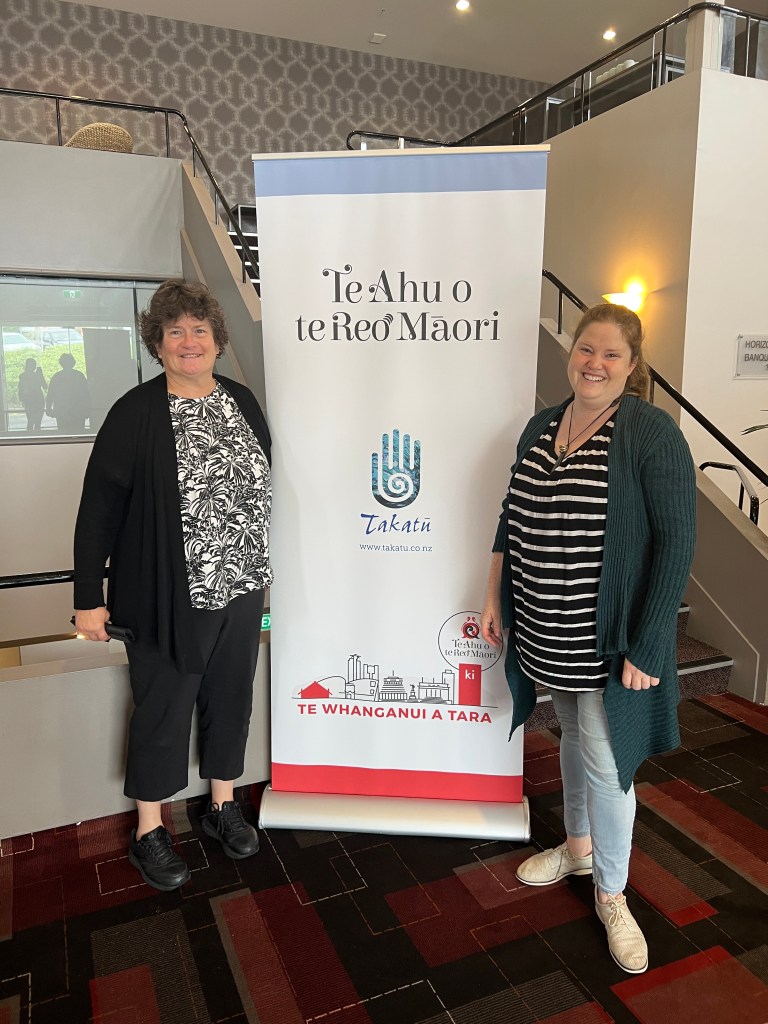
There are numerous online platforms, apps, and websites offering Māori language lessons. Teachers have had access to Te Ahu o te Reo Māori Learning free since 2021. I am currently using Takatu, a leading provider of Māori language learning programs, offering various levels of proficiency focussing on Māori language. Takatu has an innovative approach that suits me really well. It employs modern teaching methods and technology to make learning engaging and accessible. Takatu delivers programs aligned with the Ministry of Education’s Te Ahu o te Reo Māori curriculum. I especially love the structured learning because it provides me with a solid foundation and introduces me to grammar and vocabulary.
The waiting list was massive this year and unfortunately most of our teachers missed out. Just four from our school were accepted. The demand is there and I sincerely hope the current New Zealand government continues with Te Ahu o te Reo Māori Learning.
Tips for Learning Māori
Understanding Māori culture will enrich your language learning experience so embrace the culture. In my class this year I have used all my learning about culture to share with my students on a daily basis.
Everyone makes mistakes when learning a new language, but feel the fear and do it anyway. As teachers we know that mistakes are the only way to learn.
Consistency is key to mastering any language and identify any window that allows you to use force output to practise. These include learning a karakia, a whakatauki, a waiata and a kiwaha.
Celebrate small wins with all those little steps learning new vocabulary. This year my goal is to use kīwaha which is a colloquial saying or idiom. I play the guitar for our school kapa haka and songs are a great way to learn vocabulary.
Join a Māori Language Community and there are several on facebook. Connect with other learners for support and encouragement. I have also joined communities that share skills such as traditional navigation, or weaving or Rongoā or gardening.
Conclusion
Learning Māori is not merely an academic pursuit but a vital step towards reconciliation, cultural enrichment, and the preservation of a unique heritage. By embracing the taonga of the Māori language, we honour the past, build stronger communities, and create a more inclusive future for Aotearoa New Zealand.
Let us commit to nurturing the seeds of language revitalization, to sharing our knowledge with others, and to advocating for the continued support of Māori language initiatives. Together, we can ensure that te reo Māori thrives for generations to come.
Mā te whakapau ka whakatutuki. Through perseverance, we will succeed.
Seek after learning for the sake of your wellbeing. This whakatauki refers to the importance of learning for it is key to your wellbeing. If you follow the path of learning, the world will be your oyster.
I am committed to the values and expectations inNgā Tikanga Matatika | Code of Professional Responsibility and one way of showing this commitment was by completing the Unteach Racism modules designed by the New Zealand Teacher’s Council.
Racism is a complex and systemic issue that has been embedded in New Zealand society for centuries. It is important to remember that racism is not just about individual prejudice or discrimination; it is also about the systems and structures that uphold white supremacy and privilege.
The Unteach Racism initiative in New Zealand is a valuable resource for teachers and educators who are committed to dismantling racism in education. The initiative is based on the understanding that racism is something that is learned, and therefore can be unlearned.
The Unteach Racism link provides teachers with a range of tools and resources to support them in their own learning about racism, as well as in creating more equitable and inclusive classrooms. There are videos such as Taika Waititi’s unteach racism story which sets the scene for our learning.
The learning modules equip teachers with tools to identify, confront and dismantle bias and prejudice so that education is free from racism. Once on the site, an app can be downloaded to a mobile device which includes an introduction and then nine modules to work on with topics such as the history of racism in New Zealand, the different forms of racism, and how to identify and challenge racism in education.
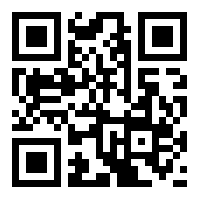
Scan the QR code to begin the modules.
These are the nine modules and the whole process takes approximately two hours to complete.
Unteach Racism
Low Self Belief
Low Expectations
Harmful Assumptions
Racist Exchanges
Exclusion
Assume Superiority
Equal Treatment as Equality
What’s next?
In addition to the app, the Unteach Racism initiative also provides teachers with access to a range of other resources, such as professional learning workshops, teaching resources, and a community of practice. An education sector login is required to take part in the conversations.
The Unteach Racism initiative is an important step towards creating a more equitable and inclusive education system in New Zealand. By supporting teachers to unteach racism, the initiative is helping to create a future where all students can thrive. I particularly liked the link to the Race Unity Speech Awards that shared the winning speeches on racism given by Rangatahi. The senior high school students express their ideas on how we can improve race relations in Aotearoa.
Some ways that teachers can use the Unteach Racism initiative in their classrooms include:
Reflecting on their own biases and privilege. All teachers have biases, whether they are aware of them or not. It is important for teachers to be honest with themselves about their biases and to work to challenge them. The Unteach Racism app provides teachers with resources to support them in this process.
Creating an inclusive classroom environment. This means creating a classroom where all students feel welcome and respected. It is important to have a clear code of conduct that prohibits racism and discrimination. It is also important to create opportunities for students to learn about and celebrate diversity.
Teaching students about racism. Students need to learn about racism in order to challenge it. Teachers can teach students about the different forms of racism, the history of racism in New Zealand, and the impact of racism on individuals and society. Teachers can use resources from the Unteach Racism initiative to support them in this teaching.
Challenging racism in the classroom. When teachers see or hear racism in the classroom, they need to challenge it immediately. This can be difficult, but it is important to send a clear message that racism is not tolerated. The Unteach Racism app provides teachers with strategies for challenging racism in the classroom.
Engaging in professional respectful and collaborative relationships. We have an obligation and the power to challenge all forms of interpersonal racism, and signal that they are not ok in our settings. A way of doing this is by calling people in and challenging their racism in a way that makes the encounter safe, productive, and more likely to unteach it in them.
The Unteach Racism initiative is a valuable resource for teachers and educators who are committed to dismantling racism in education. By using the resources provided by the initiative, teachers can help to create a more equitable and inclusive future for all students.
I am committed to develop and practice te reo me ngā tikanga Māori throughout my teaching career.
I often wonder how school leaders pass these expectations as part of section 387 (6) of the Education Act, which is binding on all teachers.
As an update, this turned up from an amazing twitter buddy. There is even more that was sent to her. I find it incredibly sad that another human can be treated this way.
Remember I turned my account to private after this rant. This was only one comment of a sickening 8. They're all on the same gut kicking line of thought. This. This is what we're dealing with. It's time to kick racism to the sewer pic.twitter.com/nHr7dNgzju
The variable nature of curriculum design and instructional materials in Aotearoa New Zealand schools refers to the fact that there is a significant degree of variation in how the curriculum is interpreted and implemented by teachers across the country, and in the selection and use of instructional materials.
This variability is influenced by a range of factors, including:
Teacher autonomy: Teachers in New Zealand have a high degree of autonomy in how they design and implement the curriculum. This means that there is no single “correct” way to teach the curriculum, and teachers are free to adapt it to meet the needs of their students and their own teaching styles.
School context: Schools in New Zealand vary widely in terms of their size, location, student demographics, and resources. This means that what works well in one school may not work well in another. There are also continuous challenges around professional development and workload.
Teacher expertise: Teachers have different levels of expertise and experience in curriculum design and instructional materials. This can lead to variability in the quality and effectiveness of rich curriculum implementation across schools. Are our school leaders up for this challenge? Leadership does matter by providing direction for their schools. Teachers are teaching but have not been involved in curriculum design. How many have even studied curriculum design in training programmes let alone have capability in quality planning?
Availability of resources: Schools in New Zealand have varying levels of access to resources, such as textbooks, digital technologies, and professional development opportunities. This can also contribute to variability in curriculum design and implementation. Any resource brought in must enhance the curriculum and not replace it.
The variability in curriculum design and instructional materials has both positive and negative implications. On the one hand, it allows teachers to be responsive to the needs of their students and to develop innovative and engaging teaching approaches. On the other hand, it can lead to inequity in student outcomes, as students in some schools may have access to a more rigorous and high-quality curriculum than students in other schools.
The New Zealand Ministry of Education is working to address the issue of variability in curriculum design and instructional materials. For example, the Ministry has developed a new curriculum document, The New Zealand Curriculum, Te Mataiaho, which provides clearer guidance to teachers on what to teach and how to teach it. The Ministry is also investing in professional development opportunities to help teachers improve their curriculum design and instructional skills. These include the ‘Common Practice Model’ They also include four teacher only days in 2023 and in 2024 and have asked schools within the same areas to coordinate the same dates so that there are minimal disruptions for parents and whānau. In addition there is now a National Curriculum Centre with Karen Spence as Chief Advisor, Strategy & Integration in Te Poutāhū National Curriculum Centre. Te Mataiaho draws deliberate attention to its histories and across the learning areas, and it is no longer appropriate to teach bits of knowledge.
Despite the efforts of the Ministry, variability in curriculum design and instructional materials is likely to remain a feature of the New Zealand education system. Teachers and leaders must know curriculum design because curriculum design must be carried out by knowledgeable practitioners. One key way of doing this is ensuring an understanding of the Common Practice Model. The school leader’s key job is to lead learning. The curriculum does not operate on its own. We must continue to share our teaching practice with a focus on explicit teaching. Schools must ensure optimal conditions for learning with availability of resources.However, by understanding the factors that contribute to this variability, schools and teachers can work together to take steps to mitigate its negative effects and ensure that students have access to a high-quality rich curriculum that reaches all students.
Within our curriculum design continually ask:
Whose voice can we not hear? As a multicultural nation sometimes there is excessive emphasis across all learning areas on one form of traditional knowledge. The excessive emphasis also includes too much content available in that one form of knowledge.
How do we ensure that everyone in our community feels a sense of ownership for our local curriculum?
How do we build partnerships with parents, whänau, iwi and hapu, and the wider community?
How do we ensure that we are being inclusive and culturally responsive to our tamariki/mokopuna, parents and whanau?
How do we make use of local and community resources and connections? Examples of this are cultural connections, businesses, community resources, professional relationships, and service providers
Is the design pushing analogue thinking in a digital world? A good example of this is downloaded work from “busywork.com” and the “Twinklification” of our classrooms.
From this webinar I spent time reading around the ‘Common Practice Model’ and strongly suggest all educators do the same.
Thank you Nina for providing this resource and webinar to keep the kórero alive.
Te Ao Māori is the Māori worldview, a holistic approach to life that emphasises the interconnectedness of all things. It is a way of understanding the world that is grounded in tikanga (customary values and lore) and mātauranga (knowledge).
Te Ao Māori is not just a culture or a set of beliefs; it is a way of life. It shapes the way Māori people view themselves, their relationships with others, and their responsibilities to the environment.
Key principles of Te Ao Māori
There are four key principles of Te Ao Māori:
Wairuatanga: Spirituality is at the core of Te Ao Māori. Māori believe that all things have a wairua (spirit), including people, places, and natural objects.
Pātuitanga: Kinship is another important concept in Te Ao Māori. Māori people are connected to each other through their whānau (extended family), hapū (subtribe), and iwi (tribe). They are also connected to the land and their ancestors.
Rangatiratanga: Rangatiratanga is the principle of self-determination. Māori people have the right to govern themselves and to make their own decisions about their future.
Whānau: Whānau is the Māori word for family. It is the most important social unit in Te Ao Māori. Whānau provide support and guidance to their members, and they play a vital role in the Māori community.
How Te Ao Māori can benefit us all
Te Ao Māori has a lot to offer us all. It provides a holistic and interconnected view of the world that can help us to live more sustainably and harmoniously.
Here are a few examples of how Te Ao Māori can benefit us all:
Wairuatanga: A sense of spirituality can give us meaning and purpose in life. It can also help us to connect with something larger than ourselves. Wairuatanga is enhanced in expressions and practice of tikanga (culture), kawa (traditions) and mātauranga Māori (traditional Māori knowledge).
Pātuitanga: Strong social connections are essential for our well-being. Whānau and other social groups can provide us with support, love, and a sense of belonging.
Rangatiratanga: Having a sense of self-determination is important for our mental and emotional health. It means that we feel in control of our own lives and that we have the power to make our own choices.
Whānau: Strong family relationships are important for our well-being. Whānau can provide us with support, love, and guidance.
How to learn more about Te Ao Māori
There are many ways to learn more about Te Ao Māori. Here are a few ideas:
Learn te reo Māori: Te reo Māori is the Māori language. It is a beautiful and expressive language that is at the heart of Māori culture. There are many resources available to help you learn te reo Māori, including online courses, such as Joining the waitlist for Te Ahu o te Reo Māori.
Read books and articles about Te Ao Māori: There is a wealth of information available about Te Ao Māori, including books, articles, and websites. You can learn about Māori history, culture, and values by reading and researching this material. Start with the narratives of your local rohe.
Connect with Māori people: The best way to learn about Te Ao Māori is to connect with Māori people. Attend Māori events and webinars, talk to Māori people, and learn from their experiences. Have you checked out the amazing Maori TV on demand resource that is available to all New Zealanders?
There are also apps that are available to help in your journey such as KŌRA MBIE or listening to Taringa Podcast.
These maps can be ordered from Down the Back of the Chair. You can find them by searching for ‘Te Waipounamu and Te Ika-a-Maui set of posters’ or its product code ‘MOEA0021’.
Recently I have been reading and watching a series of articles focused on the arrival of Artificial Intelligence (AI) and reading around what this means for education.
This week I attended an education hub webinar hosted by Nina Hood with Dr Sarah Bickerton and Mandy Henk who shared the recent developments in AI, what they may mean for education, and importantly, what some strategies might be that teachers and schools can use to engage effectively with AI.
Mandy Henk is the chief executive of Tohatoha, a charity that supports New Zealand to become a digital nation with a digitally sophisticated population.
Sarah Hendrica Bickerton is the research and policy lead at Tohatoha.
Artificial intelligence (AI) is one of the most transformative technologies of our time. It is already having a major impact on our lives, and its importance is only going to grow in the years to come.
What is AI?
AI is the field of computer science that deals with the creation of intelligent agents, which are systems that can reason, learn, and act autonomously. AI research has been highly successful in developing effective techniques for solving a wide range of problems, from game playing to medical diagnosis.
Students are already using AI tools that are already integrated into tools.
These include:
ChatGPT
Snapchat: My AI
Google Bard- Help me write
How is AI used today?
AI is used in a wide variety of applications today, including:
Self-driving cars: AI is used to power the self-driving features in cars, such as lane keeping and adaptive cruise control.
Virtual assistants: AI is used to power virtual assistants like Siri and Alexa, which can answer questions, control smart home devices, and more.
Recommendation systems: AI is used to power recommendation systems on websites like Amazon and Netflix, which suggest products and movies that you might like.
Fraud detection: AI is used to detect fraudulent transactions in banking and other industries.
Medical diagnosis: AI is used to help doctors diagnose diseases and recommend treatments.
The future of AI
AI is still in its early stages of development, but it has the potential to revolutionise many industries and aspects of our lives. For example, AI could be used to:
Develop new drugs and treatments for diseases.
Create personalised educational programs for students.
Automate tasks in the workplace, freeing up humans to focus on more creative and strategic work.
Develop new forms of entertainment and art.
Challenges of AI
While AI has the potential to do a lot of good, there are also some challenges that need to be addressed. For example, it is important to ensure that AI systems are fair and unbiased. It is also important to develop safeguards or guardrails to prevent AI systems from being used for malicious purposes.
As teachers we can treat things differently such as creating assignments to gear towards the learning using a much more analytical approach. Teachers must understand the ways these tools can help or fabulate. Teachers need to be thinking and focussing on their pedagogy. Teachers need to be teaching about AI and how to use it discerningly.
Some learning can include students fixing 5x sentences that are evidence based.
The limitations
Student Limitations of using ChatGPT is creating answers without knowledge.
Learners will not have gained the knowledge so no learning has taken place.
Bots cannot perform citations. Bots cannot do maths.
AI should not be used as search engines. Does not use a large language model to answer the question. Do not put students’ work through ChatGPT as it is not as private as it should be. Disciplines that require critical analysis are currently more challenging to be created by a BOT.
Ethical Implications in Schools.
Problematic ethical issues that must be avoided include the way the the data is collated and raised copyright challenges. Plagiarism and cheating is undermined when using AI.
Encouraging AI to form emotional connections is an issue such as ‘My AI’ from Snapchat.
Midjourney using Getty Images with a watermark.
Maybe the AI will lower the scale and target individual artists.
Ethical Concerns, what’s the ethical implications of what I am doing.
The tools can appear to be authoritative so it is always plausible to fact check AI and the question of bias. Dominant perspectives become the norm and the less dominant perspectives are less likely to occur. Inbuilt biases in society are more likely to be generated.
The more you interact with them, the nuttier the bots become. This is why guardrails are imperative. Propaganda, sexual, racist comments can explode.
Conclusion
AI is a powerful technology with the potential to transform our world. It is important to understand what AI is and how it is used today, so that we can be prepared for the changes that it will bring in the future.
Here are some additional thoughts on the future of AI:
AI could lead to the creation of new industries and jobs.
AI could help us to solve some of the world’s most pressing problems, such as climate change and poverty.
AI could also pose new challenges, such as job displacement and the potential for misuse of AI systems.
It is important to be aware of both the potential benefits and risks of AI, so that we can develop and use this technology in a responsible and ethical way.
Do not use AI uncritically, use it as a prompt rather than as a final product. Finally AI is here and what will come of that in education is really up to us teachers. We cannot ban it, but we can work with it and ensure we teach our students to be discerning in what they read and write.
For people who want to learn more about AI and education, Mandy and Sarah suggested looking up the following people, shared via the Education Hub.
Note to readers: I activated Google Bard on my personal Google account and created this blogpost prompt and then edited around the discussion heard. What was clear to me was the limitation of citations and how multistructural in creation was the outcome. I could take those lists and elaborate more on them but for now this is me checking out how a student might use the large language tools to assist with writing.
In 1980, I trained to be a teacher at Christchurch teachers college and one subject I chose as part of my specialist learning was te reo Māori. Our tutor was Bill Hohepa.
Early in 1981, he took us all to Lake Rotoiti where we stayed in a camp for the full experience of language and culture. During the long drive up, I travelled with my friend Aroha Reiriti Crofts. On the way she trained me to lead a Haka Pōwhiri.
During my time with Bill, I learnt waiata and tikanga. I also learnt Taniko and how to weave a tukutuku panel.
Another memory I have of Aroha was being taken to an event with the Christchurch Māori women’s welfare league, where I learnt to weave harakeke and learnt tikanga around the use of flax. In my third year at teachers college I completed a practicum at the Christchurch museum where I taught Māori history. In the museum I was introduced to Māori carvings and learnt the symbols on a Poutama.
Those early memories of learning helped me as a teacher in Catholic schools where the Treaty of Waitangi was actively taught as part of the Catholic curriculum. I also taught singing and often focussed on waiata and dancing with my children.
Over the past decade I have taught at Newmarket school where each year we celebrate Matariki and each year we make a hakari to share with our families. This includes harvesting our gardens to make winter soup out of the vegetables. A few times I made Rēwena bread with the children. Some years we have come together as a whole school and taught Māori crafts and Matariki activities.
This year 2023, I chose to be a Co lead with Steve From ANI, in our Kāhui Ako for Te Ao Māori. One goal in our initiative is embedding NELP 3 Priority 5: -incorporating te reo Māori and tikanga Māori into everyday activities. Steve regularly reminds me about whanaungatanga and ensures that we continually and actively plan for making connections during our mahi with teachers.
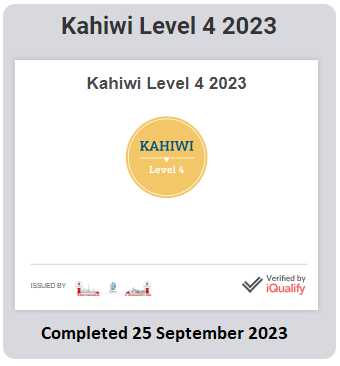
As a school we have always brought in an outside teacher to teach te reo Māori. This year we have Elena. At the beginning of this year, Elena, Steve and I enrolled in Te Ahu o te reo Māori. We felt the fear and jumped right into level 4 te reo Māori where learning is 50/50.
One of the key principles of Māori is whanaungatanga and one way of doing this is by making connections. My first online session my tutor is Te Mihinga Forbes. Te Mihinga has supported me several times behind scenes digitally with my use of te reo Māori. in addition she agreed to write a chapter for the EdBookNZ project. Her subject was Manaakitanga. I was super excited to reconnect with her on the course.
As a school we have carried out professional learning around many curriculum areas. Our teachers are currently learning Te Reo Māori with Elena. As a teacher of language, I am conscious that the best strategy to learn a language is immersion and the best way of achieving this is by teaching it. Therefore Elena continues to benefit and grow her te reo Māori learning by actively teaching the language. We will soon carry out the Taku Reo survey developed by NZCER with our students and this will help guide us as a school as to identify where to next.
As a primary school teacher, we are trained to teach any curriculum level and any subject. If we are unsure of what we do then we learn. The best strategy of learning is teaching. Māori was made an official language of New Zealand under the Maori Language Act 1987.
I look forward to our teachers picking up the wero and actively learning te reo Māori. The thirty minutes each week learning alongside the children is not nearly enough to embed NELP 3 Priority 5: –incorporating te reo Māori and tikanga Māori into everyday activities. The government is actively doing their part by providing free professional learning for te reo Māori and tikanga. It is up to schools to do their part and take advantage of the learning for all their teachers.
Incorporating te reo Māori and tikanga Māori into everyday activities will be embedded when our teachers actively teach it. In order for this to happen, professionally learning the language via Te ahu o te Reo and professionally learning tikanga is the pathway forward.
Remember when schools used to have ICT teachers or STEAM teachers.
I look forward to the day when Matariki week happens every day and tikanga is embedded daily. I look forward to when Te wiki o te reo Māori happens every day and our Māori language is embedded in our daily class teaching.
My suggestions to those of you teaching in New Zealand Schools.
Look for opportunities to attend community events that highlight te reo Māori. One recent example was attending the recent PPTA Hui held in Tāmaki Makaurau.
Another is with Matariki coming up, check out what is happening in your area and join in.
Learn to say blessings in te reo Māori such as saying the school karakia daily.
Learn to say some whakatauki.
Listen to Taringa Daily a fabulous podcast that highlights Kupu, Iwi of the week, Waiata, Kiwaha, tikanga and Once upon a Taima. The hour long sessions are like listening into a conversation.
Encourage your children to join Kapa Haka and even better if you also attend.
Learn waiata. There are heaps on youtube,. Start with the waiata that your local Rohe sing.
Find out who provide Kohanga Reo in your area and go for a visit.
Actively support your teachers who are willing to learn and have a go.
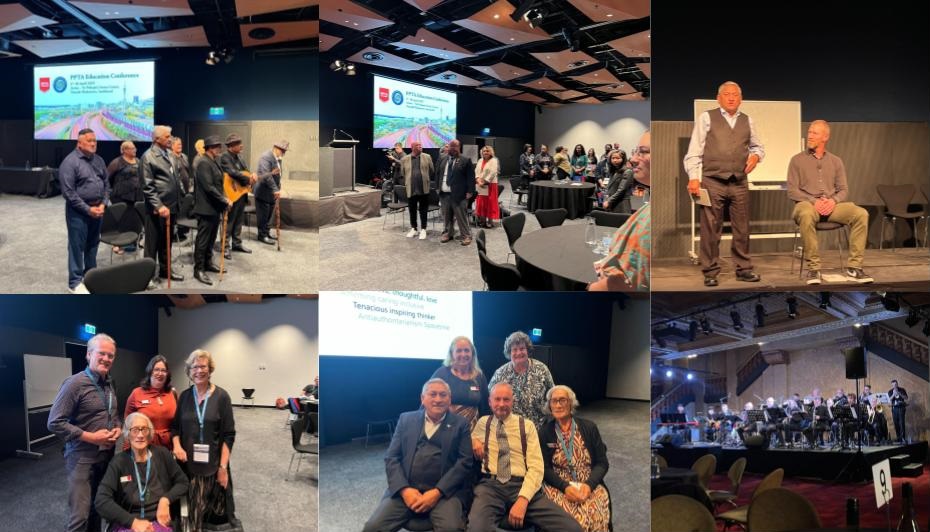
During 17-18 April, I attended the premier event for Aotearoa New Zealand secondary education kaiako, Education Conference 2023 held in the Aotea Centre, Tāmaki Makaurau Auckland.
The event was organised by PPTA Te Wehengarua and the focus was to exchange ideas and learn from peers and education leaders. This year’s Conference Convenor was Dr Helen Finn from PPTA Learning and Development Centre.
The conference began with a whakatau and Tainui were the tangata whenua who welcomed the manuhiri into the room.
The speeches highlighted Tāmaki Makaurau and made connections between the four whānui with the different hapū and iwi.
The manuhiri responded to the welcoming speeches and affirmed the reason for this conference. The conference was officially opened with karakia.
The sessions began with Chris Abercrombe-Acting President of the NZPPTA introducing the conference and the first speaker.
Honourable Minister Tinetti spoke about the importance of Honouring Te Tiriti o Waitangi and the Curriculum Refresh beginning with Mathematics and Literacy.
She reminded us about the recent disruption to learning caused by COVID and that great disruptions provide learning opportunities for us as educators. As educators, we have the responsibility and capacity to make a big difference for our learners.
Tinetti touched on Wicked Issues for learning and not narrowing the curriculum.
Wicked issues are a social or cultural problem that’s difficult or impossible to solve because of complex and interconnected nature.
The Minister for Education alerted us that attendance continues to be an issue for learning because non attendance equals no learning. Our young people need to be engaged in their learning and for us educators to build our school systems to move around and support our young people.
Rose shared about her learning and the markers in her learning life that disrupted her thinking. Some of these included the ‘The great chain of being’ which is a hierarchical structure of all matter and life, thought by mediaeval Christianity to have been decreed by God. The chain begins with God and descends through angels, humans, animals and plants to minerals.
She also shared about metaphors from biology that created images in our learning.
When she unpacked her formal philosophy she highlighted a big idea from philosophy; Epistemology: how we know what we know.
Rose provided us with an opportunity too to reflect on our own vocational threshold that changed our own thinking.
Dr Hipkins spoke about the parallel between indigenous knowledge and complexity science. How as a textbook author, it was important to be part of the system by positioning within writing as a learner.
As a researcher she noticed that if resources were not equally shared then there were issues with gender inequalities, social inequalities and a myriad of other inequalities. Life rested on the environment and what happened when resources become unbalanced.
She concluded with: ‘Which set of eyes and heart do I need to teach with?’ Do we teach as if we are outside systems looking in (an ‘objective’ view)? Or as if we are inside systems and complicit in how they are and how they can be?”
His session was peppered with discussion questions such as “Should governments ban smartphones in secondary schools?” which generated discussion between us all. Some of the highlights were highlighted at the end of each block of time so that we could hear what the general feeling was from the audience.
“It is easy for governments to issue a blanket ban on smartphones in schools. It is much harder to implement that in practice. It is also problematic because practically all young people use these devices for many useful purposes, including learning.”
Tikanga Māori i te Kura (Tikanga Māori in a School Context)
Rōpata began with making a connection with the audience. He unpacked ‘Whaka whanau tanga’ by breaking up the term into smaller root words. We carried out an activity that clarified the difference between Whakatauki and Whakatauākī.
Rōpata then took us deeper with highlighting Tikanga: The correct way of carrying out cultural protocols.
I loved hearing that Manaakitanga trumps everything EG: if it rains
Rōpata stressed the importance of Kawa: Processes that cannot be changed.
He shared with us the difference between powhiri and whakatau and to be clear which one we were doing in our school.
Tikanga Pōwhiri.
Wero
Karanga
Whakaeke
Waerea/ Karanga Whakahoki
Hongi/ Harirū
Whaikōrero
Waiata
Koha
Kai
Tikanga Whakatau
Whakaeke
Hongi/ Harirū
Whaikōrero
Waiata
Kai
If we were unsure then to return to the protocols of the hapū and iwi of the area.
Be cautious about ‘Dialling a Māori Expert’ versus developing relationships with a critical friend.
When Māori protocols take place – then the space becomes tapu: sacred. As schools: What have we put in place when we ask our children and kaiako to step up and take the lead in protocols.
He questioned us changing our school name to Māori, but do we understand the why. He stressed the importance of being compassionate to hapū and iwi and understanding capacity issues. EG: we are one school in Tāmaki Makaurau out of how many who want the same support from our local hapū and iwi.
Rōpata repeated the importance of “Understand the why.”
A clear understanding was needed when requesting translation and reminded us that translating a four page document takes more than five minutes. He stressed that not all Māori are experts in Te Ao Māori.
Moeke thanked Rōpata and shared how it was also important as educators we have the power to raise Mana or lower it .
Paul shared his life story and decisions he made that affected him as a human. He drew on his own journey from adversity to excellence.
He asked us to continually reflect on:
Am I present?
Am I open?
Am I doing what matters?
Paul shared about ‘Post Traumatic Growth’. Personal Growth is when something positive comes from adversity with having learnt from the experience and moving on.
Rome wasn’t built in a day but bricks were laid every hour. He reminded us that doing what matters is making space for discomfort and still sharing our story.”
What is your prison and what is holding you back from having the life you want?
Professor filmmaker, author and disobedient thinker
Disobedient Thinking: Intelligences that dance beyond assessment criteria
As an educator I found Welby’s session question some of my beliefs around learning. For example Mathematics and Literacy is not learning because the thought process through reading and writing and calculation is not enough. Classroom planning with the focus on Literacy and Mathematics is redundant to life learning.
We need educators who are courageous enough to think differently to the system.
The freedom to think creatively and to encourage creative thinking.
The internet is the world’s most magical library surrounded by the world’s toxic dump.
Our current testing does not test the ability to solve wicked problems and as educators we must lead away from this narrow method of determining intelligence.
He reminded us about the ‘The Myth of Learning Styles’ -that took a hold in our systems and yet how research showed weak research design.
Ings showed us some Artificial Intelligence examples using ‘Deepfake Image’. How the images seemed real until further investigation highlighted how fake they truly were.
Welby questioned the current debate around pausing ‘Artificial Intelligence (AI)’ development. Then reminded us AI is not the ethical tool but the human beings behind it. Education as it currently is continues to appear surface and probed how we were teaching deep and critical thinking.
Welby asked us about truth and how we verify what we see and read.
He stated that sophistication thinking happens in an embodied context and It does not happen in planning or report writing.
He asked us ‘What don’t we reward?’ and that we do not reward the space that grows around learners.
He reiterated that tests measure some isolated skills which are the least significant aspects of learning. Our system of measuring understanding learning, fails our children. Most of our learners have skills that are not measured. The gift we as teachers give to our students is the freedom to think, and to be courageous enough to think differently from you.”
Current school measurement is an illusion of success. He challenged us to push back on comparison and diagnosis. That time and space are the two great elements in the room. He commented that testing forces schools and teachers to be morally corrupt. Ultimately our learners pay the price. As educators we must celebrate failure because it is part of the thinking process. We must celebrate our Non Linear Thinkers by seeking ways to fill the spaces between is the essence of our programmes.
Unfortunately our assessment system assesses and rewards linear thinkers
Welby Ings (Part2)
Invisible Leadership
A leader is someone who influences change
They support others around them to influence change.
Welby asked us to highlight what three traits that a negative leader would look like for someone like me. Everyone was asked to do this activity.
Micromanage and continually checks to see if I am following through (trust)
Does not appreciate my pathway of doing my job my way
Under anticipates requests on my time
Reverse of this would be
Trusts that tasks will be completed (respect)
Trusts that there is not one way of doing something (supporting)
Gives me reflecting time and affirmation (mana enhancing)
All ideas that came from the audience discussion are about growing humans.
Growth and value.
The general school leader is a heroic leader. (The current school leader role- sucks the oxygen from the environment)
Curent traits
Singular visionary
Problem solver
Fearless
All knowing task assigner
Command- control- coerce
Yet wounded hierarchy happens when there is no growing Humans.
High levels of reporting happens and there is a fear of doing wrong. This becomes a toxic work environment and one sign is high staff turnover.
As educators we develop the Protege Model when guiding new teachers.
I will guide you
Developmental model is the better guiding model.
What can I do to help
What can I take away to make your job better
Asks and listens
Communities are relational.
Watch the children -which adults do they trust in the school?
Welby finished his session with a quote from Lao Tzu: “A leader is best when people barely know he exists, when his work is done, his aim fulfilled, they will say: we did it ourselves.”
He reminded us that it does not matter how many badges are pinned on the blazer, it does not make you a leader. It does not matter what your title is, it does not make you a leader.
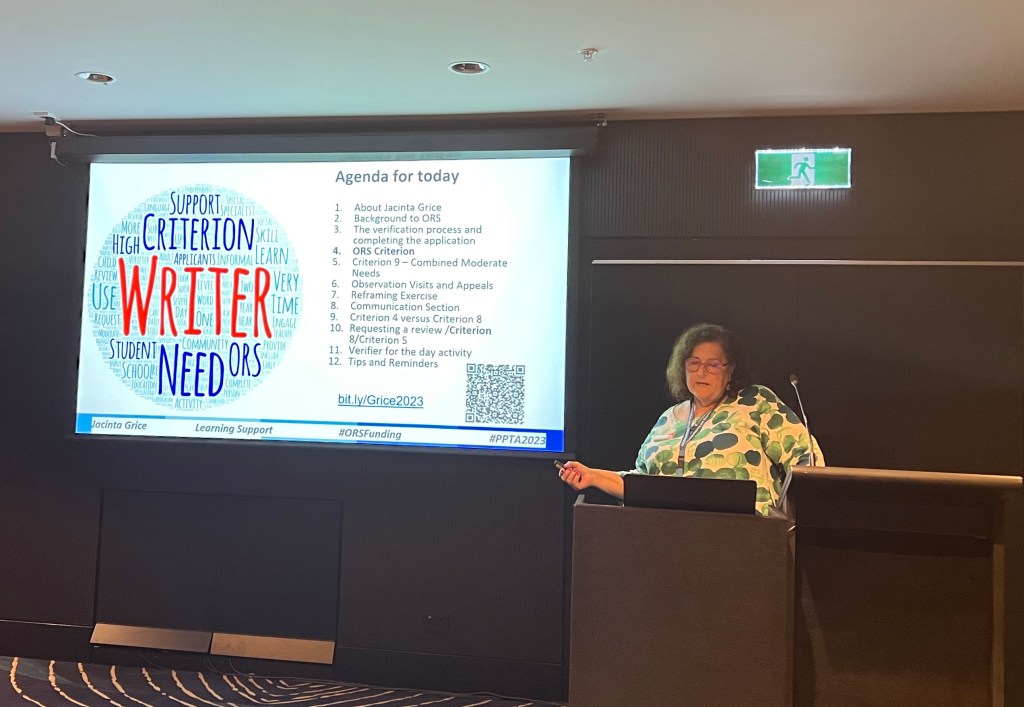
Jacinta shared some of her learning with filling in ORS applications.I was proud of how she planned for and delivered this session.
I learnt about the challenges of completing an ORS application and I learnt that the most important part of the application was the skill of the writers to paint a picture of the child.
Jay Pressnell
THE TIAKI PROJECT – An interactive audio-visual project aimed at preserving and archiving local narratives and histories
I chose this session because I have an interest in preserving local stories.
I was awed by the motion specialist effects using overlays of art to create a story. I was fascinated with the multimodal approach to this project.
Creativity happens before assessment and then assessment is highlighted in the completed project.
There were interactive ways of story telling and sharing of people’s history and Turangawaewae Narratives
We are the main character and author of our own stories. The people who tell hopeful or redemptive stories don’t necessarily have easier lives, but find a way to tell the story in a way that facilitates hope and change. Ask yourself: How can I tell a different story with the same facts?”
School have narrative poverty meaning that there is a lack of the story that reflects the students lives.
Jehan shared that “What happens in life is less important than the story we tell about it.” How can I tell a different story with the same set of facts?
Finally Te Aomihia Taua-Glassie, the Māori Vice President shared her personal story about the people who shaped her life as an educator. I particularly made connections with this story because of the number of strong women who helped shape her journey.
The conference finished with a karakia and a waiata.
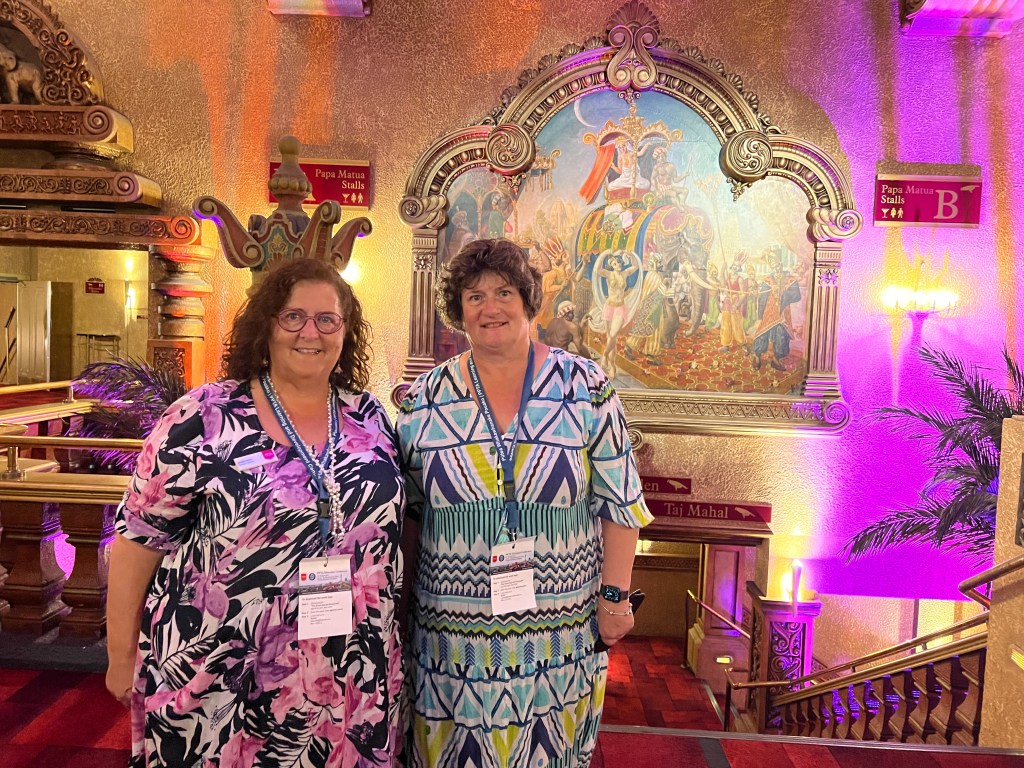
This reflection are from my notes taken during the two days. I had a really good time learning and have missed networking with colleagues. Several years have passed since I have attended a national conference. I especially thank my friend Jacinta Grice who encouraged me to join her at the conference and her PPTA colleagues who made me feel welcome. I felt honoured to make connections with colleagues in the secondary sector. I was particularly interested in Te Ao Māori workshops to continue growing my personal understanding. I was humbled to hear such inspirational speakers and Rosemary and Pasi continue to inspire me in my own learning. All the other keynotes and workshop presenters were new to me and enabled me to reflect on what was happening in my own school. Yes I took heaps of photos and have only shared a few here. Jacinta and I had the opportunity too of catching up with Penny Ashton, conference MC, and reminise about our first school where we taught together, St Joseph’s Papanui.
Thanks to Rose for this final quote that sums up my experience. “Professional learning that makes sense of the complex changes that are happening all around us transforms our *being* in the world.”
A special mention here of Johnny who helped me phrase my introduction.


 Sonya @VanSchaijik