This post is an update of that article.
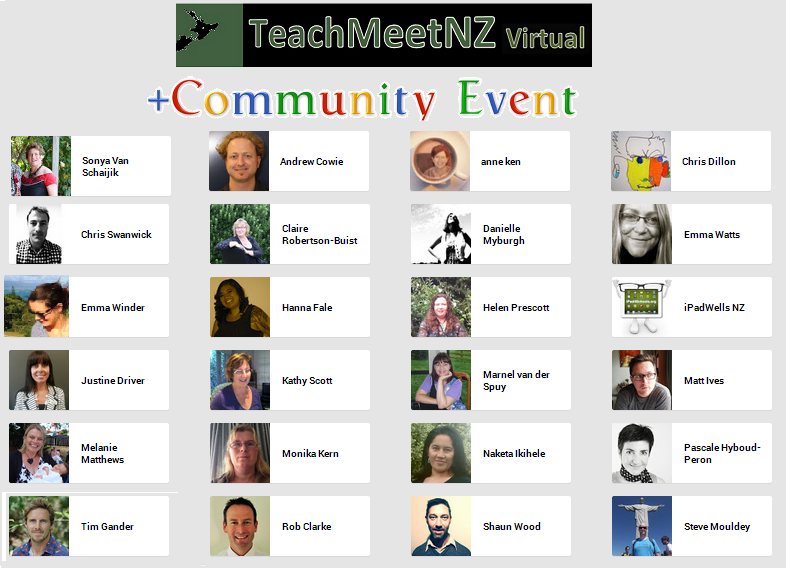
TeachMeetNZ Interface
This post is an update of that article.
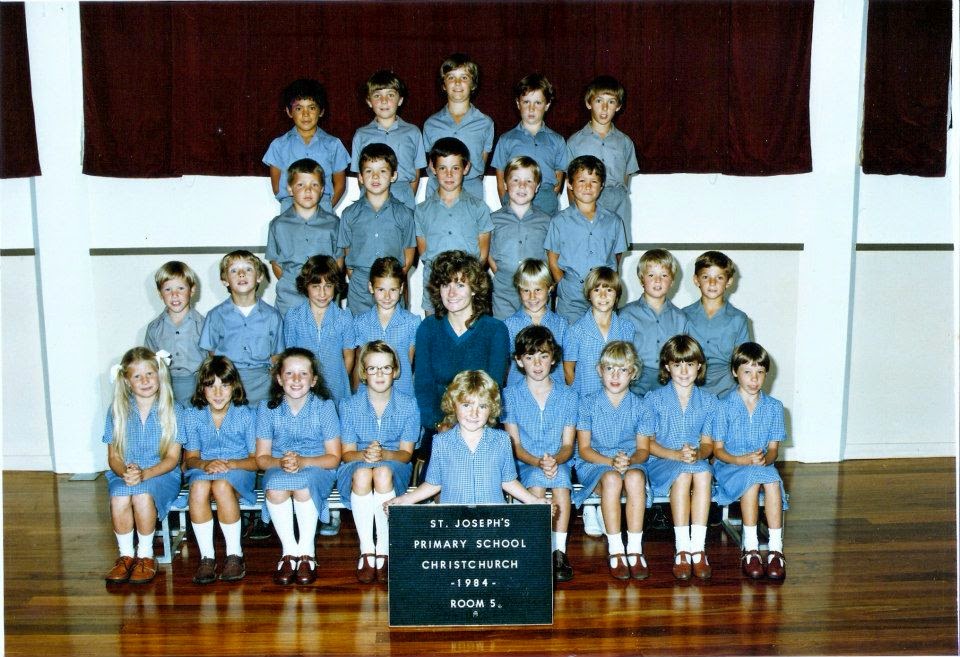
St Joseph’s School Papanui 1984
First week back at school this term and I was still finishing off TeachMeetNZ Anniversary session.
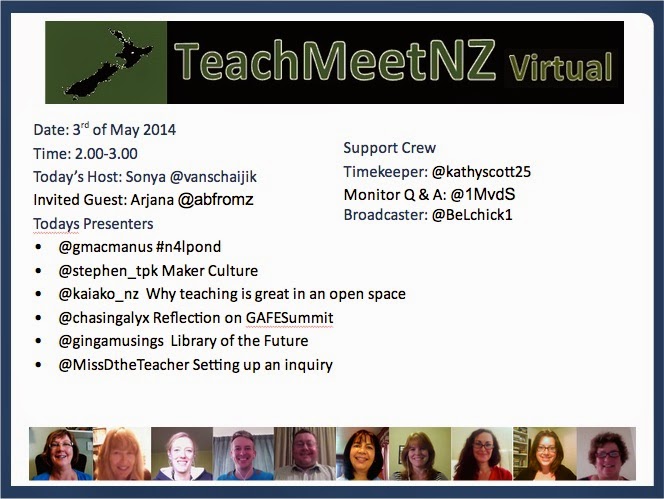
On the 3rd of May we hosted our anniversary session.
However the real date that TeachMeetNZ began was on the 4th of May 2013.
We had a full house.
@MissDtheTeacher @stephen_tpk@gingamusings @kaiako_nz @gmacmanus @chasingalyx
Our invited guest was Arjana abfromzwho got up at 4.00am in her timezone to join us. She was invited as a mentor and guest and in true Arjana style she had a turn at presenting.
Time Keeper was Kathy @kathyscott25 and she was also back up host. Kathy was one educator who had been with me from the start learning how to use the tools. She tinkles the bell to keep us on time.
For this session we trialled Question and answer in hangout and worked at bringing in more participants.
Marnel 1MvdS was my monitor for this new tool. The challenge she had was being able to see it from within a hangout. My fault, I was training the presenters but did not realise how difficult it was to see the questions from within a hangout. At the end of the session, Marnel created a storifi of the twitter feed.
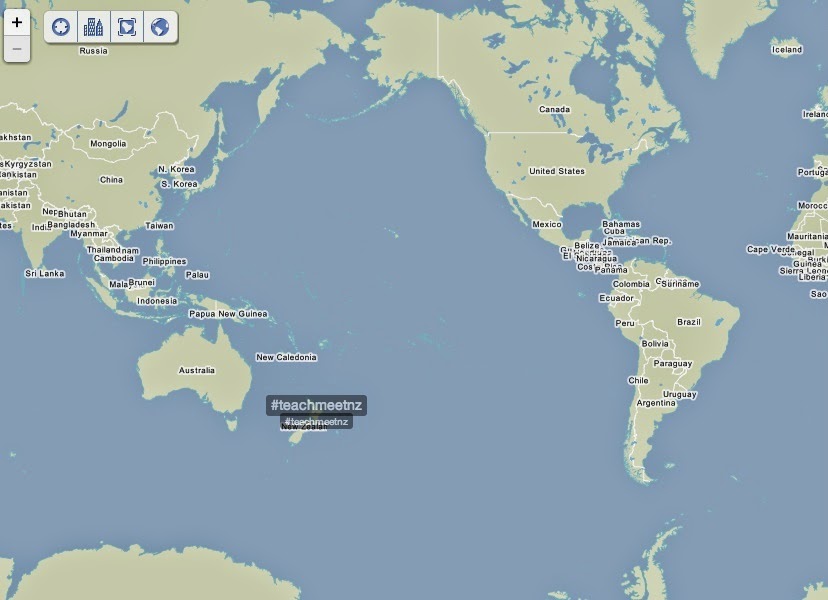
We trended again on twitter.
Monika @BeLchick1 watched the twitter feed and broadcasted on twitter as presenters spoke
We broke the 100 live time views mark on the day and 15 people watched the session right through.
Our first session took 25 minutes to broadcast and this one took just over an hour.
I have learnt a lot about my self from hearing the way I speak and direct teachers. Some of my learning include not to be so direct, giving positive, clear feedback and acknowledging the other educators who gather around me to ensure that the sessions run smoothly. These include broadcasting and helping with training. There have been 38 teacher presenters on the sessions and you can go and rewind their sessions here. The highlight for me is the reflective blogging that happens after the sessions. This is when the real learning happens for teachers as I think about how we can continue to get sidetracked with the product. I also learnt that with the Festival of Education GHO session I myself am unable to screen share. I love the way that the recording was live almost immediately after the session.
Where to next? I would love to run a session with staff to share their inquiry. I am keen to have a try at running a virtual mini conference. Maybe call in past presenters to run their own sessions but all within a single hour period. Begin with one session where everyone can tune in and then push people out to various groups and pages on the wiki. It would be great to have questions and answers too from a virtual audience.
Finally I am ready to run a discussion as is being planned because I can now operate the Q & A section on a hangout.
Hey amazing NZ tweeps, need you to GH in with presentations for #eduigniterotovegas on Thursday. Who can help? @BeLchick1 @vanschaijik
— Annemarie Hyde (@mrs_hyde) April 5, 2014
Recently the above message came to me via twitter from Annemarie Hyde.
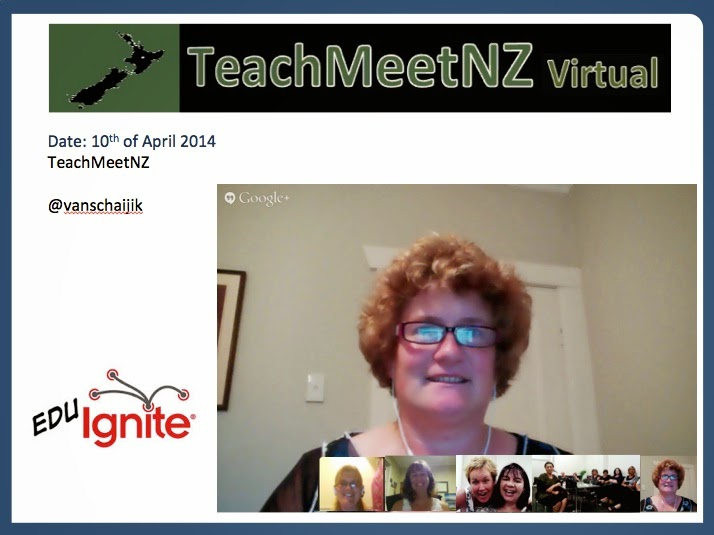
Of course I responded with a yes and here is my Eduigniterotovegas presentation. I shared about TeachMeetNZ and about the amazing connections I have made with New Zealand educators. I shared about the site being a collaborative product and how proud I am to have nearly 30 mini presentations available for anyone to come, view and share. It was great to have Marnel Van der Spuy as master of ceremony at the Eduignite and to see her in this leadership role all the way in Rotorua via Google Hangout. Because I was presenting I needed to have practise sessions and was grateful to @cossie29 and to who spent time with me in a Hangout so that I could practise my part of activating shared screen and showing my own presentation. I did miss having @kathyscott25 with her rattle snake to remind me of time.
To be honest I am always hosting a Google Hangout Session but I have never really presented. I have been hosting TeachMeetNZ sessions for nearly a year now and the sessions allow New Zealand educators to talk to each other. The sessions are like being in a conference yet more like when you meet over coffee with your educator friends. That kind of sharing of practice is a fabulous way for New Zealand educators to use technology to talk together.
TeachMeetNZ shifts the focus of conferences because now we do not have the restrictions of time, space or paying to attend a conference. The exciting part of TeachMeetNZ is the ability of a teacher presenting to other teachers. Yet the experience is not just for the teachers who attend or who tune into a session but also for the teachers who presenting. I did not realise the value of this until I myself presented at Eduigniterotovegas via Google Hangout.
Steve Hargadon’s video provided me with lots of inspiration for this post.


Welcome everyone to you our F2F audience and also to our global audience who have joined us who are have joined us virtually. I take this time to say thanks to my twitter buddies who have tweeted and retweeted this session to help us celebrate. The session today is a live google hangout. We have 7x educators from around New Zealand presenting. In addition we have 3x support educators with various roles that they will explain. The session is live on our wiki and also on google+
Talofa Lava, Malo e leleli, Bula Vinaka, Kia Ora, Ni Hao Ma, Anyoung Hasayo, Konnichiwa, Namaste and Welcome everyone to TeachMeetNZ Session 5 I am Sonya Van Schaijik a teacher from Newmarket School in Auckland New Zealand. The greetings are the language of our children from Newmarket. TeachMeetNZ evolved from my Core Education efellowship inquiry into Hyperconnectivity. The TeachMeetNZ site and framework was collaboratively developed during my TeachNZ sabbatical year.
The site continues to evolve and grow and currently there are over 20 mini presentations from New Zealand educators and growing. Just how much does ICT contribute to better outcomes for our learners and also for you to hear our teachers share their learning stories.
TeachMeetNZ is part of my ongoing learning with Hyperconnectivity that I began as a Core Education efellow in 2011. SOLO allowed me to identify that at extended abstract I needed to create an event for teachers so this is it. SOLO Taxonomy has allowed me to rethink the ways that teachers can share learning and has framed my next steps.
I will briefly highlight the story around setting up TeachMeetNZ. There is a fuller version on youtube embedded on the wikispace that I shared on the Virtual Learning Network.
To begin:
“TeachMeet is not about technology 100%, it is about the Teach first of all, and the tech is instrumental to achieving what we want to achieve pedagogically and never the other way around.” Ewan Macintosh
TMNZ is aimed for New Zealand Educators and our one is the first that I am aware of presenting using Google+ as the virtual venue. The history explains the process. However I want to acknowledge our first team.
In 2013 at Ignition I placed a notice up if anyone wanted to trial google hangout and to present a nano presentation. There were 6 people who joined the discussion and I shoulder tapped others. The first group agreed on a date and my team of helpers supported me in ironing out all the glitches. We live streamed all the training and mistakes. So that they could be rewound and learnt from.
Implementing the project involves these tools and putting time aside to work with the presenters virtually. Ah Huh moments
This year as I have been reading around the topic of collaboration and making connection my aha moment is when I knew that I was on the correct pathway with TeachMeetNZ in that we focus a lot on the children but teachers also need encouragement and recogniition.
On TeachMeetNZ teachers can come together and share their learning. For presenting they will receive a digital badge for their portfolio and a video clip of their presentation.
This is the fifth session of TeachMeetNZ and I am proud to welcome the stunning line up that we have for today.Soon I will pass it over to our team to introduce themselves and then to our presenters. So Marnel over to you first, then I will ask you to hang up as I will use your camera on the audience. I will come back at the end to run a Q&A session that will be monitored by Marnel and that will be 10 minutes. So please audience think of some questions for us. We use ChatWing for questions and answers and that is currently being monitored so from wherever you have tuned in, please join in the discussion. Tell us where you are from. Keep on tweeting and keeping the energy going using the twitter hashtag #TeachMeetNZ.
Thank you all so much for joining us. A special thanks to our amazing presenters who worked with me over the past month getting ready. A big thanks to our wonderful support team who joined in to help with todays session.
Within the next hour we should have a full recording live on the front of the wiki and on google + and over the next week I will tweet out each presenters page so you can revist and rewind and share the topics with your PLN and own staff in your schools and communities.
We can continue the discussion on Google +. So look for me and remember to use the hashtag.
We are always looking out for presenters for future sessions or even if you wish to run a topic specific session. The framework is already in place and all the templates are available to help ensure a smooth session.
Please do get in contact if you would like to join us. TeachMeetNZ is a great way to share your ideas and learning not just in New Zealand but to a global audience. We do ask that to present if you can be a New Zealand Educator, even if you are teaching overseas.
I mention Arjana Blazic who has inspired me along the way and suggest to you to look out for TeachMeetInternational as a way to present with Global educators sharing Global projects.
Please complete the evaluation form on the wiki and give us your valuable feedback. This wraps up our fifth session of TeachMeetNZ, Good bye everyone.
@vanschaijik Learning about culture is important to accept the reality “One World Many Voices”. #Globalclassroom #Culture
— Siromani Dhungana (@siromanid) February 22, 2014
Thanks to Siromani for this tweet that gave me such a great opening for this post.
Last night I was privileged to host a #GlobalClassroom chat session with Julia Skinner.
Our topic was inspired by a blog post from Edna Sackson. Edna wrote about culture and used the analogy of an iceberg.
The discussion was fast paced over the hour and I was thankful to Michael Graffin for creating a list of questions to help guide the discussion.
I was particularly interested in hosting the session as I wanted to clarify my own thoughts about culture as this is our topic for Newmarket School. The first step in teaching a new topic is to define the term with the children. I already had two sessions with the children and we had begun to make links with what they knew about culture. As my own knowledge was not as clear as it could be I was excited to learn from the discussion. I took time to ponder the various statements by going back over the chat via the storify created by Marnel. So this is what I have created for my definition. Thanks to all of you who took part as I have taken parts of the discussion to help frame my thoughts. Thanks to to Clive Elsmore who creates an archive of all the chats as it was great to trawl the following chats for their gems too.
Above the surface is the difference between us all. Below the surface is what joins us together as part of the human race. Our feelings is what makes us human. It is our treatment of the differences above the surface. Culture is our way of living. It is the beliefs and values of a group of people. It is the beliefs, values and traditions that we practise and celebrate in our daily lives. It is the core values that we all have in common such as respect, trust. beliefs, kindness and love. I think as families and individuals we evolve our own cultural practice to reflect how we are validated or what we learn. Learning about culture is important to accept the reality. “One world, Many voices.” It is about treating those differences that above the iceberg with actions of dignity and respect. It is about communication and being transparent with communication.
Where to next, this week I will be reworking our class draft definition and I can see how I am moving to creating a definition of culture from our school perspective. So again, I can see how I would use the above the iceberg to what we can see in schools as a difference between schools and what happens below the iceberg as a commonality we have with all our children in schools.
Finally, when I frame learning using SOLO taxonomy I use my SOLO mentor Ginny who I go to for feedback. Ginny has suggested I include way of life too and how culture is passed between generations. Therefore the idea from Siromani of ‘One world, many voices’ surmises this. Again Ginny’s feedback suggests turning my thinking upside down and begin with whats under the iceberg and use that to give examples of what is above the iceberg. Those of you who were with us last night, what definition of culture did you come up with?
Follow up, I was interested to see Dr Kofoed, my school principal include this statement as part of our teacher appraisal.
‘To enhance the relevance of new learning, in 2014 teachers will include:
developing classrooms as high-trust environments, where the teacher affirms and validates the culture and identity of each student.’ Love it.
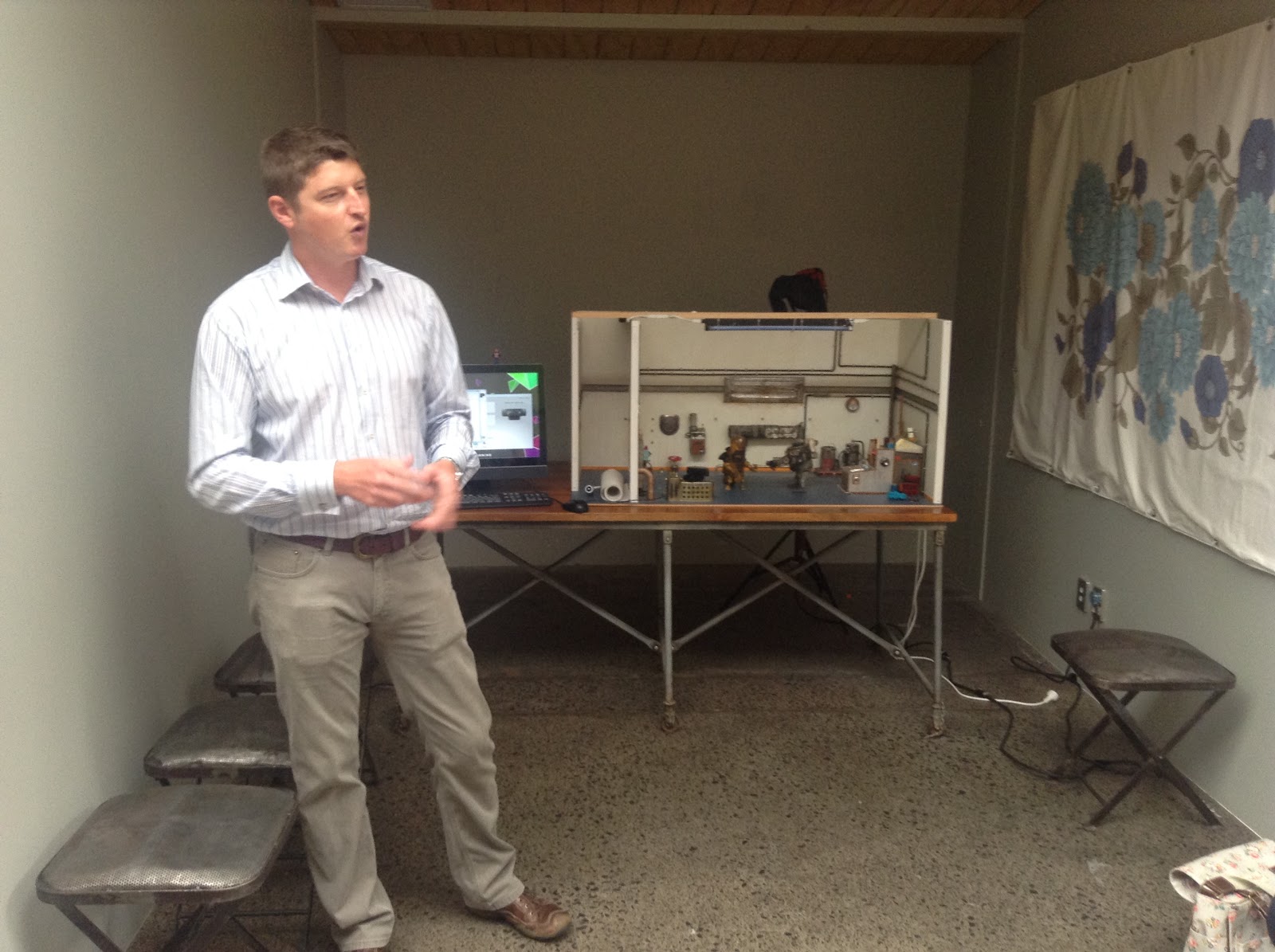
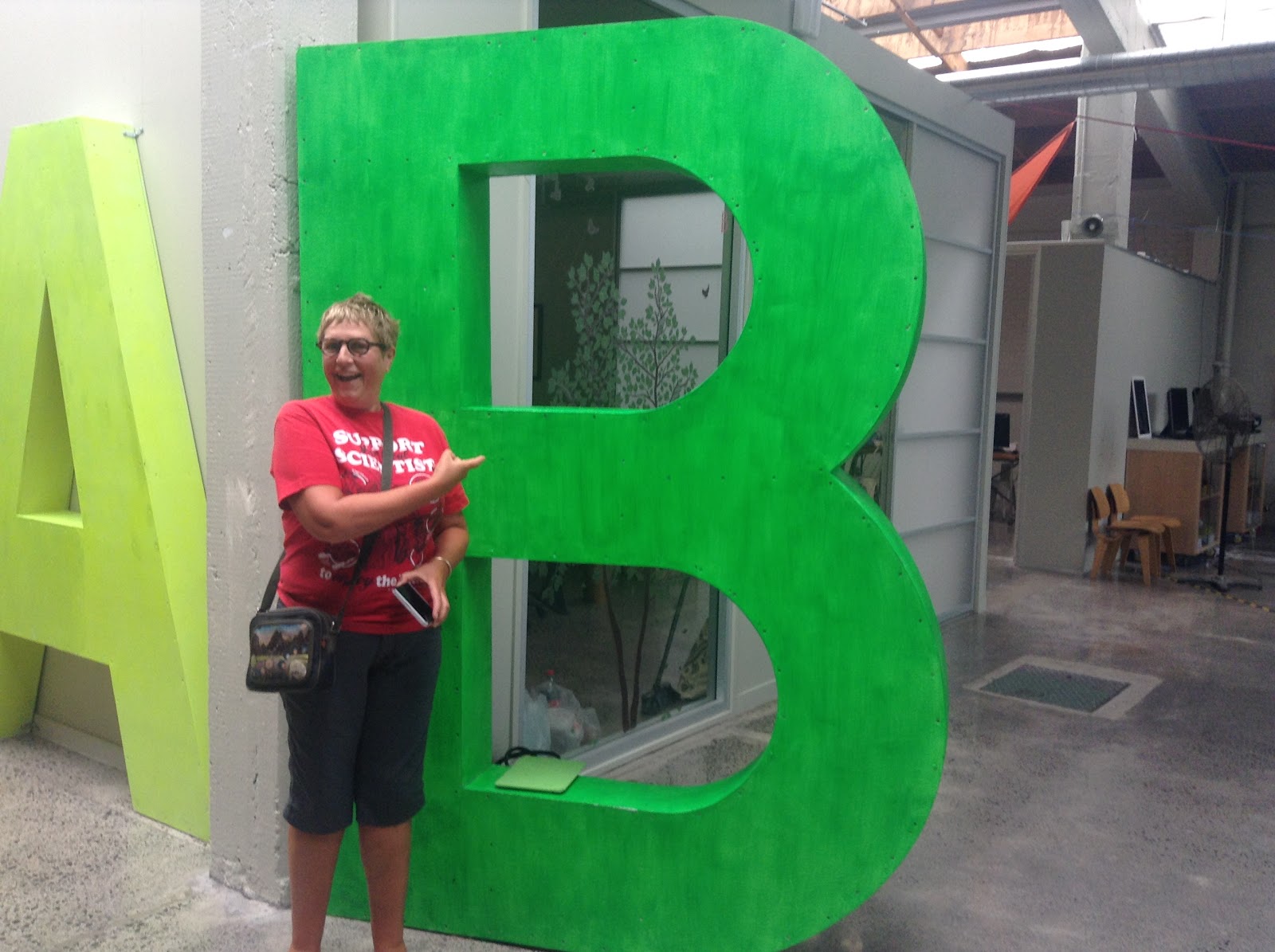
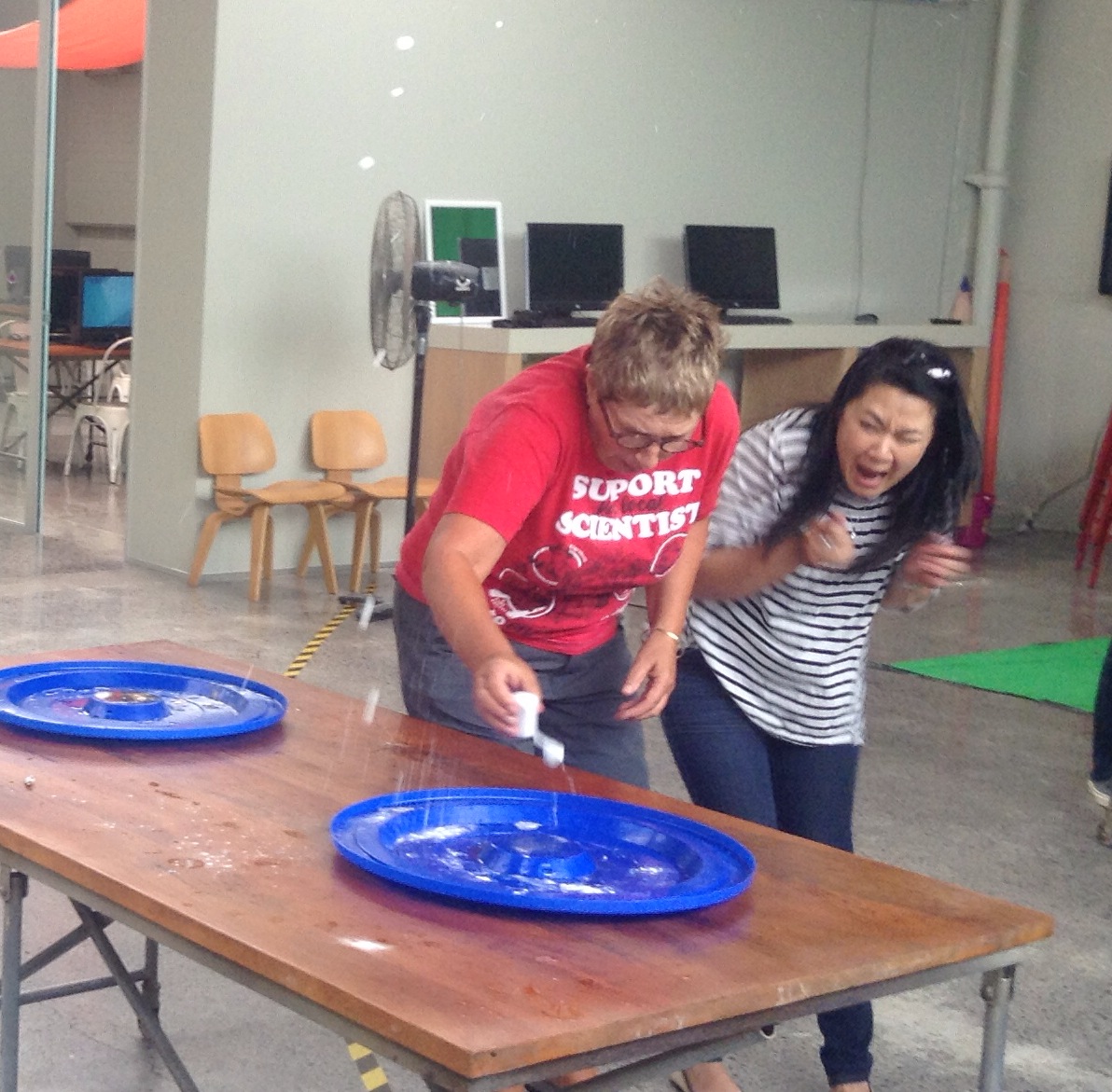
On Friday 7th of February and a day after Waitangi Day, we had a teacher only day with a science focus. We visited Mindlab and spent the afternoon with @chrisclanz. The three hands on activities that were shared with us included making rockets, creating auras with Aurasma and adapting code to make our car robots work. I added some photos here from my picasa drive. Chris highlighted the need to to Engage, Plan, Discuss and Reflect when teaching science.
When we used Aurasma, we all had our teacher iPads and were provided with WIFI access to download, create a short video and upload to our accounts. Many teachers eagerly discussed their next steps with Aurasma. I was able to solve an ongoing problem of matching an aura with an underlay.
Probably the highlight for me was making connections with teachers that I work with in an engaging and fun way. Yes I also learnt more about teaching science. Chris showed us Scratch and Makeymakey as well as the 3D Printer. I was in geek heaven. I would have loved to have some more hands on coding opportunities with these technological learning tools. I tagged you @LidijaKralj @vanschaijik @loryrous @bsanja http://t.co/p0abqyst63
— Arjana Blazic (@abfromz) December 24, 2013
How to change the date on blogger to reflect current time? Thanks to @annekenn for this other little gem.
(Cross Posted from TESOLANZ Newsletter December 2013 Vol 22 #3)
A collaborative effort using google Docs by Sonya Van Shaijik, with Margaret Kitchen and Maree Jeurissen
Anytime, anywhere connectivity can change the face of learning. Just look at the Hole in the Wall Project below. Learning is about collaboration and co-creating, and E-Learning enables this. This article reports on Sonya Van Shaijik’s (E-learning Lead teacher and ESOL teacher from Newmarket School) Ministry of Education TeachNZ sabbatical which was to investigate the relationship between pedagogy and student learning using ICT. A long-time advocate of bilingual learning, Sonya visited Asia to enrich her understanding of the children she teaches.
India: The Hole in the Wall Project
http://www.hole-in-the-wall.com/Publications.html

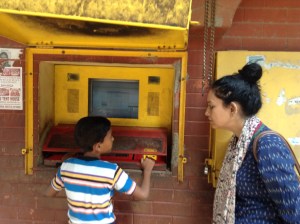
Sonya’s visit to one cell of The Hole in the Wall Project illustrates the changing face of learning. In 1999 a team from NIIT (an Indian company specialising in educational learning solutions, information technology and much more) carved a “hole in the wall” that separated the NIIT premises from the adjoining slum in Kalkaji, New Delhi. Through this hole, a freely accessible computer was put up for use. This computer proved to be an instant hit among the community, especially the children. With no prior experience or teacher intervention, the children learnt to use the computer on their own. Sonya was taken to meet three of the earliest users at one cell by Dr Ritu Dangwal, a researcher in the project. One of these first users is now a shop owner, another is in the second year of teacher training and one is training to be a lawyer. Sonya also watched the children step up to use the computer. One boy comes every morning to talk to his grandfather in another city, the grandfather also using a “hole in the wall” computer. The project’s instigator Dr. Sugata Mitra hypothesises that: The acquisition of basic computing skills by any set of children can be achieved through incidental learning provided the learners are given access to a suitable computing facility, with entertaining and motivating content and some minimal (human) guidance.

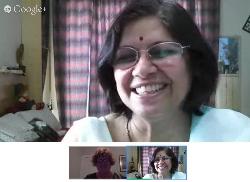
Sonya also was able to virtually meet Dr Suneeta Kalkarni the face behind the Granny cloud project (http://solesandsomes.wikispaces.com/Home) which is the next stage of Sugata’s work. This is when learners do not need supervision but that does not mean that they do not need ‘benign mentors’. Indeed, is it not the role of grandparents, uncles, aunts, [and sometimes parents and teachers too!] to be benign and friendly mentors instead of just ‘supervisors’?
Flat classroom conference
http://fclive2013.flatclassroomproject.org/
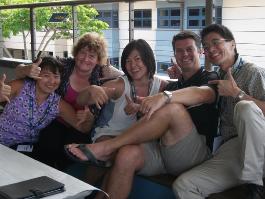
Sonya participated in a flat classroom conference in Hawai’i, a unique event that included 200 students and 40 educators from 9 countries working together in teams. Flat classrooms are about educators and students being part of learning communities using leading technology tools such as wikis, blogs, social networking and digital storytelling.
https://sonyavanschaijik.com/2013/08/01/flat-classroom-conference-2013/
![]() |
![]() |
| Hui Mei Chang, Sonya Van Schaijik
Anita Chen, Bill Brady, Ryan Fujii |
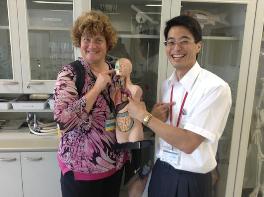
Sonya reconnected with Ryan in Japan later on in her journey |
Pedagogy and Student Learning
Sonya used her TeachNZ sabbatical to establish connections with educators around the world. Schools in Europe and then in Asia were visited and different learning environments observed. The educators who allowed access to their domain were educators who have a history of sharing professional practice and responding to children’s learning by using Technology in Transformative Ways. Whilst on her journey Sonya was able to observe how schools in Europe learn a second and even a third language. Many schools visited begin learning a second language by about 9 years old and the language is kept separate by teacher or by subject. Language and content learning are fully integrated and two or three languages are learned concurrently by all students – food for thought for the NZ context.
While away on her TeachNZ Sabbatical, Sonya used the following tools to communicate with educators both in New Zealand and globally.
https://twitter.com/vanschaijik
http://instagram.com/vanschaijik
http://www.sonyavanschaijik.com
More Information on Sabbatical Teacher Awards
http://www.teachnz.govt.nz/teacher-awards/directory/primary-teachers-sabbatical/
http://www.teachnz.govt.nz/teacher-awards/directory/secondary-teachers-sabbatical/