TeachMeetNZ Bloopers and Troopers and where to next.

TMNZ Anniversary

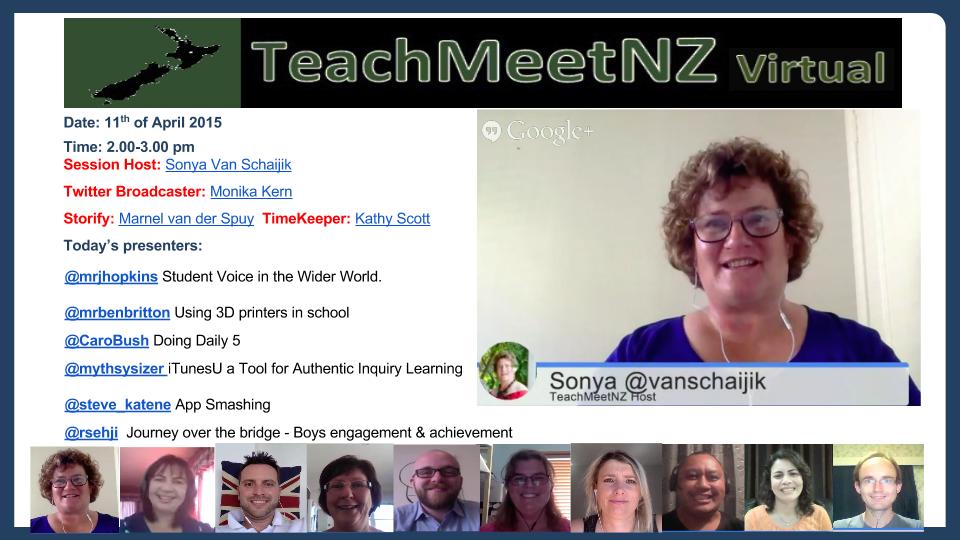
Yesterday was the second anniversary celebration of TeachmeetNZ. WOW I can hardly believe how fast the past two years have evolved with the project. To anyone who has taken part as a presenter, audience or the support crew, I say thank you. I cannot tell you how far the reach of TeachMeetNZ has been. All I can do is share some of the numbers I have such as having over 80 educators share their learning.

After each session I push out the evaluation form and use the feedback to drive the next session. Currently most of the feedback comes from the presenters. The feedback allows me to identify areas that need addressing.

Bloopers

One day I must put together a TeachMeetNZ bloopers clip. To be honest most of the major bloopers will end up being me. I still have a giggle when I recall one session going live with my opening slide telling the world that I was outside hanging up the washing and to get ready for the broadcast. Since that day, I now just launch straight into a session because TeachMeetNZ is not about my learning but about the current presenting team’s learning.

Yesterday was no exception. 40 minutes until live time, I could not get the hangout record button activated. The setting up has become so slick, that the link had been prebroadcasted as part of the advertising sheet I generally set up.

So I left the team on the original hangout while I problem shooted. I quickly set up another hangout, grabbed the links, readjusted and came back to the team where I gave them the new hangout link and asked them to rebroadcast the new link like mad over twitter and google+ hangout. This all happened in the space of 15 minutes. Thank goodness I knew hangouts so well that I was able to do this.

Then we went live and once I had greeted everyone, we had technical feedback happening just as the first presenter lined up for their spot. Someone had the video live and I watched the mics trying to identify who…. it was me. In embedding the new video onto the home wiki, I had inadvertently left the page open. One of the ‘rules’ I go through with the team during practice sessions.

Troopers

I will let the presenters into a little secret here, those of you who know me well know that I am not the best at multitasking. I cannot operate technically and listen to conversations at the same time. Therefore it is important for me to see your slides before the session so that I may prepare myself better as a host. During a live session, I am so busy watching cameras and mics that I have no idea what you say. I come back and rewatch the session after the event and then give you feedback via twitter. My feedback is usually positive because I know how far you have travelled technically as educators during this period of preparation. I know preparation has been intensive and I know how much work you put into your presentation. In addition, I know that you have already had feedback from your peers during the practice run throughs. I believe that last thing you need at this stage would be critical feedback.

Where to Next: TeachMeetNZ Leadership Panelist Discussion

From a presenter’s perspective TeachMeetNZ  is all about connecting and collaborating with each other to create a product for education. But from an audience perspective TeachMeetNZ  is about consuming. Yes there is some feedback on twitter and sometimes with the Q & A on a hangout and generally it is all positive. I have had some of the audience reflect on a session via blogging.

I do have an idea for an upcoming session. I can see a TeachMeetNZ critical discussion happening but will need to select the panelists carefully.  Maybe only have 4x. I envisage a depth discussion happening where we can come together as educators and have dialogue. Kind of like a debate, or a critical friend discussion. Where we are taking someone’s work or research and critiquing it. Not in a critical sense but yet in a critical way. From my experience in education I have identified very few educators who have the skills to cope with discussion like this. I do not believe I could cope with discussion like this because I am an educator who has better discussion after the fact.

I have to choose carefully and firstly I need a strong host. The major challenge is identifying who because I know what happens when school leaders get together, they can be worse than teachers in keeping to a time schedule. I am looking for dialogue leaders who are strong in their field of research and practice and can handle the discussion. That they are willing to be open to the critical dialogue. That they would treat this session as learning for their own professional growth. That they are open to having their views swayed with the discussion. That are happy to create a recording for education.

So I need some whos, I already have in a mind a host. Who do you think could cope with this task. In education who have you heard speak in a critical way and I am not just talking about blogs, I am talking about real time. Maybe this is the leadership TeachMeetNZ that many have asked for. Drop me a DM via twitter and give me some names.

To find out more about TeachMeetNZ, check out the previous sessions.
 

Critical friends

As an experienced educator I learnt from some of the best. One of which is my dear friend Patisepa Tuafuti and the other was Anne Saunokonoko.

Pati shows by her actions that she grows leadership. One of which is standing back. She would push me hard to do things well out of my comfort zone and then be there to celebrate with me when I ever did anything amazing. But again always in the background. She never takes credit for achievements and always focussed on the group success. I cannot count the number of times she has shared successes with me and often put me in the limelight. But really it is her driving force that has achieved the outcome.

The other is an old principal Anne. Anne would say, “when you are successful, we are successful so go for it Sonya.” When I would quibble at attending another professional development session particularly concerning ICT, she would remind me with, ” Its not what you get out of the session, but what you contribute.” Staff at my school will now hear me use the same words. At the end of most training or celebrations she would be there for me to recap with and she would gently nudge me into trying something else new. Now I would call that downloading and rewinding strategies with a critical friend as part of reflection.

I often observe presentations and watch who is hovering in the background like a mother hen. More recently with social media I observe who is broadcasting the success of their teachers. Yes that person could be at the front in the spotlight. But often you watch them hovering to ensure that the sessions go well and only step in when needed. They are there to help celebrate their teachers achievements and to be the person to recap with and help identify next steps.

At the same time we all need mentors. We all need someone we can download with and rewind our learning. We all need someone who helps us identify our next steps. Some schools use the term critical friends because often they ask the hard questions. They provide opportunities for staff to step up. They are the ones pulling the staff forward to take a jump into unfamiliar learning.

In your workplace, who do you identify as your critical friend? Who is the staff member who pulls staff hardest out of their comfort zone? Probably those of you who are reading this, it is you. If you are arrived via twitter or if you are from my school, then you are my one of my critical friends and you know me, I welcome discussion. Click below.

Science

Science has been dominating my time this past few months and it has been exciting.

@mattynicoll approached me to lead the 24th of February #ScichatNZ and of course I said yes. I know Matt because we were both on the steering committee for #edchatnz and he is one of the teachers joining the #TeachMeetNZ meets #Science session.

I enjoy teaching science and learning through the Nature of Science. For those of you interested in learning how to run a twitter chat, I use the #GlobalClassroom training shared with me from @mgraffin. He is an Australian Science passionate teacher that I have met on twitter. I set up a google Doc and divided the hour up with questions. You can see the one I set up for #SciChatNZ here. Matt was fabulous is supporting me by giving me the topic. During the hour chat, I have learnt too from @ussieEDchat the importance of using a graphic for questions as this helps hold the chat together. So I created a presentation of the questions here . I exported the presentation as jpgs and tidied up the images leading up to the session.

The session was storified by @NZScienceLearn so do go back and revisit the session. I was grateful for the #SciChatnz team who rallied around me and helped ensure that the twitter chat flowed. In fact it didn’t just flow, it stormed and we trended on twitter.

One of the important lessons I learnt from @julielindsay is about keeping a record of the sharing. So I like to see some kind of an archive of chat history. This is something that the #SciChatNZ team do very well.

The other big Science collaborative project I was involved in was with Cath @NZScienceLearn. We had been coordinating a #TeachMeetNZ meets Science Session for the 21st of March. You can read more about that here.  We had a team of 8 science educators joining us and they are well known in the science education community partly because of their twitter activity and their involvement in various science projects such as #scichatnz and Science fellowship.

As part of my collaboration with Cath I was interviewed by Melissa @NZScienceTeachr on behalf of the New Zealand Association of Science Educators. You can read that interview here.

My goal this year is to understand how social media works and so I had investigated how everything linked across platforms and how traffic was driven. I observed the TeachMeetNZ youtube channel with interest. Through the work of @abfromz and @BartVerswijvel I stumbled across Thunderclap. I activated a thunderclap to help broadcast the science session and also so I could see how it drove traffic. I set up tickets in Eventbrite and I could see the huge integrations that this site had with Facebook, Twitter and instagram. In addition, I activated my Mailchimp account that had been dormant for a while. I used the TeachMeetNZ meets Science session to play with many of the tools.

Science at Newmarket School has many links. In particular the work we did with @S_Heeps. I had @BelindaHitchman join me from School in the TeachMeetNZ session. In addition we had @Doctor_Harves join us at school for a visit.

My SOLOtaxonomy thinking hat is excited because I believe that my work with TeachMeetNZ is moving into relational thinking. I am having other educators put their hand up to host a session. Yes I can already see where it needs to go for extended abstract thinking here in New Zealand. But I need a few more strong Google + educators with a working understanding of youtube.

Hey Tony, thanks for sharing a viewer’s perspective. The fun is in the connecting and collaborating sessions. Thanks too with your support in Pond, Google + and Twitter.

The term is nearly over

Reflection near the end of term allows me to sort out my thoughts and helps me make sense of the speed that sometimes happens in my thinking. This post is a way of sifting through how I am thinking.


Science

Science at Newmarket School has many links. The school has recently completed a science contract under the guidance of Susan Heeps. Last year Virginia Kung and her work with science was featured under the Future Focused Learning site.

During the recent #TeachMeetNZ meets #Science session Belinda Hitchman @BelindaHitchman from Newmarket School shared her work that was carried out in regards to using coding. She explained the links between understanding coding and understanding science. Recently I led a #scichatnz live twitter chat. You can read about the how the session was developed on a post on the Scichatnz blog.

The TeachMeetNZ meets Science session was a collaborative process between myself and Catherine Battersby from the Science Learning Hub. However what began as a duo chatting face to face soon became a full group of science educators making connections on twitter and google +, creating a presentation to share in a google hangout, learning and supporting each other with the tools, celebrating during and after the event and then sharing via a reflective blog post for the education community. As part of my collaboration with Cath I was interviewed by Melissa @NZScienceTeachr on behalf of the New Zealand Association of Science Educators. You can read that interview here.

Using Social Media for learning

My goal this year is to understand how social media works and so I have been investigating how everything links across platforms and how traffic is driven. I observed the TeachMeetNZ youtube channel with interest and was particularly interested in the way the channel took a spike during each session and then how this was sustained over a period of time after each event.. Through my online involvement  I stumbled across Thunderclap which is a social media tool that allows broadcasting across several social media sites at the same time. A thunderclap was activated to help broadcast the TeachMeetNZ Science session and also  to see how traffic was driven. In addition I set up tickets in Eventbrite and could identify the integrations that this site has with Facebook, Twitter and instagram. In addition, I have reactivated my Mailchimp account that has been dormant for a while as this allowed access to subscribers to events.

I used the TeachMeetNZ meets Science session to play with many of the social media tools.


TeachMeetNZ goal

Recently I had a discussion with Julie Lindsay and she asked me what my goals were for TeachMeetNZ. My  goal for TeachMeetNZ is for the process to continue to evolve. I have identified that my work with teachers and the site is moving into relation thinking using SOLOtaxonomy because each year I have had a teacher take on the task of hosting an event. Therefore other educators are making the link of the importance of teachers sharing their practice. A few other educators have indicated a willingness to host a session. So far I have had Tim Gander hosted a TeachMeetNZ meets PE, Steve Mouldey hosted TeachMeetNZ meets Geography and now Cath Battersby hosted TeachmeetNZ meets Science. Coming up there is a session for Samoan teachers and a session for Maori teachers. In October Matt Esterman has agreed to cohost with me again as we run a second ‘Across the Ditch’ TeachMeetNZ where we combine TeachMeetNZ with TMSydney.

The real goal of TeachMeetNZ is about educators making learning to network and make connections with each other outside their school bubble and having fun learning collaboratively.


Youtube as a vehicle for sharing continues to evolve and for the next topic focussed TeachMeetNZ  I recommend a drop in presenter numbers and having a larger support team. For example having a separate time keeper then enables me to move silently in the background and concentrate on cameras and sound. In addition having the twitter broadcaster join the hangout and even have a live blogger record the event in progress. It does take time to train a team, however the event quality is worth it. For the next subject specific TeachMeetNZ these recommendations will be put to the host because ultimately the session is for a teacher to practice reciprocity and help with coordinating and running the session.


Leaving a legacy

TeachMeetNZ is about teachers leaving a legacy for the education community. This can be in the way of twitter microblogging and being curated using storify, it is in the youtube clips, the slides that are made available to the community via the wiki, it is in the reflective blog posts that eventuate about the sessions and the process.

Where to Next: 

Currently  TeachMeetNZ educators create their own presentations on something they are passionate about. Each session is about bringing a group of educators together to make connections with each other online and to share their learning.

Using all of my own learning frameworks, I have identified that my next big step using youtube is all about collaboration. I am planning for teachers to work together and create an artefact like I learnt how when becoming FlatConnection Certified. Through the work I do with Pam Hook, I have identified networking to learn as thinking relationally because teachers working collaboratively together strengthens their understanding about making links with each other and with a topic.

If an artefact is co-created  then abstract thinking is extended. This was highlighted in the edbookNZ project that happened during Connected Educators month. The educators taking part informed me that they had more fun learning with each other during the process.


Teachers collaborating and networking to learn

So the edbooknz collaborative site is ready and I have put my hand up to organise and coordinate this during Connected Educator month in October. I will use all my learning around social media and educators to drive this years #edbooknz project. It will be wiki based so all learning will be public. This will drive extended abstract thinking because many educators come together, make links and cocreate a product in live time and with a realtime audience.


Final Question

Will you say yes to this collaborative opportunity? Will you allow your learning to be on display in real time? If you are keen to be one of the team leaders, then let me know.

Educampwelly

Yesterday I attended #educampwelly at St Mary’s college in Wellington.

I took time out from a hectic schedule to show my support for Philippa who I knew was one of the organisers.

IMG_0286

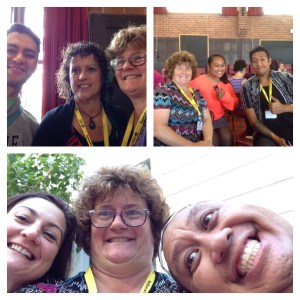
Teachmeetnz : @Juliet_Revell @timoslimo @hunch_box @AKeenReader @vanschaijik @heymrshay @taratj

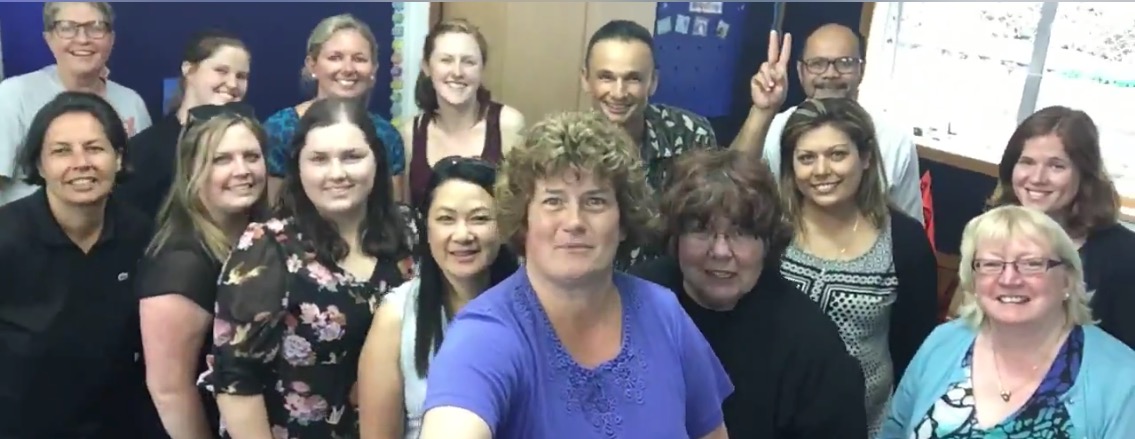
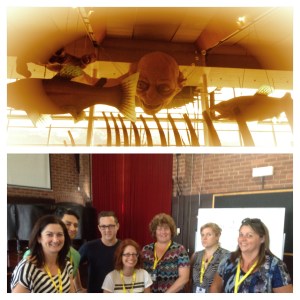
Philippa is one amazing educator who is moving fast in ‘edusphere’. Last year she presented with me on a TeachMeetNZ session and later on we were both on the steering committee for edchatnz, then she was was selected to be a Coreefellow 2015 intake. Now she is part of the Mindlab team and is sharing her passion about Design thinking and learning. That is her in the middle of the #TeachMeetNZ photo that I always try and gather at events.

However as an experienced teacher sometimes we attend events to offer support but can come away with so much more. That was me.

First of all I was able to visit St Mary’s College and having been a Director of Religious studies for most of my teaching career, I was able to see the visual evidence of the special character of the school. I loved the way that the main organiser Paula opened the session for the day as all catholic schools open special events with a prayer. I especially loved that she proudly did so in Te Reo. She delegated the blessing of the meal to another delegate.

The second highlight was catching up with the fabulous #TeachMeetNZ educators. I always watch how they are getting on and have a real sense of pride in seeing them. I was able to chat with the upcoming presenters such as @Jackbillie35 and @steve_katene and find out more about them and their interests and tag a new presenter for an upcoming session.

The third highlight was having a chat with Tim about the Pond developments and hear him mentor a new ICT Lead teacher in ensuring that systems are in place before purchasing devices. This reminded me how much I still need to mentor staff at my school about pedagogy before the tool and continue to encourage them to share their practice outside of our school bubble.

A further highlight was leading a SOLOtaxonomy session. Totally off the cuff and totally exciting because we had recently had Pam Hook work at our school and we revisited the why and the how of SOLOtaxonomy. Therefore I was able to share with the interested delegates some of what I had recently heard from Pam. I think that my mentor Ginny would have been proud because I even showed them how to create a rubric using the generator from Pam’s site. However on reflection, I did not start with a rubric. I did use the hand signals to indicate a shift in thinking. I also used the hand signals to identify teachers whose thinking was strong and encouraged them to lead a discussion at their tables because the group was so big.

IMG_0289

I attended other sessions too and took away much in the discussion. I was able to make connections with heaps of new educators, introduced a couple onto twitter, and unfortunately could not attend everything. So I do look forward to reading other blogs about the educampwelly event. For example here is Leanne’s reflection. @fivefoot3

Finally you have no idea how excited I was to meet Drew @phatnesian and Victoria @vtofilau. They are other Samoan educators who also attended on the day. We chatted in Samoan and generally basked in the glow of finding each other as I know from research how few and far we are in the education system.

IMG_0285

To finish up with I love freebies. As educators we often spend on our own professional development and it was such a fabulous gesture of Coreeducation Wellington team to sponsor our lanyards. This helped us put a twitter handle to a face. They were there too and helped with registration and helped problem solve the WIFI.

To the N4L team who put on the pizzas for us hungry people. This enabled us to stay back and chat because during the packed day there were so many exciting sessions that just having the opportunity to chat and catch up with each other is also such an important part of educamps. Thank you too for this. You remember what it is like as teachers to attend events and knew exactly what you would do if you had the chance to support.

Now Fiona, educamp mama you were not here physically but you were here on our lips, in our minds and in the odd tweet you were tagged in and responded to.

So for all of the delegates who attended, have you fulfilled the criteria for earning your digital badge? To help you, here is the twitter list from the day. Have you joined the educamp group on google +? Here is the link.

Have you taken time out to say thanks to the amazing welly_ed team who put together this fabulous event for us? What are your plans regards running your own collaborative event? eg: I have one coming up #TeachMeetNZ meets #Science hosted by Cath.

Lastly have you recorded your reflection of the day and have shared it in a public way?

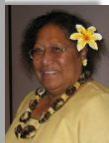
Aufaga Faimai Tuimauga

Ua ta le logo o le aogoa i luga. Ua valaau lenei faiaoga e sauini i lana aoga fou. Faimai, ia manuia lou malaga ma e fetaui i le Pule muamua. Alofaaatu uso.faimai

I was sad to hear of the passing of a dear colleague from many years ago. My friend Pati emailed me the news this morning.

What I know about Faimai is from the years we worked together as part of the Ulimasao Bilingual Education Association.

I located this page that she helped create and you can see even then, she was keen to learn how to use the tools for broadcasting. This page was was first created in early 2000 and each year the steering committee had to update their own page, which she did.

What I remember of Faimai was laughter. As in a belly roar that was totally infectious. In addition she was a doting grandmother, a fabulous dancer, connected and knew everyone. She was able to fill a hall with people if we were fundraising.

She was fiercely proud of her grandchildren and proud that they were bilingual. She would correct my Samoan if it needed correcting but would do it in a positive way and usually with one of her belly laughs. She adored her husband Toleafoa and he adored her. This could be seen by the way they treated each other.  Below is the page she maintained for her Ulimasao Profile.

Name: Aufaga Faimai Tuimauga

Employer: (MOE in 2006)

Position:Position: AUSAD Pasifika Bilingual Education Cluster in Mangere

Coordinator/Facilitator

Association: Ulimasao Bilingual Education Assoc. Inc. N.Z.

Office Bearer: Education Advisor

ExperienceOver 20 years of teaching and involvement in education both in Western Samoa and Aotearoa/NZ. Taught at Viscount School Mangere, Redoubt North Manukau, Mangere Central Primary, Aorere College,

Part time Lecturer – Auckland College of Education

Language Advisor: AUSAID Project with Macquarie University Sydney Australia- Project between the Government of Australia and the Government of Samoa, key supporter and assistant facilitator for Schooling in Mangere project 1995, initiator of the community development towards Ulimasao development, organiser of the Samoan teachers’ educational trip to Western Samoa in 1993,

MOE project: Know How Resource: Implementing the Technology Curriculum,

Director: Pacific Island Auckland Initiative [Participation in Early Childhood]

Member of the Pacific Island Advisory Group in the Ministry of Education, involved with the development of Unit Standard and NCEA, Coordinator: Secondary Teachers Professional Development project, Manager & Presenter: MOE Radio Education programmes in Auckland

Education/Qualification:

  • MA (Applied Linguistics) [Hons]
  • Dip in Education of Students with Special Teaching Needs (STN)
  • Dip. English Language Teaching (ELT)
  • Adv. Dip. Teaching
  • Higher Dip. Teaching

Sports/Interest: Dancing, Socialising, Being a doting Grandmother


Teacher Only Day Part 2 #SOLOtaxonomy

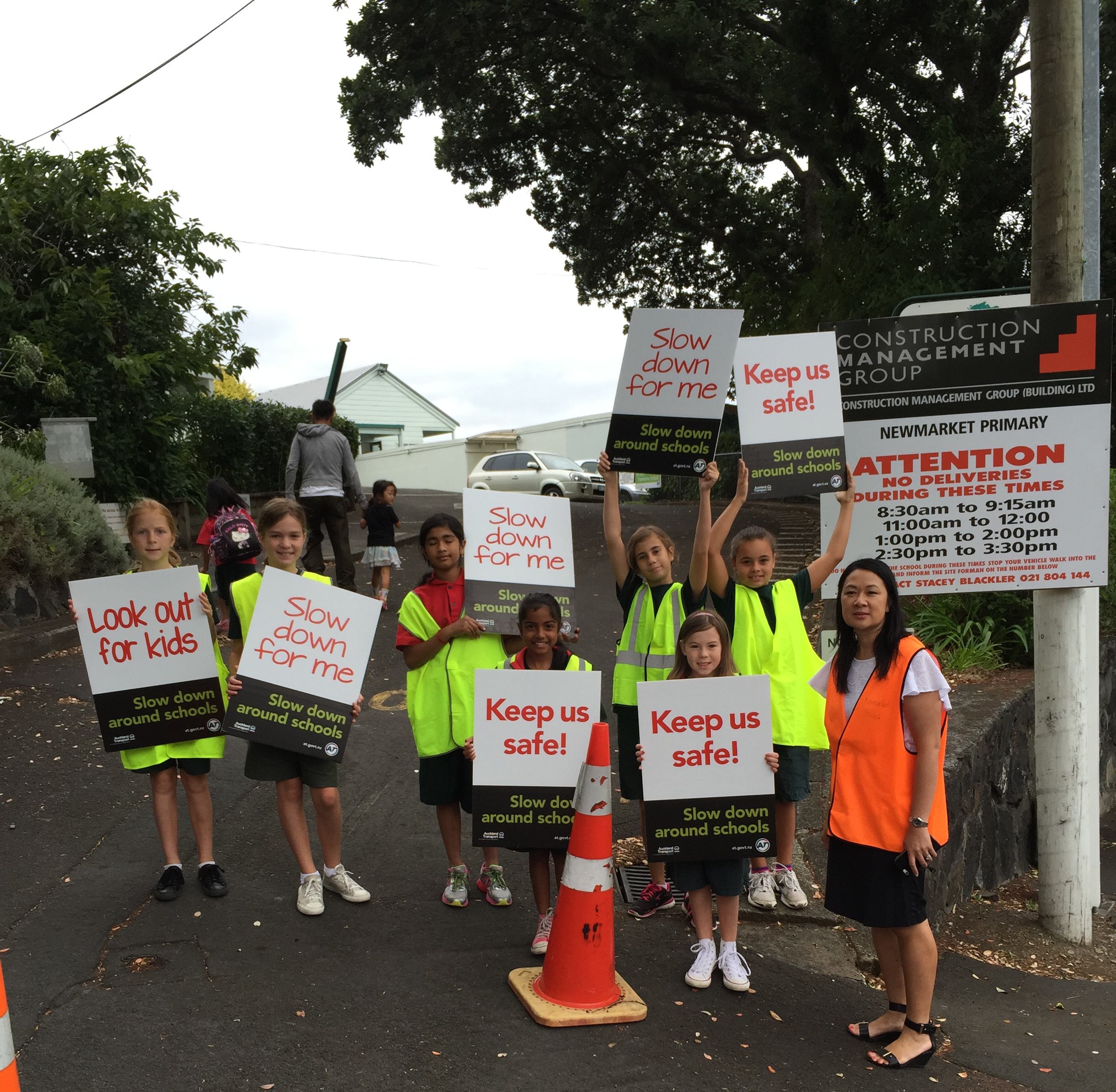
travelwiseUnder the leadership of Virginia Kung, our assistant principal, Newmarket School are trialling the New Zealand Transport Agency Resource Road Safety, Everyone is a Road User.

According to Pam Hook, “Students need a context where they have a voice and feel like they belong, matter and can make a difference. These road safety education resources are designed to enable students’ agency as active citizens so that they contribute to a safe road network. Students are encouraged to seek community-based solutions to help road users experience safer journeys. This focus aligns with the New Zealand Curriculum vision for young people to be active participants who contribute to the well-being of New Zealand.

Just from this paragraph alone I am excited because I am Newmarket School’s Travelwise Lead Teacher. It is like a whole pile of events are aligning. Pam Hook came to school and ran a teacher only day for us about the resource and refreshed our thinking around the use of SOLO Taxonomy.

artichoke

Pam, aka @arti_choke, began our session by explaining the use of SOLO Taxonomy in our teaching and learning. If you are looking for resources or a definition on SOLO Taxonomy, then visit her site  http://www.pamhook.com/.

Pam reminded us about loose ideas, connected ideas, extended ideas.

The tool is agnostic in any curriculum area.

Single strips for SOLO is a great way of clarifying understanding and use of SOLOTaxonomy.

Single SOLO line

See, Think, Wonder

http://www.canterbury.ac.nz/spark/researcher.aspx?researcherid=1104322

Pam then shared the New Zealand Transport Agency Resource Road Safety, Everyone is a Road User.

We discussed some learning ideas such as:

  • How much space is taken up by parking.
  • Compare parking spaces with the space for learning
  • Sequence morphing from a driver to a pedestrian. (Typical Pam approach- thinking outside the square.)
  • Wicked problems map (Already in the project)
  • Use google maps to take a snapshot of the area (I am using this idea.)
  • What would happen if the road was not there? (Never thought about this)
  • What does it make you wonder?
  • What questions would you ask Gillies Ave? (Personalise the road, love this idea)
  • Invent the design of the new road. (this idea I am already using)

Situational Awareness is when you are aware of all that is around you and this is one concept I will add to my global project proposal. For me situational awareness happens when Pam Hook runs professional development at our school. Our senses are heightened and our professional discussion and learning deepens. The following weeks has a hive of SOLO based learning happening. One of the challenges is sustaining the buzz that always follows Pam Hook sessions.

Where to Next:

Newmarket School would benefit from exploring what we mean by ‘student voice’. Is student voice a gathering of student views through surveys or focus groups, or is student voice when students actively participate in school decision making. How well do we as a school promote student leadership and students being in charge of their learning? How do we as a school explicitly show that our students have a voice?

This year I wish to investigate what student voice is and the impact that this might have on learning.

One way of doing this is via a planned Flat Connections global project led by our Travelwise leadership team where we are focus on on being Participatory Citizens.

The plan for this project is that the Travelwise student focus group will be actively involved in decision making. They will practise self efficacy by being in charge of their own learning. They will gather student views through surveys and communicate their findings school wide, nationally and globally. They will think critically about information and ideas and reflect on their learning.

They will do this by investigating a wicked problem in our community.

Through this our student will collaborate with other student focussed groups nationally and internationally and devise a solution that benefits future generations. By using the New Zealand Transport Agency resource I will refine the global project further.

Basically our global project is about our students being involved in local council planning decisions that affect their health and wellbeing. Students will have  opportunities to develop leadership, self efficacy, and resourcefulness while participating with others within a high‑trust culture and through a stimulating curriculum.

Through carrying out this inquiry I want to further strengthen my understandings about student partnership and students’ ability to make and take accountability for their own choices so they can actively contribute to school life and their education experiences. This learning aligns against the Registered Teacher Criteria, RTC 08: teachers demonstrate in knowledge and practice their understanding of how ākonga learn.

Reading Eggs

eggs

http://readingeggs.co.nz/

Reading Eggs Class Management

Date:Thursday 19th February @ 3:30pm

Today I attended a webinar on Reading Eggs Class Management. The session was valuable as it allowed me to see reading eggs fuller features because we were led through the system.

The webinar showed us how to manage classes, monitor student progress and how to access teacher resources.

Some of the learning I experienced included monitoring student data and how this can be exported into a spreadsheet and used as part of data gathering. I liked seeing the teacher resources and a whole world opened up for teaching reading. I was particularly interested  in reading express and saw 1700 ebooks available in the Library which is perfect for our chromebook chromebooks and the iPads. Here you can search for titles and authors.

http://student.readingeggspress.com/library/landing

At the beginning of the year resitting a placement test is advised if you are a little hesitant at the previous years data.

Reading eggs Ages: 4-7

 Reading express Ages: 7-13 years

Assignments can be set so that students must complete the set task before they can complete any online activities. The children can compete with their friends using Reading Express.

Gathering of data

The system also gives you your student data so this is another tool to monitor progress with.

So what is Reading Eggs?

Reading Eggs as a unique online world where children learn to read. Self efficacy develops as each child learns through one-on-one lessons that allow children to progress at their own rate. Motivation is increased as the students enjoy learning using the competitive tool. The children enjoy learning how to read using reading eggs.Second language learners particularly enjoy the programme as the tool is intuitive to their ability.

However the greatest learning happens when the teacher is monitoring and using the tool more than just as a filler activity while they are teaching reading.

Where to next: I think I would like to trial an intervention strategy using reading eggs with my ESOL children to see if this learning system makes an accelerated difference in my student’s literacy achievement.

Teacher Only Day Part A

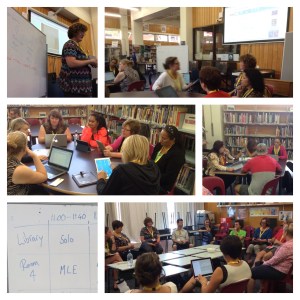
Below the visuals show how our professional learning day evolved.

TOD1

First of all Wendy showed us around the school and explained some of the changes that had taken place over the holidays.

Then Roger took us through some sample fitness activities that also developed team spirits.

We had Charlotte Rawcliffe demonstrate the PaCT Tool, Maths Model.

http://assessment.tki.org.nz/Progress-and-Consistency-Tool/The-PaCT-frameworks/PaCT-aspects

The session was an introduction to the PaCT tool. We were shown how the tool can give a clearer idea of identifying where the children at at with mathematics.
We had a session with Belinda who explained to us how to teach empathy.
She had curated a range of sites for us to look through.
Then Ginny and Eileen took us through the expectations for our school.
I spoke about citizenship and had the teachers contribute their ideas via a padlet.
After lunch, we had Erica Soman from Fine Young Artists teach us a workshop about colour.
Workshop Two: Discover Colour

We learnt about mixing colours using chalk pastels. Then we drew a cube and used colour to accentuate depth, use of light and the horizon line.

I enjoy teaching art and I hope to have the opportunity to use the chromes or iPads for creating art.

Probably the highlight for me today was learning with an amazing group of people.

Participatory Oriented Citizens:

In October of 2012, I attended Ulearn as an attendee. From the flood of information that washed over me I set two goals.

The first was to run a TeachMeet in New Zealand using Google Hangouts to provide a space where teachers can share their stories. That goal has eventuated and has grown into a curated resource for education that currently has over 70 teacher stories in 3 minutes.

The second goal was to to have our children collaborate on a Global project. This second goal is drawing closer. This year a school global project will be launched that was developed as part of my #FlatConnect Global Educator outcomes.

In the past we have coordinated and run two global projects and have taken part in a few others. Our coordinated projects involved hosting an author in the hot seat. The first session was hosted face to face at the National Library and we hosted Sandra Morris. We had six New Zealand Schools involved and one came in via Skype. Most of the asynchronous communication took place via email. Except for two teachers via twitter. During the global event we used synchronous communication such as Skype and the children used the ‘author in the hot seat forum’ on Superclubsplus to ask questions of the author.

The following year in May 2012, our children took part in a Global Project coordinated by the BBC. You can read more about that here. The asynchronous  tools used were email and youtube. Later that month we ran anothercoordinated global session using Superclubsplus and this time directly from our school. We hosted Ant Sang, kiwi graphic artist extraordinaire.  The story was featured on TKI as part of the Snapshot For Learning series. The link can no longer be located so have added the link to the shared doc used to create the entry. Virginia Kung our assistant principal was the driving force behind this project as part of her inquiry and I coordinated the tool supporting her. Again our synchronous tool was the ‘author in the hot seat forum’ on Superclubsplus. Note here, Superclubsplus is now known as Skoodle.

Where to next? 

As 2015 begin, I think about how our next global project will eventuate. As a Travelwise school with a focus on reducing traffic at the gate, we will take a leading role in this Flat Connect global project and this time I want the children much more involved at the connecting, collaborating, creating and sharing process. I have observed some of the global work we have been involved in and have led and have identified the one offs. Using SOLO Taxonomy this is multistructural in thinking and in order to move to relational thinking we need to create learning experiences that last longer than a one off synchronous session. The skype in the classroom our students were recently involved in was another example of these one off sessions. I regard these one off sessions like a tourist hopping on and off the bus. ‘Stop, take a photo- here is the evidence I have been here and taken part.’

At Newmarket School the #FlatConnect Global Project Travel2School for children will focus on students as participatory orientated citizens as framed by Westheimer and Kahne’s (2004) conceptions of citizenship. We will unpack what this means by identifying responsibilities such as.

    • take skilled and active role in groups that work for the common good
    • know effective strategies for collaborative action

Connections between students will be more than a one off communication session. Collaboration between students will involve students working with others outside their own schools. Across schools an artefact will be co-created that will make a difference to school communities. The students will celebrate learning by globally sharing and reflecting on their part in the process. Underpinning this project will be citizenship. You can read how my thinking is evolving around the term citizenship here.


References

Routledge.Westheimer, J. and Kahne, J. (2004). Educating the “Good” Citizen: Political choices and pedagogical goals. American Political Science Association