Teacher Only Days- reflection

IMG_3024.JPG

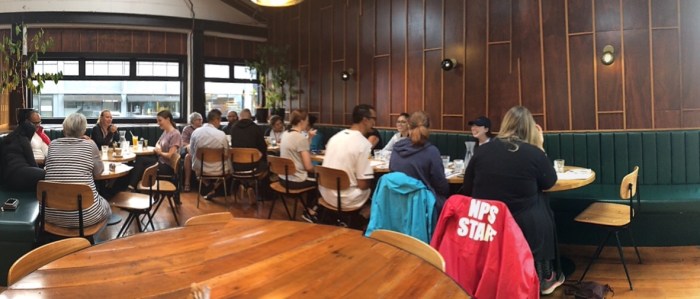
Each year at Newmarket school we usually begin the year with teacher only days. I have been at a school that had them at the end of the year and both times have positives and challenges. This time I was ready for some learning because I have been really busy with family and my garden during the summer holidays. Usually I read heaps in the holidays but this vacation I have not done as much. Below is a summary of what I learnt


Emergency procedures

As a school Wade Harrison from RED Consultancy,  helped us revisit our ‘Emergency procedures’. We began the new year with several new members and so it was timely to go over Planning and preparing for emergencies and traumatic incidents.


PaCT Tool

Three years ago together with several members of staff, I attended my first training with PaCT at the Ministry of Education Symposium held at Ellerslie. Last year our ISL created a Hapara space on our Staff Workspace to guide teachers in using PaCT with mathematics. You can check that link here. The PaCT section is green.

This week we had Nadine Sorresen from evaluation associates run a days professional learning with us using PaCT.

The session with Nadine was just in time learning for me. She took us through the power of PaCT and reminded us about its interrelationship with the Learning Progression Framework.

To explain it simply PaCT is the engine that unlocks algorhythms when we make Overall Teacher Judgements using the Learning Progression Framework.

The Learning Progression Framework Illustrates the Curriculum visually.

Three key words from PaCT to know are

  • Aspects
      • Aspect are the big ideas within each curriculum areas.
      • Some aspects have smaller sets and this indicates smaller increments.
      • The aspects cover learning from Year 1-year 10.
      • They do NOT Correspond with curriculum levels and do NOT increase year by year.
  • Sets
      • Sets are within the aspects and break down those big ideas into smaller increments of learning.
      • Help with decision making as illustration examples are wide and varied.
  • Illustrations
    • Are visual examples of learning at each level so that as teachers we can track and confirm our judgement before using the PaCT tool to give a clearer picture.

Below are the Aspects we make Overall Teacher Judgement on

Writing across the curriculum

  • encoding
  • text features
  • vocabulary knowledge
  • think and organise for learning
  • communicate knowledge and understanding
  • literary purposes
  • influence others

Reading across the curriculum

  • processing system
  • text structure
  • vocabulary knowledge
  • reading critically
  • organise ideas and information for learning
  • using information and ideas in informational texts

My Takeaways

  • All of the Illustrations within a Set weights the Aspect.
  • PaCT does not happen at one sitting but as evidence is gathered over 1-2 terms across the curriculum. Nadine spoke about Naturally Harvesting.
  • Several week before confirming the final indicator within a PaCT a teacher can see where gaps still need to be gathered from.
  • PaCT works well when completed twice a year and is ongoing annually
  • PaCT can be anniversary collated for our year 1-3 reporting cycle.
  • Teachers can track progress of
    • Individual students
    • Class
    • or other groups

Overall PaCT supports teachers to understand how students develop their expertise in learning. Currently PaCT is set up for Reading, Writing and Mathematics.

As we naturally harvest learning we look across curriculum for evidence to help us make our overall teacher judgement.


Belonging

Last year I worked with a group of students to look at planning for 2019.

Together the children came up with the overall theme of Belonging.

We used SOLO Hexagons to clarify thinking around what we believed to be important ideas for learning. The children wanted to know more about our local history and wanted to know stories about our school and area.

As a school we were fortunate to make connections with Pāora Puru from the Ministry of Education who was then invited to share his historic knowledge about our Maunga, Maungawhau.

As a staff we were going to have the session on the mountain itself however the weather had other plans. So Pāora came to school. Pāora helped define what is unique and distinctive about Auckland.  We garnered information not just about our local area but the whole of Tāmaki Makaurau. He shared rich historic heritage. This heritage reinforces our sense of belonging, our identity as Aucklanders and a sense of pride in our beautiful city.

As a green gold endorsed school this learning enriches our knowledge and pride about our environment.

During his session we had two visiting teachers from Parnell School who are working alongside us as a Green Gold Endorsed school. In addition we had Nicky Elmore our liaison from the Auckland Regional Council.

I cannot wait to share some of the stories I learnt with our children. Every two years we visit our local marae of Orakei and this year is our year so again there will be more to learn and to share.


Teacher only days are usually days of professional learning. At Newmarket School I always enjoy them because of opportunities that are created to make connections with each other. Our Senior Leadership team always ensure that we are well fed and watered both physically and mentally. There are always next steps through Goal Setting and that will come soon. These days give us the chance to reflect on what is coming and to set in motion ideas and opportunities for learning.

This year I am in class with a beginning teacher, I have our support staff programme to oversee and coordinate, I will continue to look at the trends in our ethnic and learning data, I have my across schools role for ACCoS, and I will continue to support the staff wherever I am needed.

I have had a good break and feel refreshed and excited for the new year.

Message for my son

49344879_504627990028343_3774369302119972864_n

Photo by Margaret

O le a lou manatu i le uiga o le savali i le pogisa faaleagaga?

What do you think it means to walk in spiritual darkness?

One word for 2019

Wairuatanga

Mā te whakapapa tūhonotia ai ngā mea katoa, whai māramatanga ai hoki ngā kōrero atua, kōrero tuku iho, ngā hītori, ngā mātauranga, ngā tikanga, ngā āria me ngā wairuatanga ki tēnā whakatipuranga ki tēnā (Te Ara 2015). / Whakapapa binds all things and clarifies mythology, legend, history, knowledge, customary practices, philosophies and spiritualities and their transmission from one generation to the next.

(Maori Dictionary)

Every year, I think of a Maori word that I hear in my educational context but do not really understand. I take that word and find out as much as I can about it to deepen my understanding. This year my one word is Wairuatanga.  In Samoan the word is ‘Faaleagaga.’

Last year, I learnt to use my Samoan language to help with unpacking Maori concepts. The challenge I have is that I am not of Maori blood. However I am Samoan and historically we share ancestors and traditional spiritual practices that are intertwined with our environment.

When I refer to the introductory statement in Samoan I think back to Fanaafi, when she wrote:  ‘A leai se gagana, ua leai se aganuu, a leai se aganuu ona po lea o le nuu.’ When you lose your language, you lose your culture and when there is no longer a living culture, darkness descends on the village.

Yesterday at my nephew’s wedding, my eldest son shone a light on our Samoan culture as he proudly stood up in his ‘ie faitaga’ and his ‘ofutino elei’ wearing an ‘ula fala’. He had been practising a translation in Samoan to say at the wedding. And he did it. As a Samoan mum, I could not have been more proud. He had also made some Ula Lole and made a big fuss with presenting them. The couple received 2 strands each and one strand had $10.00 notes in between. So if you can visualise this very handsome young man calling ‘Tiuhoo’ and racing up before the ceremony began to present his gift. Behind the couple we faced the beach so Tagaloa was our backdrop. In front of the couple the ‘Uo ma Aiga’ had gathered and were seated. So we have all the next generation witnessing something like this for their first time and therefore the transmission of a practice. Around us we have our ‘Faalupega’ both living and deceased so there is live history happening.  

At a wedding, the focus is always on the newly wedded couple. However if we dig deeper we can see the occasion as an opportunity to revitalise who we are, make connections to our past, our ‘gagana’ and our ‘aganuu.’ The chance is there to do something about ‘Wairuatanga’. If you just think about it,  the moment to act is soon gone.

The backdrop of Tagaloa is a timely reminder too to act. The wedding allows us the opportunity to reflect about what we say and do. Tagaloa and who we are as Pasifika are so intertwined. As inhabitants of the Pacific Ocean our islands are drowning in plastic and so the reminder is there to look after our natural resource.

So my son our customary practice of gifting ‘Ula Lole’ does need a revamp. Maybe our next ones do away with all the plastic and we just weave money into natural materials. As we sat making them you and I discussed how creating these gifts sets a benchmark for the next wedding in your generation. So let us take up the challenge together and see if we can create something just as stunning, but with a lot less plastic. At the same time, hold your head high. As a young man, you already have all the qualities we hold dear. Your knowledge of our legends, our family history, our customary practices, philosophies and ‘faaleagaga’ holds you up as a light in my heart.

SOLO Taxonomy and reflecting

Yes I know multistructural as in have just listed my reflections. However I am OK with that. So far I have had a lovely break. Caught up with family.

Been riding the busses with mum and that is always heaps of fun. Slept in most days past the dreaded 5.30am alarm.

Major life events that happened over the year;

Notable challenges or mistakes;

  • Lost and regained weight
  • Letting go by building the expertise around us
  • Was really sick
  • Took on Travelwise again for my 7th year.
  • Both boys shifted away
  • Did not escape to Tiritirimatangi because of tooth.


Notable successes.


Parent Engagement and Participation

Whanau.png

I learnt how to use this fabulous tool on youtube where the transcript can be extracted. Earlier this week our Across School Leaders in the Auckland Central Community of Schools (ACCoS)  presented their years work as a short video. I exported the transcript into a spreadsheet, removed the times, copied and pasted the text into a doc and then created a word cloud using https://voyant-tools.org.

What came through strongly in the key terms used were agency, teacher, student and school. Other words to be expected were learning, leaders, professional, collaboration, feedback.

However the word I would love to see appear was parents. But this was not. I know in our  Pāngarau/Mathematics  Initiative which I led, we had parents as one of our key areas.

As we move into 2019 I wonder how we can include parents and whanau more into what we do as school leaders. Our initial achievement challenge document included this key area and we fought to have it included and passed for our ACCoS but it seems to have fallen under our headlights.

Maybe each initiative can include our parents and ways to include them as one of their goals when they create their Action Plans for next year.

Again I am looking at this from a leadership view across our schools  but as I dig deeper and push right down into our professional learning groups within schools or PLGs, I wonder what their improvement plans look like and if parents even receive a mention.

We are so much better at focussing on our agency with our children and now our teachers. Maybe it is time to also highlight agency with our parents and families. By stressing a focus in this area, a greater consciousness will be raised of the importance of parents and whanau in their children’s learning.

What are your thoughts? Do your parents and whanau feature strongly in your Action Plans in your Communities of Learning. Can I see this if I search for it?


Ulearn 2018

ulearn

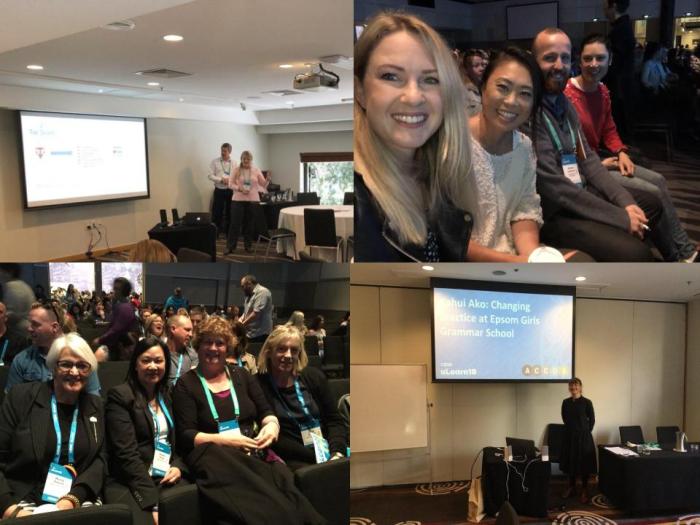
This Year I attended Ulearn 18 with several colleagues in our ACCoS Kahui Ako. 

Ulearn is CORE Education’s annual professional learning conference.  The conference is suitable for teachers, facilitators and school leaders alike, from early childhood through to tertiary.

CORE set up a space where we have access to plenary speakers Bios and Graphic Sketches that were created during sessions.

This blog post is a summary of those presentations with links if you want to explore these further.

Each conference gives us access to international speakers. Often I hear inspirational plenaries and I am always super excited to see our own educators take the main stage. I believe that here in New Zealand we also have world class stories to share. This year there were three plenaries who were varied and all had the same message about the importance of humans being at the heart of decision making.

On the first day we heard Hana O’Regan from Aotearoa. Hana asked us to tell stories, stories that have not been told. Stories that were not allowed to be told in the past. She questioned the negativity within stories from our cultural legacy that our ākonga are hearing and described their potential impact on young Maori. Let us “be brave” (Hana’s words); we must reflect on the cultural narrative that is shared in our classrooms and positively override the stereotypes by telling the stories that count. Here you can read more.

On the second day we listened to Pasi Sahlberg from Finland and who is now based in Australia. Pasi reminded us about the power of small data: tiny clues through personal observations, collective human judgment, and raw instinct that can lead to big change in schools. In order for big data to work we as educators have to contribute small data to contribute to our school’s big data. Lead and think with small data first, then use in conjunction with the rest of our skillset and Big Data.

Pasi iterated that rather than develop and agree to systems that put even more emphasis on screen learning and can truly mine data for Big Data, we should be pushing for ‘face to face, eye to eye, breath to breath to get a full understanding of who we are working with.’ Here you can read more.

On the final day we had Mike Walsh beam in via hologram. Mike discussed a reality where we cannot avoid ‘big data’, analytics and ‘machine thinking’. We have to prepare our children and students for this digital world, where our services are more and more likely to be run through a digital platforms. The consequences of of big change are arriving in the world. We need to teach the coming generation about being comfortable with uncertainty / ambiguity and to be flexible in the face of change.

Mike sees great potential in digital tools, environments and artificial intelligence that can assist teachers and parents to help learners reach their own potential. In his view it will not be entirely digital or online, it will be a combination, the screens will be less visible but DATA and algorithms will be prevalent in informing decisions. Here you can read more.

The breakout sessions I attended.

There are links to the abstracts and any resources they shared. Also do follow them on twitter.

Removing specific barriers to access learning using assistive technology


Evaluating games for learning and teaching mathematics and the Key Competencies


Artificial Intelligence – New Zealand opportunities


Va‘atele: Creating reciprocal partnerships and digital translanguaging opportunities with Pasifika learners and their whānau


How to reclaim professional wisdom in schools by using small data


Kāhui Ako: Changing practice at Epsom Girls Grammar School


The importance of humans at the heart.

Ulearn conference is also the time when I reconnect with other educators from around New Zealand. I also have the chance to catch up with CORE Education efellows and hear what they have been sharing. If you want to know more, here is a link for the annual efellowship. It is now known as Dr Vince Ham Scholarship. Vince was one of the mentors for the efellows.

efellows

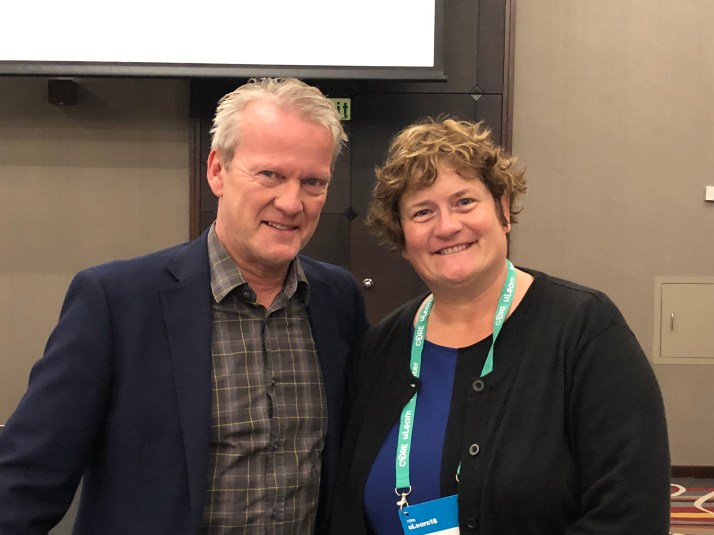
The conference is also time to connect with new twitter buddies via the hashtag #Ulearn18. I have to mention Tim Stevens @MrStevensAGSnz who quickly created shared docs of all the plenaries. It is time too to catch up with old friends such as Ritu Sehji @rsehji

Ritu

This year our Mathematics Team presented our initiative and work across three schools. For them Ulearn was a first time experience. I was super proud of them all and how together we collaborated to share our years work in one hour. To find out more you can check out the Mathematics tag on our ACCoS Blog.

Maths

Auckland central schools use collaboration to drive change in Pāngarau/Mathematics

Overall Ulearn is a time for connections, for collaboration, for sharing and for reflection. A reminder to share back with your schools what you learnt and a reminder to thank your school leaders if they supported your attendance. For us at Newmarket School I am always grateful for the opportunity that our Board of Trustees and principal provide by supporting our attendance at this national conference. They have allowed me to attend every year since I have been at Newmarket school. As we continue with our ACCoS journey I know that more principals within our Kahui Ako will also allow their Across School Leaders and In School Leaders to share our work with educators in and beyond New Zealand.

Big Data & the space between the numbers.


pasi.jpg

Thanks Laura for the photo.

In 2012 as a core education efellow I  researched Hyperconnectivity with the initial thinking that it was important to travel on the journey with our children to be as connected as we could possibly connect them. My thinking was that the more devices we could plug the learners into a variety of devices,  the better they would be in learning. However by the end of the year I realised how much more I needed to learn and found my thinking had shifted hugely thanks to several disruptive thinkers in education. These were names like Larry Cuban, Mark Pesce, Ulises Mejias, Sherry Turkle and of course our own Pam Hook who just kept asking the hard questions.

Search for them and you will find readings and videos that have a bit of a cautious educators edge to them. Here you can listen to my reflection as an efellow. From my learning I realised that what was not seen or could not be measured was just as important as the numbers. I changed my thinking to the human approach or as in samoa we would say Va Fealofani. In Maori they say Whanaungatanga. My twitter buddy Tahu wrote a fabulous definition here about whanaugatanga and included ‘Me hui kanohi ki te kanohi kia rongo i te mauri o te tangata!’ It is important to meet face to face, eye to eye, breath to breath to get a full understanding of the people we are working with.’

Since I have been an Across School Leader for the Auckland Central Community of Schools I have been the person with the big data focus. I love data so when I knew Pasi would be talking about data I was intrigued. Last year I had been invited to be part of the Ministry of Educations initiative, Student Information Sharing Initiative (SISI)  and I wrote a post cautioning about how we gather data as educators which has continued to guide me and my thinking around data.

We often need educators who force us to pause what is happening and zoom in a little closer and say hey, remember that the machines are fabulous however just a reminder “whose voice can we not hear?” During Ulearn I attended 2 sessions with Professor Pasi Sahlberg with a focus on data.

Those of you who know Pasi’s work will remember his works around GERM, Global Education Reform Movement. Pasi introduced me to fabulous educators in Finland when I decided I wanted to visit the country that was highlighting extraordinary Big Data results via PISA. You can read my journey here when I visited Juväskylä- the Centre of Finnish Education.

Next: What I took away from Pasi’s sessions.

Education Data in general is run by big big data educators.  Big data does things like data mining. But does big data really make education smarter?

How does big data help schools?  There are those that think that the more we rely on big data concludes the better our education will be.

However big data often fails educators. In order for that big data to work we as educators have to contribute small data. But is small data, smart learning?

Big data often uses schools as small data and schools use teachers and their data as their small data. So as teachers we collect small data to contribute to our school’s big data. But more importantly we should be looking at the best way of using that small data to improve our practice.

We have already identified the strategies that help shift learning. But is learning all about the data? Pasi say’s ‘As educators we should trust our raw instincts of what works. Be amongst what is happening- not just observing and monitoring.’

Alongside our learning data we should be focussing on the space between the nodes. The elements that cannot be seen or measured. These are relationships. Relationships with our students and family, relationships with our colleagues both in and beyond our schools, relationships with our communities both locally and globally.

Ethically, rather than develop and agree to systems that put even more emphasis on screen learning and can truly mine data for Big Data, we should be pushing for ‘face to face, eye to eye, breath to breath to get a full understanding of who we are working with.’

To finish with (Excuse the pun 🙂

Pasi leads by example and always shares his work freely. Here you can have access to his slides.

Thanks Pasi for the reminder about the space we cannot see but yet is just as important as the data gathering.


Timetravel to Canada

First Nation totem poles in Stanley park

With modern flights I left New Zealand on Saturday night and arrived in Vancouver on Sunday just after lunch.

I have always wanted to visit Canada because I had a pen pal who lived here. Mrs Dianne Di Sommer set that up when I was in intermediate. So Canada was on my bucket list. 

The trip far exceeded all my expectations. I traveled with my second sister and we left our eldest sister at home looking after Mum. 

One journey highlight was flying our national carrier and having a comfortable flight over and back.

In Vancouver we were able to tick off many to dos on our list. Such as the Capilano swing bridge where there was information about water conservation, visiting the First Nation totem poles in Stanley park to remind how closely linked original people are with the environment, the Vancouver Aquatic Centre where there was much information on the sad state of our oceans. 

The second day saw us experience an early snow fall on Grouse Mountain. Again reminding me how much we are a water planet. The variety of trees growing on the mountain was again a reminder of how much trees, mountains and water are all interconnected. 

We caught the aqua boat to Granville island and spend a couple of hours wandering the market place seeing and tasting some local produce. 

We were in one of the movie capitals of the world and they were just launching the International film month. 

We stayed at Sutton hotel, just a stone throw from Fremont hotel where ghost busters was filmed. The hotel was clean, quiet and very comfortable. The hotel was centrally located within walking distance from everything we needed. 

My impressions of Vancouver was a feeling of familiarity. The city was just shifting into the autumn season and so the trees were just starting to Change colour so there was yellows, orange and red happening. I looked out for the Anna Hummingbird but this trip was not to be. However my sister took great delight in teasing me about traffic signals that I had earlier on wondered which bird we were hearing. 

We came to Canada prepared for a constant drizzle as had been forecasted and yet, we really only had drizzle the first half day. The rest of our trip was dry and mild. 

Food

One cannot visit a new place without mentioning the food. 

We breakfasted at Bellaggios most mornings where we ate bacon and eggs and bottomless coffee. I was treated to a Mexican dish, Thai and my absolute favourite was eating Canadian Salmon at Earles served with rice and long stemmed broccoli. We finished off our meals with a shared slice of pumpkin pie. 

Being school teacher I had wondered if I could squeeze in a school visit. But for this trip I am glad I did not because the journey was really short. 

Those of you who know me, know my love of numbers. During my short visit I walked just over 67,000 steps covering approximately 44 kilometres. Most nights I slept close to 12 hours. 

Overall I had an amazing time. I spent time with one of my sisters. I was able to visit an amazing city and have a bit of a break from work. 

I forgot to mention. On our last day as we were signing out, a small party of First Nation people in full regalia were just leaving the hotel. I was super excited but restrained from getting a selfie because it just did not seem right. The man had claws on his hands and they both had on beaded national dress. I would have loved to find out more. But again maybe next time. 

Training tech to adult learners

People “… learn most effectively when they are responding to challenges that they know will directly and significantly affect their lives.” Malcolm S. Knowles

Poutama.jpg

Introduction

In Aotearoa New Zealand, Maori have a whakataukī about learning.

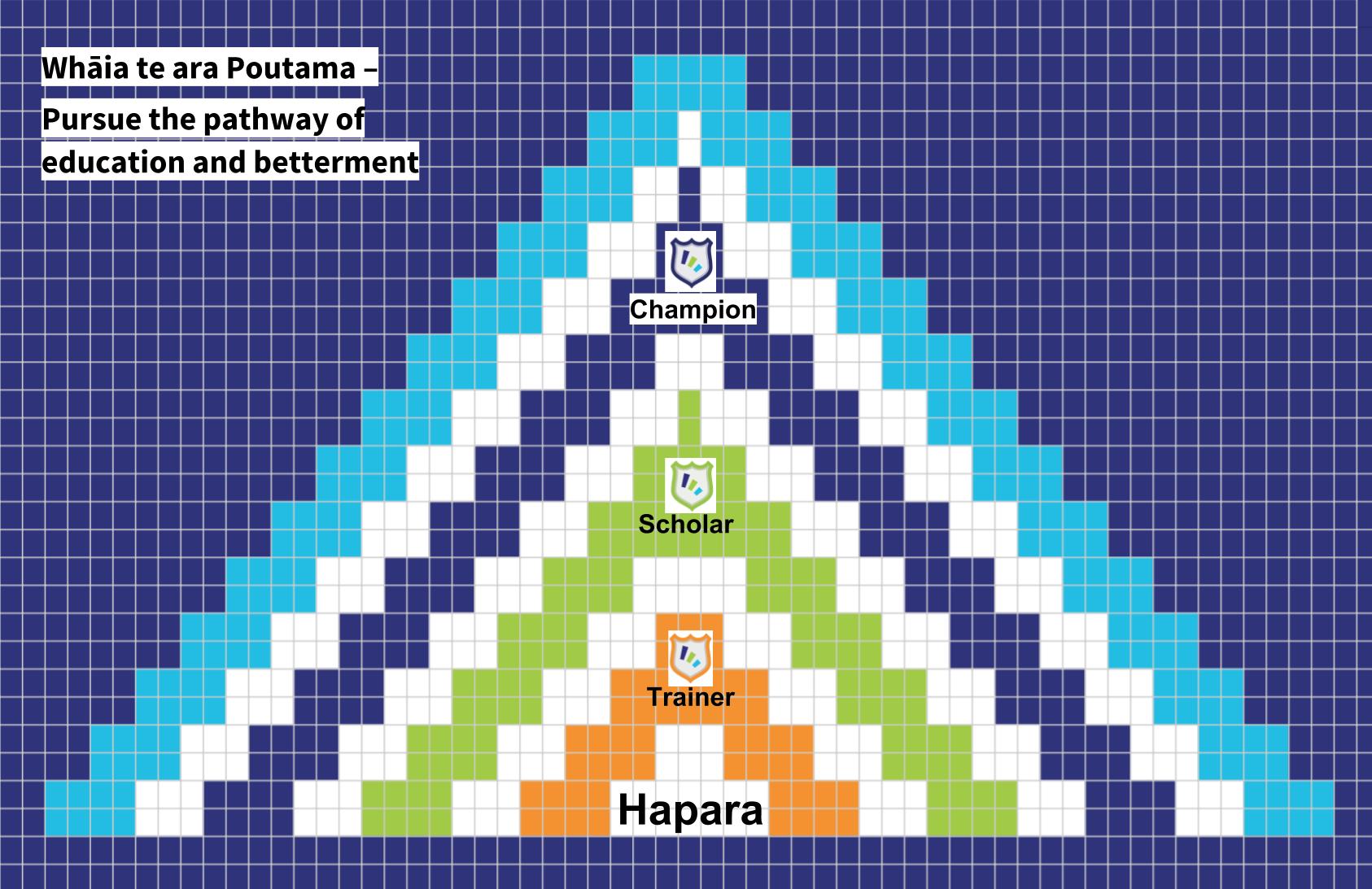
Whāia te ara Poutama – Pursue the pathway of education and betterment.

Poutama is the stepped pattern of tukutuku panels and woven mats – symbolising genealogies and also the various levels of learning and intellectual achievement. The pattern is often used in policy or in institutions to symbolise that learning happens in a scaffolded way. I have taken the idea and related it to my Hapara online learning this year. First I learnt what it was like to be a learner in the Hapara System and learnt how to work alongside  other Hapara Champions in the world to complete course work when undertaking my Hapara Champion Certification. Next I learnt about the role of the teacher in learning and I learnt more about the importance of pedagogical and content knowledge in the Hapara Scholar Certification course. Now I am learning about andragogy and how adults learn so that I may better cater for the teachers that I work with while completing the Hapara Trainer Certification.

My current assignment is to develop a philosophy around training tech to adults. However it has developed much more than that in me because as an adult learner I have made several links with my own learning and have made links with several online projects I have lead and been involved in. So in order to complete this assignment I have read several articles given to us on the course as well as searched further articles and videos to deepen my learning around adult learners. What follows is an unpacking of this learning. If you have time I would love to hear your thoughts about when you have worked with adults and let me know if what I have written is even close to developing a training teaching philosophy.

I am particularly interested in your thoughts if you are registered facilitator or if you are an across school leader in a Kāhui Ako. However maybe you might also have been at the receiving end of professional learning and can contribute some personal thinking to help deepen my understanding around adult learning.


Adult Learners Overview

As a course designer first and foremost is identifying the characteristics of the adult learner being helped and learn empathy for the learner by being an active learner too. Next, learn the subject well enough to enlighten the learner and learn the process of assessing the learners comprehension level. In addition it is important to understand andragogy which is all about how adults learn best and how different this is from pedagogy. Consideration must also be given to the stages of learning that happens as part of the process of learning. Finally as a course designer review previous courses and reflect on areas for change that better meet the needs of the adult learners.


Identify the characteristics of the adult learners

Pappas wrote about characteristics that exist (to some degree) in every adult learner and stressed the importance of understanding these especially in designing courses.

Adult learners are generally self-directed learners therefore learning needs to be structured in a way that lets them assess their progress at individual levels. Te Kete Ipurangi reminds us that “What matters most is not so much the form of the assessment, but how the information gathered is used to improve teaching and learning.”

Adult learners rely on their personal reservoir of life experience. For this reason learning needs to be immersive enough to compete with all the other distractions.

Adult learners are ready to learn based on a need so if the learner sees that they are making progress or learning something useful, then they will stick with it. One idea is to provide increments of learning in the way of digital badges such as can be seen in Digital Packbags or in certificates that acknowledge course completion.

Adult learners desire knowledge for immediate application and consequently  require deeper functional knowledge that can be translated into everyday use. A key strategy is using self help videos that can be slowed down, paused and re wound depending on the rate of learning.

Andragogy

Adults learn best when learning is focused on them, not the teacher.   Learning experiences should be based around lived experiences, because people learn what they need to know.  According to Malcolm Knowles, ‘Andragogy is the art and science of adult learning.’ Therefore andragogy refers to any form of adult learning.  There is an excellent video by Janet Finlay that explains andragogy and can be viewed here. The video compares andragogy and pedagogy as well as explains the six adult learning traits developed by Knowles in detail. Below four traits have been highlighted.

Adult Learner Experience: As a person matures he/she accumulates a growing reservoir of experience that becomes an increasing resource for learning.

Readiness to Learn: As a person matures his/her readiness to learn becomes oriented increasingly to the developmental task of his/her social roles.

Orientation of learning:  As a person matures his/her time perspective changes from one of postponed application of knowledge to immediacy of application, and accordingly his/her orientation towards learning shifts from one of subject- centeredness to one of problem centeredness.

Motivation to Learn: As a person matures the motivation to learn is internal.

The stages of learning

Mezirow, 1990 identified  transformational learning as  “The process of recognising, analysing and making deliberate changes to the assumptions that we have that cause us to think act and behave in certain ways.” Mezirow states that learning is a “process of using a prior interpretation to construe a new or revised interpretation of the meaning of ones experience in order to guide future action”. This type of learning occurs when one’s beliefs or “meaning scheme” changes due to new information and ideas. These changes may occur quickly, or take place over a longer period of time.

Identification of a Dilemma or a Crisis: The realisation that we had all along been holding on to wrong beliefs or that we don’t know what we should know is often a trigger to dig in and unearth information or review our mindsets and thought patterns. Not knowing or realising that we have the wrong information is a crisis that is deeply upsetting to all of us. You have to point out to your learners what they don’t know to make them curious about your course.

Establishment of Personal Relevance: This is the context or the answer to the eternal “what’s-in-it-for-me” question that inspires people and drives learning. The context can be personal, professional, or social, and you should establish it right at the beginning of the course to spike interest and reiterate it often to keep learners hooked. Adult learners are motivated to learn when they can envision the results of their efforts.

Critical Thinking: Adult learners are sensible, rational people with minds of their own. So it is important to create opportunities for critical reflection (premise reflection) to encourage them to re-examine their beliefs and attitudes.

When learners have the opportunity to sort through their feelings and thoughts and realise on their own what they need to shed or tweak, they will be more willing to accept and embed the learning.


Areas for change

Teaching adults is really about understanding that learning is about good teaching.

The more learners are actively involved, the better they learn. Words like self efficacy and agentic learner come to mind as well as ensuring that the task is as Hattie would say the “Goldilocks theory of Just right.” Good teaching is all about the learner being at the centre of learning and that the tasks are just challenging enough to motivate the learner forward.

Course designers must actively involve adult participants in the learning process and serve as facilitators for them. Treat learners with manakitanga which is respect, understanding, and genuine concern. Adult learners need to know why they need to learn something so ensure that there are well-defined objectives.

Adults approach learning as a problem solving and they learn best when the topic has immediate value. Therefore establish clear directions based on the adult learners needs.  

Adults learners learn experientially so  ensure that content is meaningful and transferable to the adult learners’ world. Adults learners approach learning as problem solving so provide opportunities for them to work together and to share their knowledge and experiences. Help adult learners to see their learning by providing incentives to earn badges, certificates and to reflect on their learning.  Also give them opportunities to give feedback to the sessions because feedback is a key action expected of all learning.

References

Finlay, Janet. (2010, May 17). Andragogy (Adult Learning). Retrieved September 28, 2018, from https://www.youtube.com/watch?v=vLoPiHUZbEw&feature=youtu.be

Graham, Steve. (2007, May 22). A Simple, Easy To Understand Guide To Andragogy. Retrieved September 20, 2018, from https://www.cornerstone.edu/blogs/lifelong-learning-matters/post/a-simple-easy-to-understand-guide-to-andragogy

Hattie, John (2008). Visible Learning: A Synthesis of Over 800 Meta-Analyses Relating to Achievement. NY: Routledge.

Mezirow, Jack. (1991). Transformative Dimensions of Adult Learning. San Francisco: John Wiley and Sons Inc.

New Zealand Ministry of Education TKI (n.d.).What is assessment for learning? Retrieved September 18, 2018, from http://assessment.tki.org.nz/Assessment-for-learning/Underlying-principles-of-assessment-for-learning/What-is-assessment-for-learning

Pappas, Christopher. (2018, January 23). Adult Learner Characteristics: 7 Key Points To Consider. Retrieved September 15, 2018, from https://elearningindustry.com/adult-learner-characteristics-key-points-consider

Van Schaijik, Sonya. (2018, April 22). Not too hard or soft but just right. Retrieved September 29, 2018, from https://sonyavanschaijik.com/2016/09/07/not-too-hard-or-soft-but-just-right

Mooncake 月饼 Yuèbǐng

moon cakes.jpgmooncakes2.png

Next week we celebrate Chinese Language week. My school continues to experience much change over the last ten years, particularly in the demographic makeup of the school. Our total Asian group has increased in the last decade from 43% in 2007 to currently 68%.  At present our biggest ethnic group is Chinese children who make up 26% of our school role and that number has nearly doubled in 10 years.  So particularly for them we celebrate Chinese Language week and this gives us the opportunity to find out more about our children, about their language and to learn something about their culture. 

This year Monday 24th of September is the celebration of the Moon Festival. Chinese tradition celebrates the moon festival as the culmination of harvest. This is when the moon is the brightest in the sky. The day is celebrated with family coming together and much preparation is undertaken with the food delicacies prepared. One of these is moon cakes or 月饼.  Making moon cakes is to do with the story of Houyi and Chang’e and story goes that moon cakes were one of Chang’e favourite delicacies.

I usually retell the following story of their love.


The story of Houyi and Chang’e.

Legends are like the shifting sands of a desert.

This legend is no different, and there are many versions. But this legend is special because it is retold by Newmarket School.

The Jade Emperor was ruler of Heaven. He had ten naughty sons. One day, they changed themselves into ten suns.

They burnt the earth from high up in the heavens. Unable to stop them being naughty, the Jade Emperor called for Houyi.

He was an archer known for being a straight arrow shooter. The emperor told Houyi to teach his sons a lesson.

Houyi, was a half god and was very strong. He came to Earth and saw its suffering with his own eyes. Everything was burnt and there was not much life, and the people were in pain. Houyi was angry.

So he acted. He took 9 arrows  from his bag and aimed at the hot suns. First one fell down, then another. In the end, nine of the Jade Emperor’s sons were dead. Houyi left only one sun alive, to give the earth light and warmth.

When he heard the news the Jade Emperor was furious.

He sent Haouyi and his wife Chang’e from Heaven.

The emperor took away all their powers. They were now forced to live on Earth like ordinary people.

The pair found human life hard. Houyi had a single wish. He wanted to return to heaven with his beloved wife. She did not need to suffer.

Fortunately, Houyi remembered that the immortal Old Mother of the West, who lived on Earth. She had a rare supply of medicine that could let them live forever. The hopeful archer left to find her. He reached her palace and met the Old mother.

When the Old Mother of the West heard the story, she gave Houyi two things. One was the medicine and the other was a warning. She told Houyi to share the medicine with his wife. Drinking half the medicine will let him live. The entire medicine will let him live forever and send him to the heavens. Houyi thanked the old mother.

When Houyi returned home to his wife Chang’e, she was very happy.

While her husband rested from his journey, Chang e could not resist looking at the medicine that he had brought back. She really wanted it and so she drank up all the medicine.

Before long, she felt her body grow sleepy, and she began to float into the sky against her will.

Because the jade emperor had banished her, she could no longer return to heaven. Earth was now beyond her grasp as well. With nowhere else to go, Chang’e drifted to the lonely Moon.  

She coughed and there was a little bit of medicine left. It changed into a rabbit.

She spent the rest of her days in the lonely moon palace with the white rabbit. She cried for her husband Houyi.

But he was had to live the rest of his days on Earth as a man. Chang e looked down on Earth and could see her husband with lots of delicious food waiting for her.

Now each full moon you can see Chang’e with her rabbit against a blossom tree calling out to her husband on Earth and hoping he is still waiting with a feast for her return.


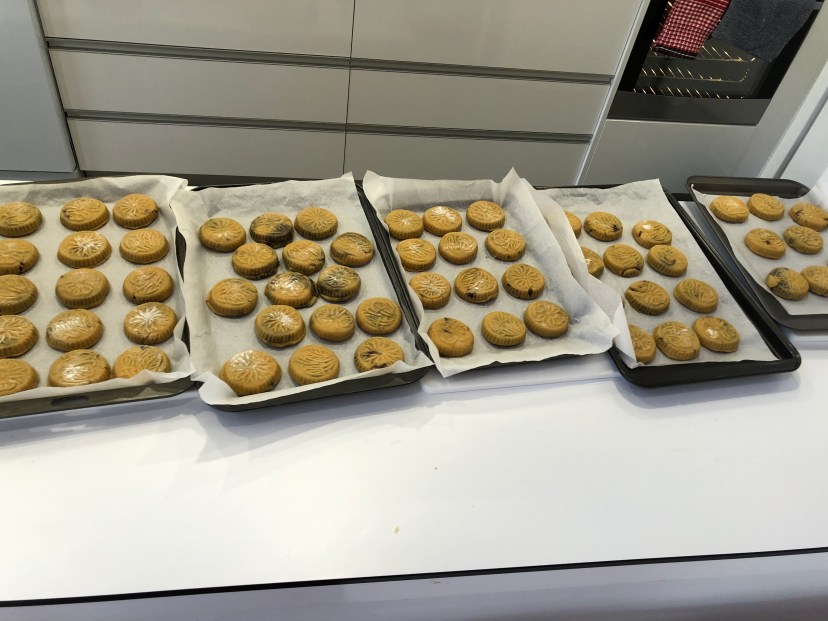
This year some of our fundraising leaders asked if they could make moon cakes and I agreed to help. So I thought I would share our recipe with you.  Our recipe has the sweet red bean paste filling  红豆沙.

How to make Moon Cakes

Equipment

Ingredients

  • 50 mls of Peanut Oil or vegetable oil.
  • 1 tsp of Alkaline water (I cup of water with 1 tsp of baking soda added.)
  • 140 grams of golden syrup
  • 1 teaspoon of vanilla essence
  • 200 grams of flour
  • Extra flour for kneading and to stop mixture sticking.
  • 500 gram packet of sweet red bean paste 红豆沙
  • 1x egg

Method

  1. Microwave Golden syrup until slightly runny. EG: 30 sec High
  2. Mix golden syrup with alkaline water and vanilla essence, mix well using a spatula.
  3. Add the oil and mix well.
  4. Make a well in 200 grams of flour in a large bowl.
  5. Pour in Golden syrup mixture and mix well (Mixture should look wet and sticky.
  6. Cover mixture with plastic glad wrap, leave for 3 hours or more.
  7. Knead the mixture until it is smooth and shiny.
  8. Divide the mixture into 4 even pieces.
  9. Then divide them into 4 smaller balls, about about 25 grams each.
  10. Roll them into balls and set aside on a piece of greaseproof paper.
  11. Roll the red bean paste into 35 gram balls ( A little bit thick and sticky).
  12. Flatten the brown balls so they are nice and thin. As you work the ball the oil is warmed by your hands and you can do this easily.
  13. Place a red bean ball mixture inside and pull up so that the red bean ball is covered with the flour and golden syrup mixture. Set these aside.
  14. Continue with the rest of the mixture until you have 16 balls.
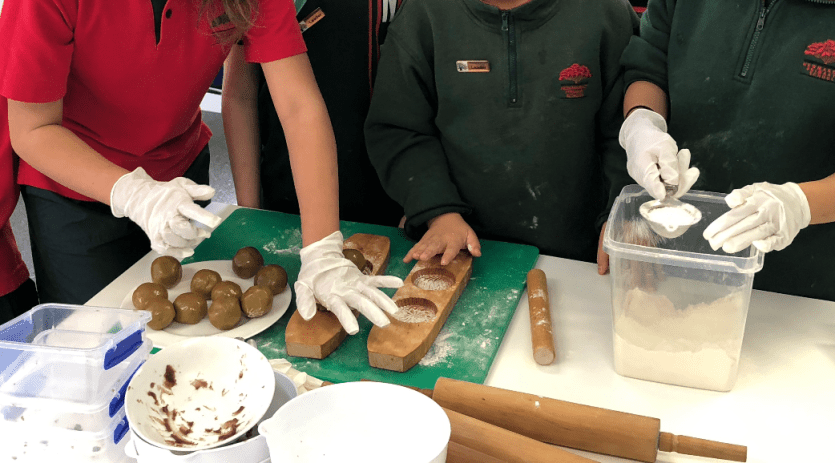
  15. Use a traditional mould, and brush on a little flour.
  16. Then press the mixture into the mould.
  17. Use your palm to gently flatten the top.
  18. Tap the mould against the table and the uncooked moon cake will pop straight out.
  19. Place on a baking tray.
  20. When they are all done, spray water over the cakes.
  21. Bake at 150C for 10 minutes.
  22. Take out of the oven and cool for 10 minutes.
  23. Brush on beaten egg and put back into the oven for 15 minutes.
  24. Take out, cool.
  25. They can be eaten immediately or put in a tin for a few days.

Time

  • I made the pastry skin mixture the night before. The next day it took us nearly 1 hour to craft the moon cakes. If you measure the balls well there should be very little left over.

The murmurings of an across school leader.

murmur.png

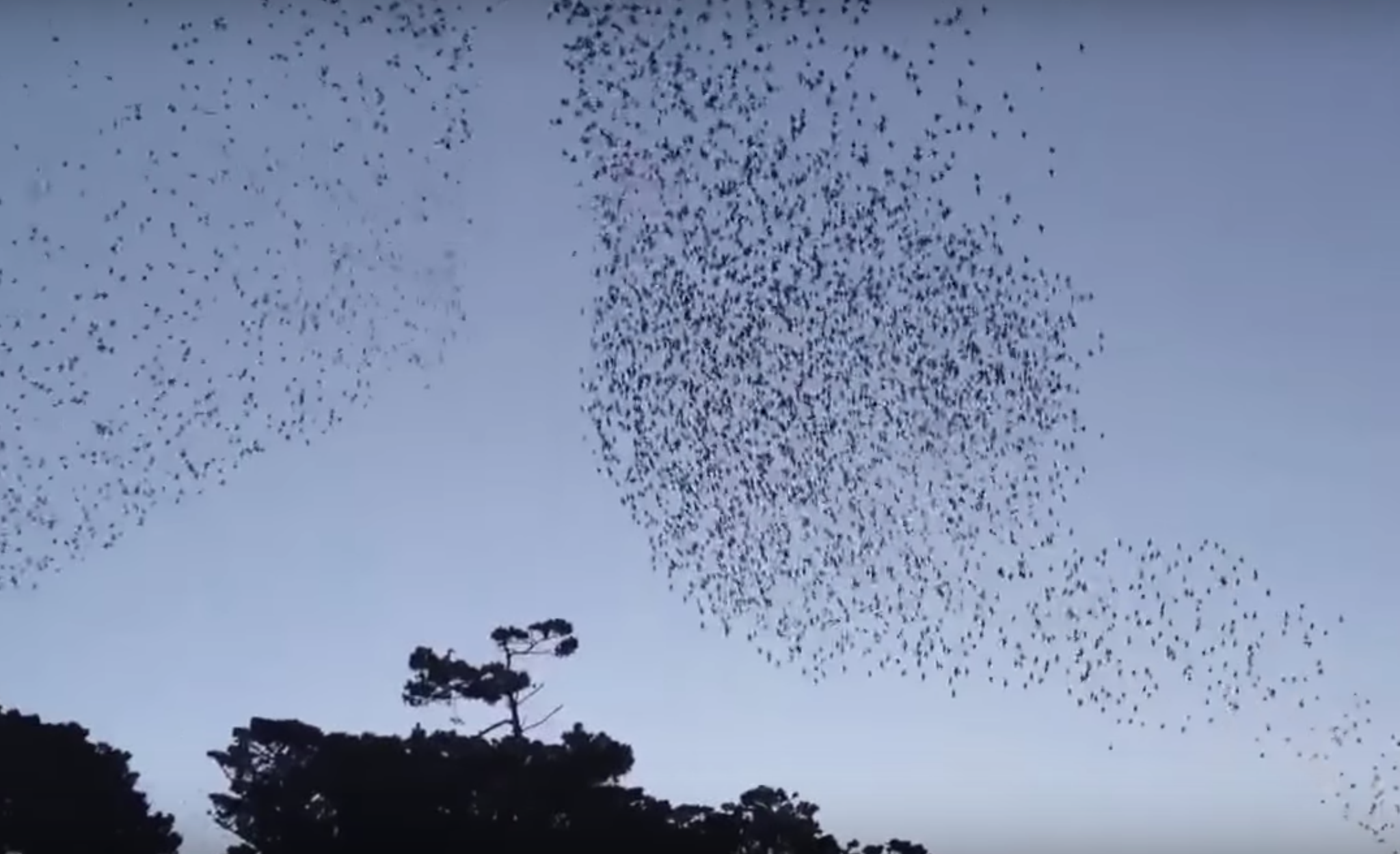
Starling Murmation By Kate Taussig taken in Nelson

“There is no such thing as a neutral education process. Education either functions as an instrument which is used to facilitate the integration of generations into the logic of the present system and bring about conformity to it, or it becomes the ‘practice of freedom’, the means by which men and women deal critically with reality and discover how to participate in the transformation of their world.” Paulo Freire


Background

Several years ago, I began blogging and in my earlier writing days I wrote a piece about learning and used Mangroves and how they adapt and evolve depending on what is happening within their growing environment to make a comparison about learning Several years later I wrote about Distributive Leadership and used flying geese as an analogy for leadership. Earlier last year I joined a global webinar and spoke about the learning and networking I do as a Global Educator.  Then I worked with other Across School Leaders in different Kāhui Ako as I ran a webinar for #INZpirED.

More recently I shared about learning at a local school and spoke about networked leadership and again compared this to Mangroves.


This week I reread the article on “Discussion Leadership for Communities of Learning” and thought about starlings when they murmur or fish when they shoal and believe that this is how Across School Leaders look like as Networked Leaders. When I began in the role two years ago, I felt like the starlings moving as a murmur with little understanding of direction but instinctively knew that this was the future of leadership. If you watch videos of murmurs you will understand what I mean. If you are new or not so new to the role, you will also understand what I mean. The discussion article referenced “Five Think Pieces” and after rereading this second article I thought I would unpack my understanding of what leadership looks like as an Across School Leader.

So below is what I have written and if you have any feedback, ideas or suggestions I would love to open up discussion via twitter and use the hashtag #EdBlogNZ.


Definition of an Across School Leader

An Across School Leader (ASL) is an educational leader and is different from leadership in schools because their focus is to operate as a networked leader within a Kāhui Ako.  Therefore an ASL is also part of the wider community of Kāhui Ako so they are a part of Government’s Investing in Educational Success initiative.


They have different facets to their role description. The primary focus of ASL leadership within Kāhui Ako focuses on actions that will shape the culture of learning more powerfully and develop the professional capital of teachers as a group.

An important ASL skill is awareness. Awareness that they are part of a larger networked system and so they seek ways  for the collaborative development of their leadership. An ASL identifies conditions required to enable them to work with each other, across sectors and with related agencies regionally, nationally and globally in ways that enable learning and development. They identify responsibilities that they  have to the Kāhui Ako beyond their own schools and own school leaders. An ASL helps provides access to people, information, and resources. They develop and use networks in ways that builds relationships and strengthens alliances in service of Kāhui Ako work and goals.


Systems

An ASL has confidence in their own knowledge and strengths. They have identified gaps in what they know and have the skills to network with others who can support the work they do. They have an understanding of complex adaptive systems because they know they are system leaders and it is important for them to identify what those systems are in order to strengthen their work. Complex adaptive system opens up new ways to work, with ideas advocated in complexity theory which is the study of complex and chaotic systems and how order, pattern, and structure can arise from them.

An ASL helps establish the systems and structure on how the Kāhui Ako will report and track on student and process outcomes each year. Some of these include transparency of record keeping and communication. ASLs work transparently because the more public they are, the more order develops in their work, the more easier they are found, the more opportunities come up for networked learning. Another part of their work is about being data informed and learning from failure. Knowing and working with data helps the ASL identify patterns in learning and track how successful the Kāhui Ako is towards their goals.


Coaching

An ASL understands that they are partners in leadership and learning and that they are partners in the Treaty of Waitangi. Therefore as leaders they work in learning partnerships and in collegial team coaching groups with a focus on learning and development.  They are project leaders and can network relationships across developments within and across Kāhui Ako. They are coaching leaders and understand about changing their own practice in order to coach others to do the same.

The ASL operates within the networked paradigm, promoting high levels of collaborative inquiry and activity, activated by strong mentoring and coaching relationships.


Community

An ASL needs to be aware of community learning needs in order to target a particular type of learning that is not yet already available. They lead project initiatives within the Kāhui Ako and foster community relationships. Their role is critical for achieving the standards of education leaders in education. Their leadership is inclusive, strategic, and above all collaborative. ASLs are distinguished by not just being leaders for the schools that they work in but also be part of the wider network of community leaders and have a clear obligation to the Kāhui Ako community. Their focus is on the development of a leadership community of practice, and to advocate for the kind of professional learning required by network leaders. At the same time success as an ASL requires individualised commitment to their own Kāhui Ako goal.


Networked Leaders

Overall  Across School Leaders must operate as Networked Leaders. They look for ways to maximise interaction between themselves, the In School Leaders that they work with and the senior leadership teams of the schools they work with and their community. In addition they go beyond themselves and cross sectors and identify related agencies regionally, nationally and globally in ways that enable learning and development.


ASL must develop their own leadership in order to be effective in terms of developing professional leadership and any form of leadership development programme should operate within the network. They must develop their knowledge of social media in order to tap into Kāhui Ako regionally and nationally and to connect with other learning communities globally to learn with and from them. They seek opportunities to share learning and regularly reflect in a transparent way. Some of these ways these can be via social media, through blogging and presenting. They hear all voices in their community and actively seek ways to create dialogue. They keep transforming and know that they are evolving and changing with the needs of the communities that they work with. The work they do is based on changing their own practice and to develop networked system leaders for New Zealand schools.


To finish with I believe that to be a successful ASL I must move from making connections, to collaborating, to coconstructing, to copresenting, to coreflecting.

Reference:

Education Council (Ed.). (2015, November 17). Leadership for Communities of Learning. Retrieved September 8, 2018, from https://educationcouncil.org.nz/sites/default/files/Discussion paper_leadership_web.pdf

Bendikson, L., Robertson, J., Dr, Wenmoth, D., Durie, M., & Gilbert, J. (2015, November 17). Five Think pieces. Retrieved September 8, 2018, from https://educationcouncil.org.nz/sites/default/files/Five Think pieces.pdf