Educampwelly

Yesterday I attended #educampwelly at St Mary’s college in Wellington.

I took time out from a hectic schedule to show my support for Philippa who I knew was one of the organisers.
IMG_0286

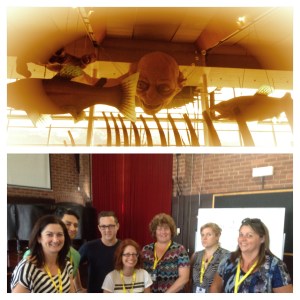
Teachmeetnz : @Juliet_Revell @timoslimo @hunch_box @AKeenReader @vanschaijik @heymrshay @taratj

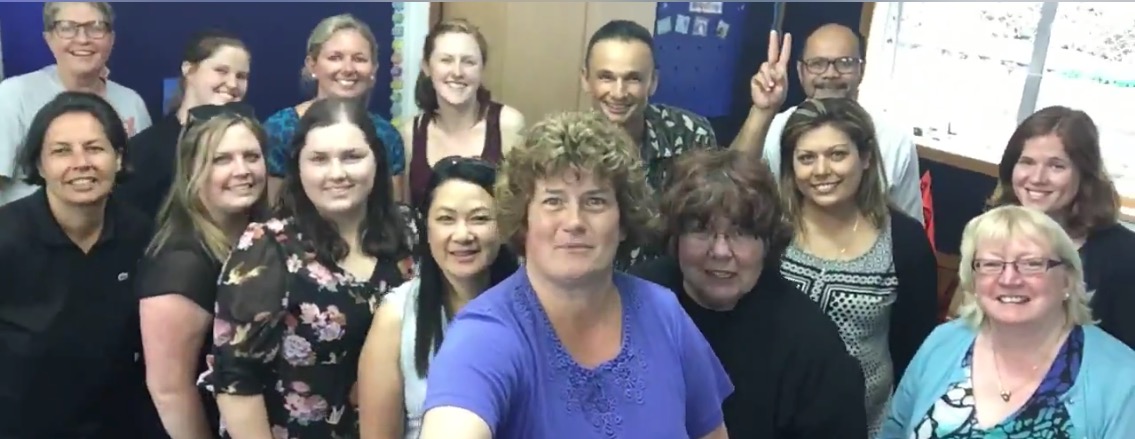
Philippa is one amazing educator who is moving fast in ‘edusphere’. Last year she presented with me on a TeachMeetNZ session and later on we were both on the steering committee for edchatnz, then she was was selected to be a Coreefellow 2015 intake. Now she is part of the Mindlab team and is sharing her passion about Design thinking and learning. That is her in the middle of the #TeachMeetNZ photo that I always try and gather at events.

However as an experienced teacher sometimes we attend events to offer support but can come away with so much more. That was me.

First of all I was able to visit St Mary’s College and having been a Director of Religious studies for most of my teaching career, I was able to see the visual evidence of the special character of the school. I loved the way that the main organiser Paula opened the session for the day as all catholic schools open special events with a prayer. I especially loved that she proudly did so in Te Reo. She delegated the blessing of the meal to another delegate.

The second highlight was catching up with the fabulous #TeachMeetNZ educators. I always watch how they are getting on and have a real sense of pride in seeing them. I was able to chat with the upcoming presenters such as @Jackbillie35 and @steve_katene and find out more about them and their interests and tag a new presenter for an upcoming session.

The third highlight was having a chat with Tim about the Pond developments and hear him mentor a new ICT Lead teacher in ensuring that systems are in place before purchasing devices. This reminded me how much I still need to mentor staff at my school about pedagogy before the tool and continue to encourage them to share their practice outside of our school bubble.

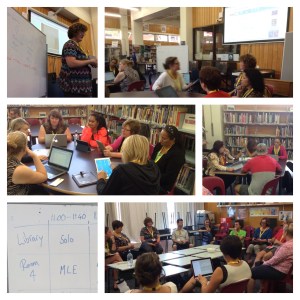
A further highlight was leading a SOLOtaxonomy session. Totally off the cuff and totally exciting because we had recently had Pam Hook work at our school and we revisited the why and the how of SOLOtaxonomy. Therefore I was able to share with the interested delegates some of what I had recently heard from Pam. I think that my mentor Ginny would have been proud because I even showed them how to create a rubric using the generator from Pam’s site. However on reflection, I did not start with a rubric. I did use the hand signals to indicate a shift in thinking. I also used the hand signals to identify teachers whose thinking was strong and encouraged them to lead a discussion at their tables because the group was so big.
IMG_0289

I attended other sessions too and took away much in the discussion. I was able to make connections with heaps of new educators, introduced a couple onto twitter, and unfortunately could not attend everything. So I do look forward to reading other blogs about the educampwelly event. For example here is Leanne’s reflection. @fivefoot3

Finally you have no idea how excited I was to meet Drew @phatnesian and Victoria @vtofilau. They are other Samoan educators who also attended on the day. We chatted in Samoan and generally basked in the glow of finding each other as I know from research how few and far we are in the education system.
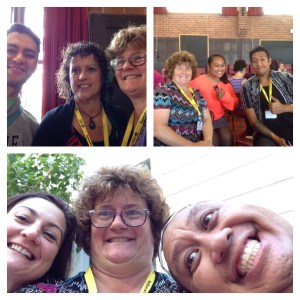
IMG_0285

To finish up with I love freebies. As educators we often spend on our own professional development and it was such a fabulous gesture of Coreeducation Wellington team to sponsor our lanyards. This helped us put a twitter handle to a face. They were there too and helped with registration and helped problem solve the WIFI.

To the N4L team who put on the pizzas for us hungry people. This enabled us to stay back and chat because during the packed day there were so many exciting sessions that just having the opportunity to chat and catch up with each other is also such an important part of educamps. Thank you too for this. You remember what it is like as teachers to attend events and knew exactly what you would do if you had the chance to support.

Now Fiona, educamp mama you were not here physically but you were here on our lips, in our minds and in the odd tweet you were tagged in and responded to.

So for all of the delegates who attended, have you fulfilled the criteria for earning your digital badge? To help you, here is the twitter list from the day. Have you joined the educamp group on google +? Here is the link.

Have you taken time out to say thanks to the amazing welly_ed team who put together this fabulous event for us? What are your plans regards running your own collaborative event? eg: I have one coming up #TeachMeetNZ meets #Science hosted by Cath.

Lastly have you recorded your reflection of the day and have shared it in a public way?
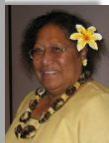
Aufaga Faimai Tuimauga

Ua ta le logo o le aogoa i luga. Ua valaau lenei faiaoga e sauini i lana aoga fou. Faimai, ia manuia lou malaga ma e fetaui i le Pule muamua. Alofaaatu uso.faimai

I was sad to hear of the passing of a dear colleague from many years ago. My friend Pati emailed me the news this morning.

What I know about Faimai is from the years we worked together as part of the Ulimasao Bilingual Education Association.

I located this page that she helped create and you can see even then, she was keen to learn how to use the tools for broadcasting. This page was was first created in early 2000 and each year the steering committee had to update their own page, which she did.

What I remember of Faimai was laughter. As in a belly roar that was totally infectious. In addition she was a doting grandmother, a fabulous dancer, connected and knew everyone. She was able to fill a hall with people if we were fundraising.

She was fiercely proud of her grandchildren and proud that they were bilingual. She would correct my Samoan if it needed correcting but would do it in a positive way and usually with one of her belly laughs. She adored her husband Toleafoa and he adored her. This could be seen by the way they treated each other.  Below is the page she maintained for her Ulimasao Profile.

Name: Aufaga Faimai Tuimauga

Employer: (MOE in 2006)

Position:Position: AUSAD Pasifika Bilingual Education Cluster in Mangere

Coordinator/Facilitator

Association: Ulimasao Bilingual Education Assoc. Inc. N.Z.

Office Bearer: Education Advisor

ExperienceOver 20 years of teaching and involvement in education both in Western Samoa and Aotearoa/NZ. Taught at Viscount School Mangere, Redoubt North Manukau, Mangere Central Primary, Aorere College,

Part time Lecturer – Auckland College of Education

Language Advisor: AUSAID Project with Macquarie University Sydney Australia- Project between the Government of Australia and the Government of Samoa, key supporter and assistant facilitator for Schooling in Mangere project 1995, initiator of the community development towards Ulimasao development, organiser of the Samoan teachers’ educational trip to Western Samoa in 1993,

MOE project: Know How Resource: Implementing the Technology Curriculum,

Director: Pacific Island Auckland Initiative [Participation in Early Childhood]

Member of the Pacific Island Advisory Group in the Ministry of Education, involved with the development of Unit Standard and NCEA, Coordinator: Secondary Teachers Professional Development project, Manager & Presenter: MOE Radio Education programmes in Auckland

Education/Qualification:

  • MA (Applied Linguistics) [Hons]
  • Dip in Education of Students with Special Teaching Needs (STN)
  • Dip. English Language Teaching (ELT)
  • Adv. Dip. Teaching
  • Higher Dip. Teaching

Sports/Interest: Dancing, Socialising, Being a doting Grandmother


Teacher Only Day Part 2 #SOLOtaxonomy

travelwiseUnder the leadership of Virginia Kung, our assistant principal, Newmarket School are trialling the New Zealand Transport Agency Resource Road Safety, Everyone is a Road User.

According to Pam Hook, “Students need a context where they have a voice and feel like they belong, matter and can make a difference. These road safety education resources are designed to enable students’ agency as active citizens so that they contribute to a safe road network. Students are encouraged to seek community-based solutions to help road users experience safer journeys. This focus aligns with the New Zealand Curriculum vision for young people to be active participants who contribute to the well-being of New Zealand.

Just from this paragraph alone I am excited because I am Newmarket School’s Travelwise Lead Teacher. It is like a whole pile of events are aligning. Pam Hook came to school and ran a teacher only day for us about the resource and refreshed our thinking around the use of SOLO Taxonomy.

artichoke

Pam, aka @arti_choke, began our session by explaining the use of SOLO Taxonomy in our teaching and learning. If you are looking for resources or a definition on SOLO Taxonomy, then visit her site  http://www.pamhook.com/.

Pam reminded us about loose ideas, connected ideas, extended ideas.

The tool is agnostic in any curriculum area.

Single strips for SOLO is a great way of clarifying understanding and use of SOLOTaxonomy.

Single SOLO line

See, Think, Wonder

http://www.canterbury.ac.nz/spark/researcher.aspx?researcherid=1104322

Pam then shared the New Zealand Transport Agency Resource Road Safety, Everyone is a Road User.

We discussed some learning ideas such as:

  • How much space is taken up by parking.
  • Compare parking spaces with the space for learning
  • Sequence morphing from a driver to a pedestrian. (Typical Pam approach- thinking outside the square.)
  • Wicked problems map (Already in the project)
  • Use google maps to take a snapshot of the area (I am using this idea.)
  • What would happen if the road was not there? (Never thought about this)
  • What does it make you wonder?
  • What questions would you ask Gillies Ave? (Personalise the road, love this idea)
  • Invent the design of the new road. (this idea I am already using)

Situational Awareness is when you are aware of all that is around you and this is one concept I will add to my global project proposal. For me situational awareness happens when Pam Hook runs professional development at our school. Our senses are heightened and our professional discussion and learning deepens. The following weeks has a hive of SOLO based learning happening. One of the challenges is sustaining the buzz that always follows Pam Hook sessions.

Where to Next:

Newmarket School would benefit from exploring what we mean by ‘student voice’. Is student voice a gathering of student views through surveys or focus groups, or is student voice when students actively participate in school decision making. How well do we as a school promote student leadership and students being in charge of their learning? How do we as a school explicitly show that our students have a voice?

This year I wish to investigate what student voice is and the impact that this might have on learning.

One way of doing this is via a planned Flat Connections global project led by our Travelwise leadership team where we are focus on on being Participatory Citizens.

The plan for this project is that the Travelwise student focus group will be actively involved in decision making. They will practise self efficacy by being in charge of their own learning. They will gather student views through surveys and communicate their findings school wide, nationally and globally. They will think critically about information and ideas and reflect on their learning.

They will do this by investigating a wicked problem in our community.

Through this our student will collaborate with other student focussed groups nationally and internationally and devise a solution that benefits future generations. By using the New Zealand Transport Agency resource I will refine the global project further.

Basically our global project is about our students being involved in local council planning decisions that affect their health and wellbeing. Students will have  opportunities to develop leadership, self efficacy, and resourcefulness while participating with others within a high‑trust culture and through a stimulating curriculum.

Through carrying out this inquiry I want to further strengthen my understandings about student partnership and students’ ability to make and take accountability for their own choices so they can actively contribute to school life and their education experiences. This learning aligns against the Registered Teacher Criteria, RTC 08: teachers demonstrate in knowledge and practice their understanding of how ākonga learn.

Reading Eggs

eggs

http://readingeggs.co.nz/

Reading Eggs Class Management

Date:Thursday 19th February @ 3:30pm

Today I attended a webinar on Reading Eggs Class Management. The session was valuable as it allowed me to see reading eggs fuller features because we were led through the system.

The webinar showed us how to manage classes, monitor student progress and how to access teacher resources.

Some of the learning I experienced included monitoring student data and how this can be exported into a spreadsheet and used as part of data gathering. I liked seeing the teacher resources and a whole world opened up for teaching reading. I was particularly interested  in reading express and saw 1700 ebooks available in the Library which is perfect for our chromebook chromebooks and the iPads. Here you can search for titles and authors.

http://student.readingeggspress.com/library/landing

At the beginning of the year resitting a placement test is advised if you are a little hesitant at the previous years data.

Reading eggs Ages: 4-7

 Reading express Ages: 7-13 years

Assignments can be set so that students must complete the set task before they can complete any online activities. The children can compete with their friends using Reading Express.

Gathering of data

The system also gives you your student data so this is another tool to monitor progress with.

So what is Reading Eggs?

Reading Eggs as a unique online world where children learn to read. Self efficacy develops as each child learns through one-on-one lessons that allow children to progress at their own rate. Motivation is increased as the students enjoy learning using the competitive tool. The children enjoy learning how to read using reading eggs.Second language learners particularly enjoy the programme as the tool is intuitive to their ability.

However the greatest learning happens when the teacher is monitoring and using the tool more than just as a filler activity while they are teaching reading.

Where to next: I think I would like to trial an intervention strategy using reading eggs with my ESOL children to see if this learning system makes an accelerated difference in my student’s literacy achievement.

Teacher Only Day Part A

Below the visuals show how our professional learning day evolved.

TOD1

First of all Wendy showed us around the school and explained some of the changes that had taken place over the holidays.

Then Roger took us through some sample fitness activities that also developed team spirits.

We had Charlotte Rawcliffe demonstrate the PaCT Tool, Maths Model.

http://assessment.tki.org.nz/Progress-and-Consistency-Tool/The-PaCT-frameworks/PaCT-aspects

The session was an introduction to the PaCT tool. We were shown how the tool can give a clearer idea of identifying where the children at at with mathematics.
We had a session with Belinda who explained to us how to teach empathy.
She had curated a range of sites for us to look through.
Then Ginny and Eileen took us through the expectations for our school.
I spoke about citizenship and had the teachers contribute their ideas via a padlet.
After lunch, we had Erica Soman from Fine Young Artists teach us a workshop about colour.
Workshop Two: Discover Colour

We learnt about mixing colours using chalk pastels. Then we drew a cube and used colour to accentuate depth, use of light and the horizon line.

I enjoy teaching art and I hope to have the opportunity to use the chromes or iPads for creating art.

Probably the highlight for me today was learning with an amazing group of people.

Participatory Oriented Citizens:

In October of 2012, I attended Ulearn as an attendee. From the flood of information that washed over me I set two goals.

The first was to run a TeachMeet in New Zealand using Google Hangouts to provide a space where teachers can share their stories. That goal has eventuated and has grown into a curated resource for education that currently has over 70 teacher stories in 3 minutes.

The second goal was to to have our children collaborate on a Global project. This second goal is drawing closer. This year a school global project will be launched that was developed as part of my #FlatConnect Global Educator outcomes.

In the past we have coordinated and run two global projects and have taken part in a few others. Our coordinated projects involved hosting an author in the hot seat. The first session was hosted face to face at the National Library and we hosted Sandra Morris. We had six New Zealand Schools involved and one came in via Skype. Most of the asynchronous communication took place via email. Except for two teachers via twitter. During the global event we used synchronous communication such as Skype and the children used the ‘author in the hot seat forum’ on Superclubsplus to ask questions of the author.

The following year in May 2012, our children took part in a Global Project coordinated by the BBC. You can read more about that here. The asynchronous  tools used were email and youtube. Later that month we ran anothercoordinated global session using Superclubsplus and this time directly from our school. We hosted Ant Sang, kiwi graphic artist extraordinaire.  The story was featured on TKI as part of the Snapshot For Learning series. The link can no longer be located so have added the link to the shared doc used to create the entry. Virginia Kung our assistant principal was the driving force behind this project as part of her inquiry and I coordinated the tool supporting her. Again our synchronous tool was the ‘author in the hot seat forum’ on Superclubsplus. Note here, Superclubsplus is now known as Skoodle.

Where to next? 

As 2015 begin, I think about how our next global project will eventuate. As a Travelwise school with a focus on reducing traffic at the gate, we will take a leading role in this Flat Connect global project and this time I want the children much more involved at the connecting, collaborating, creating and sharing process. I have observed some of the global work we have been involved in and have led and have identified the one offs. Using SOLO Taxonomy this is multistructural in thinking and in order to move to relational thinking we need to create learning experiences that last longer than a one off synchronous session. The skype in the classroom our students were recently involved in was another example of these one off sessions. I regard these one off sessions like a tourist hopping on and off the bus. ‘Stop, take a photo- here is the evidence I have been here and taken part.’

At Newmarket School the #FlatConnect Global Project Travel2School for children will focus on students as participatory orientated citizens as framed by Westheimer and Kahne’s (2004) conceptions of citizenship. We will unpack what this means by identifying responsibilities such as.

    • take skilled and active role in groups that work for the common good
    • know effective strategies for collaborative action

Connections between students will be more than a one off communication session. Collaboration between students will involve students working with others outside their own schools. Across schools an artefact will be co-created that will make a difference to school communities. The students will celebrate learning by globally sharing and reflecting on their part in the process. Underpinning this project will be citizenship. You can read how my thinking is evolving around the term citizenship here.


References

Routledge.Westheimer, J. and Kahne, J. (2004). Educating the “Good” Citizen: Political choices and pedagogical goals. American Political Science Association

Defining TeachMeetNZ

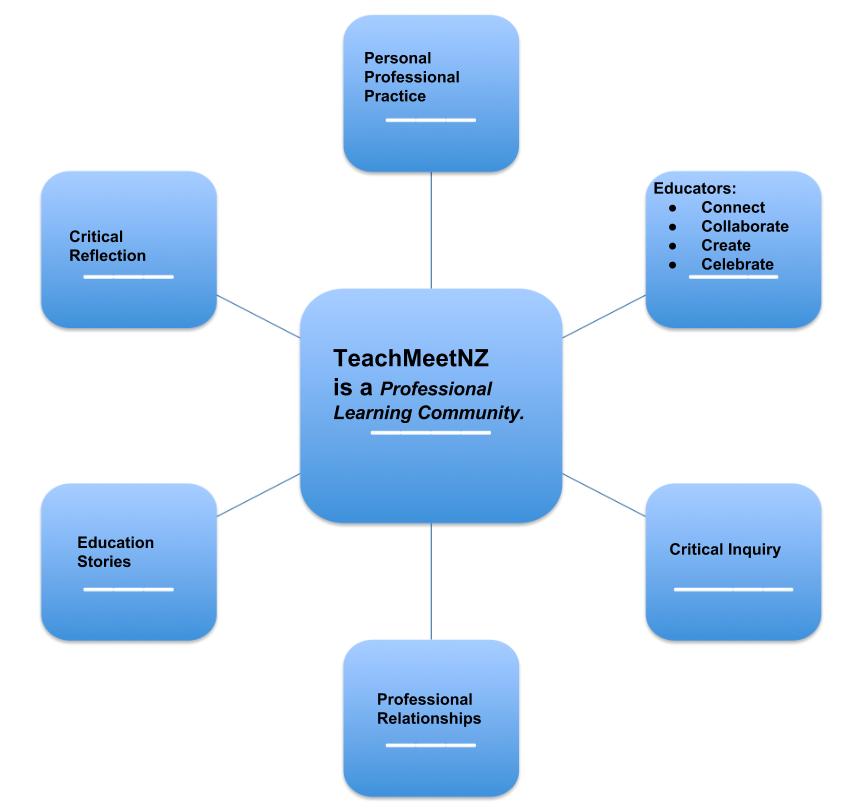
TMNZ key word image (1)TeachMeetNZ is a professional learning community and environment that provides asynchronous and synchronous opportunities for New Zealand teachers to connect, collaborate, create and celebrate with other educational professionals beyond their own school communities.

First teachers build professional relationships by making connections with each other on twitter and google +.

Then they collaborate together as they learn from and with each other on how to use Google Presentation, Google Hangout, Slideshare and other online presentation tools for sharing their work.

Next they create a nano presentation and share an education story, a critical inquiry or an idea that has impacted on personal practice. This presentation is shared with a current cohort where critical feedback is given and received. The practise sessions are recorded using Google Hangout for personal viewing to help with identifying areas of self improvement.

After that teachers celebrate the learning process in a three minute ‘nano’ presentations that TeachMeetNZ curates allowing teachers to leave a learning legacy for the benefit of other educators globally.

Finally a critical reflection including links to professional literature is written and shared with the education community via a blog where again feedback is given and received.

Overall TeachMeetNZ supports teachers professional learning and builds capabilities. Ultimately I  believe that a visibly learning teacher benefits students learning and student achievement. ‘Every child deserves a teacher that never stops learning.’ Something amazing happens when a group of educators connect, collaborate, create and celebrate together. That is TeachMeetNZ.

Hello WordPress

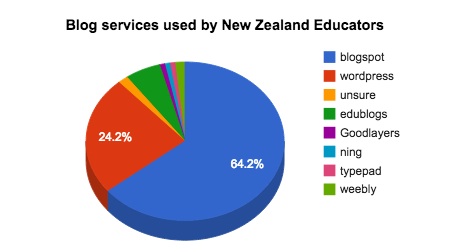
graph‘I want to reflect on my practice but there are so many tools to use. What would you recommend?’ Many times I get asked this question. My response is, ‘ I cannot tell you that, you will need to work it out for yourself.’

Treat your blog like a house, one day you might have to shift and like house shifting there is a huge turmoil, work involved, archiving, sorting and basically getting rid of rubbish, reorganising and a general tidy up. In addition there is the thinking that the new space will be better organised with proper tagging etc.  I have been thinking about my original decision to use blogspot as my preferred choice on and off since 2012 when I began to see wordpress being used and I set up my wordpress account. I hesitated because blogspot is a google tool and Google is the king of the internet, correct? Umm no check out China where the majority of the worlds population live and google does not rule.

I began my blogging journey in May of 2009. Therefore this is my sixth year of blogging. I chose blogger because at that time I had attended a course about setting up blogs and blogspot was the tool used. Again I focussed on the tool and not the process.

My blogging journey has been a bit sporadic as I thought through the process of change. My reflective journey started with a whizz and a bang and then slowed right down as normal teacher life took over.  When I am unsure I find I shift back into what I know rather than tackle the challenge. However every so often I got back into the process with renewed vigour. 2014 was a good year for reflection. I reflected on average approximately one post every two weeks and I want to continue that journey.

Many questions come to mind as I think of changing my reflective tool such as:

  • What about my stats?
  • What about Google being the king of the internet?
  • What about my stats?

With time comes wisdom and I realise, I really do not care about either. Choose the tool for the job and from what I have seen, wordpress is pretty flash. And maybe in another seven year I might need to shift again, who knows? We all know how quickly information gets buried.

This time last year I set up my personal domain using google sites as I wanted a space that curated all that I do. I am still struggling with how clunky Google sites are. I continued to persevere because we use GAFE at our school and I needed to know how to use sites because sites does integrate nicely with drive and I love drive. This time last year too, I had set up a google slides personally for my own information and again when I get asked, ‘Who else blogs? Can I see what this looks like?’ You can check out the curated links if you are interested in reading other kiwi educator blogs.

We are all on a visible journey and from experience I know the importance of leaving breadcrumbs of sharing. I have been looking seriously too at how educators track their learning. The educators who have been active online for a while and whose reflective work I seriously admire, I like the set up of many of the wordpress blogs and I still like many features of blogger.

2015 I am shifting folks. Rather than bring my posts with me, I have archive my past seven years using blogspot. and any interested readers looking for any past posts can visit them there.  My new space here on wordpress will begin too with the registered Teacher Criteria. I have always admired how Stephanie Thompson did that. Through discussion with Virginia Kung, I have been working through what my own system should look like and have set up a tagging system that works for me.

I might relent with some past popular posts and bring those over with me. I am definitely bringing some of the features I liked from blogger and will combine the two blogging tools for a more streamlined look. I will need a bit of time to understand all the tools and create the space I want. So do check back and give me feedback.

So which blogging tool do you use and why? If you are a wordpress blogger, which tools do you particularly like?

Update

Oh My. I managed to export my entire blog from Blogspot and imported it into WordPress. The whole site came over, including all the comments. In addition, the domain name purchase was so easy. All the hashtags imported as categories and I just need to reinput them as hashtags and identify a theme that works and I am in my new space.

O Lau Malu


O lau Malu
‘Talofa lava, malo le soifua ma le lagi e mama. O au o Sonya Van Schaijik. O lou aoga o le aoga tulagalua o Newmarket, i Aukilani, Niu Sila. O lou galuega, o au o le faiaoga mo tamaititi e lua gagana. O lou pito ata mai o le faaogaina o le tekonolo ma tamaiti ma faiaoga.’


E iloa le tagata lona tulaga i upu e tautala ai
My tattoo journey begins with my Grandmother a treasure of our family. She was not blessed with a malu but her mother Simeaneva was. So in my family, the malu skipped two generations. I am conscious that I am the ‘uputi’ of Nana’s ‘laau.’


O au matua o mea sina mai le Atua
When I asked my parents if I could get my malu, my mother’s response was initially why?
My fathers was, are you sure sweetheart. Are you aware of how hard it will be to remove?
I said I am not asking for your permission , but I am asking for your blessing. They both gave their blessing.


O lou tina tausi
My godmother however was totally supportive. She said, ‘Good on you girl. I am so proud of you. If I was young again I would join you.’


Teu le gafa
The why part is interesting. I have huge pride of being Samoan. I am aware that on the outside I do not look Samoan, however on the inside my Samoan blood is thick and pure. I know who I am and where I come from. I know my ancestry thoroughly because I am one of the family genealogists. Through that work, I learnt that my great grandmother Simeaneva Fonoti from the village of Le Pa in Falealii had a malu.


O au mamanu
Before I undertook my malu, I spoke at length with Noel McGrevy who had interviewed Samoan Tufuga and collated their photos and stories. I learnt about the malu patterns and the difference between female and male Mamanu.


Le Mata o le Malu
I specifically asked for some male patterns because of my knowledge and identity. I am a
mother of sons and the atualoa is associated with my two sons. I have a stylized mata o le malu unique to me. In addition, I have the upega as my connections to my aiga, my gafa and in a way the way I connect online.


Tufuga Ta Tatau
When I first approached my tufuga, his response was ‘E ta muamua lou laulaufaiva na ta lea o lou tino.’ Meaning was I committed to my Samoan language and culture? Now when I meet Tuifaasisiga Tuloena Sua, I meet my other father. When I meet any of his other subjects, we are brothers and sisters of his family because together we spilled blood under his tools.


E le o se mea e tau faaalialia
Some Samoans say ‘Show your malu when it needs to be shown’. Only someone with a malu
can really respond to that statement. When I first had mine done, I would flash glimpses of it whenever I could. I was so proud and excited about having being blessed that I wanted to show the world my gift. However with age comes quieter pride. So you might only see it when I think you need to see it.


Process of Tatau
I placed my trust into my tattooist. My body was his canvas. I undertook the pain for 36 hours. six hours per day over six days. My tufuga and I both were both responsible for my tattoo. His is the job and mine is hygiene and taking care of myself during and after the sessions as the skin heals.


A leai se gagana, ua leai se aganu’u. A leai se aganu’u ona po lea o le nu’u.”
-Aione Fanaafi Le Tagaloa
There was a huge responsibility to complete my tattoo because I did not want the shame of a pe’a motu – the unfinished tattoo. With the blessing comes the responsibility to my language and culture. “Without language there is no culture. Without culture, darkness descends’,  Aiono Fanaafi Le Tagaloa


O lau Malu o Mea Sina mai Samoa
There are obligations of being a Samoan tattooed female, knowing what it represents and what it means. For me the malu sums up an old Samoan saying. ‘O le ala o le pule o le tautua.’ The path to leadership is through service. In my school of Newmarket I identify stronger with our historic motto: Not self but service.


Uso ma aiga
A malu is something that’s not undertaken on a whim – it takes focus and bravery. While the
tufuga tattoos you, a ‘solo’ wipes off the excess ink and blood. In addition I was surrounded by family and friends singing along to encourage me as I lay half exposed while one third of my body was being tattooed.


Ta Tatau
As the ‘au’ bit into my skin and the ink forced into the wounds, I could hear and feel the vibration in my bones. The feeling is indescribable. Each ‘Tufuga Ta Tatau’ has a rhythm and I coped with Tui’s rhythm by singing in a monotone to the rhythm of the ‘au’ and had holders grip my head, ankles and wrists.


Le Pea ma le Malu
When I was growing up, I hardly saw anyone with a pea or a malu, However that has recently
changed as more of us take this step of cultural pride. I am Samoan. I have royal blood so yes I have the right to wear a malu. From Simeaneva Fonoto descendents I am one of 5 who has been blessed with a ‘tatau.’


Samaga Pea
We celebrated the completion of my malu with the gifting of fine mats to the ‘Tufuga’ and special visitors. With this is a connection to my Grandmother Matalaoa as several mats came from her funeral via my parents. My sons were part of this process therefore paving the way forward for who they are.


Taofi mau i au mea sina
There are different kinds of malu and you can usually tell by the spacing between the skin. Mine is ‘gigii’. There is not much space between my patterns. A malu is completed when the hands are blessed. That will be the final stage of my malu. My Malu is a covenant between myself and my culture I hope to do that before ‘Tui Fa’asisina’ becomes too old. ( I give a shout out here to my friend Vaemasenu’u Zita Martel who has also been blessed with a malu. She lives and breathes her covenant. )


Falealupo
So where to next, the next time I share with you I will share my digital tattoo and describe my digital journey. Just as the ‘tatau’ journey ended in Samoa at the village of Falealupo in Savaii, so do I end my personal tattoo story with you . But before I finish –
Lea la ou te faalele lou pea malu ma outou e faitau lau tala manatua lou fesili. E ta sou malu?.’

If you want to make contact with Tuifaasisiga Tuloena Sua, here is his contact cell in New Zealand, 021295 6482.

Flat Connections Global Educator


Yuss!! My Flat Connections Global Educator certificate arrived on the last day of 2014 via @julielindsay. I was thrilled to receive it.


What an incredible journey I have had with Julie. Beginning early in 2013 when I was planning my global journey to visit educators around the world. I was able to deviate slightly from my travels and begin in Hawaii because Julie was running a session for global educators face to face. There I worked with a group of total strangers who after one day became friends. We had a lot of fun learning with and from each other.


Then early this year, I heard she was on her way to New Zealand to present as a spotlight speaker at the Google Apps for Education Summit that several of our staff attended from Newmarket School. We caught up briefly before the summit and I attended one of her sessions and again was totally inspired with how she ran a face to face session and was able to motivate so many teachers to collaborate and co construct learning.


Next I spotted her call for interested applicants for the Flat Connections Global Educator accredited course but at the time was feeling a little swamped with all that I had undertaken. So thought I would leave it for another year. However a change in circumstances allowed me the opportunity of joining this round.


Those of you who know me and have worked with me know that there is not much I am unable to do in an online setting. However taking on this challenge was an amazing experience.


I have learnt so much not just with Julie but with my peers in the same cohort. They were @julieswords1 @AnnRooney6 @mblanrun @BonnieHermawan.
By taking on the challenge of taking part with other like minded educators I was stretched in my thinking about online collaboration, I was stretched in my technical skills and I was stretched in time management.


“The Flat Connections Global Educator course aims to provide educators at all levels (K-12, Tertiary/Pre-service, Teacher educators) with resources and skills to go global! This includes how to introduce and sustain global learning into your curriculum as well as how to join and complete, design, implement and manage a global collaborative project. Focus is on connected and collaborative learning using Web 2.0 and other technologies. Weekly workflow and regular assignments and challenges provide pathways for teachers to build confidence to interact globally and to bring opportunities to their schools and classrooms.”


Most of my thinking is underpinned by SOLO Taxonomy and I was excited to be able to step through my SOLO thinking and apply it to Global Learning. A lot of what I have achieved I had previously identified as extended abstract thinking and at that time seemed just out of reach.


Some of the success I have had this year can be contributed to SOLO Taxonomy framing and being activated by the #FlatConnect learning that I had been exposed to. These success included my most popular blog post when one assignment called for a blog post about Global Digital Citizenship and having others comment on it. Another success was setting up a padlet to encourage delegates attending our Uearn presentation to ask questions. A further success was a collaboration with #TMSydney and #TeachMeetNZ and identifying challenges when attempting a project between two countries. In addition I was inspired with a crowdsourcing idea and created the framework for a nation wide educators digital book.


When working with my colleagues to complete collaborative and co constructed artefacts I was able to understand the challenges I will face when I work with children along the same ideas.  


During the 10 week course I was exposed to new ways of communicating, learned new technical vocabulary, comprehended the importance of actively taking part, left evidence of what I had achieved, reflected on my learning, gave and received feedback from my colleagues and was responsible for my own learning. I devised my own way of coping with what was asked of us.


I learnt how to use new tools and revisited old tools but in a different way. A highlight was coordinating a Google Hangout with my colleagues.
 
Where to next as an accredited Flat Connections Global Educator? I am looking for interested educators to join us online at Newmarket School as we lead a Global Project for The initial idea of this project is exploring getting to school safely with a focus on health benefits and turning city planning around – not just keeping pedestrians safe but building cities for pedestrians. So if you are interested in being part of my first Flat Connect Project, then do make contact via twitter @vanschaijik.


Each of the following education documents stresses the importance of working beyond the classroom in a connected and collaborative way.


The United Nations Secretary-General launched the five-year Global Education First Initiative (GEFI) in September 2012 to accelerate progress towards the Education for All. See more at: http://www.globaleducationfirst.org/about.html#sthash.KC6E7cxb.dpuf


The New Zealand Ministry of Education put out a report from Associate Education Minister Nikki Kaye’s 21st Century Learning Reference Group titled Future Focussed Learning in connected communities. This report highlights the importance of understanding Global connections and learning as an educator.


The New Media Consortium states that   ‘young learners need skills to analyze information,
communicate effectively, and collaborate in global environments to solve complex problems.’ under Complex Thinking and Communication.


So if you and your school are looking at a system already set up that helps align the learning at your school with Global Focussed Education then I encourage you to seriously think about joining one of the Flat Connetion’s global projects that run each year.  If your school is serious about teachers understanding Future Focussed Learning in Connected Communities then I encourage teachers to join in and work on their Flat Connection Global Educator Certificate.


For more information you can contact Julie Lindsay directly.
Start with this portfolio website – http://about.me/julielindsay
You can connect with Julie via