Distributive Leadership

Hellen Keller said, ‘The world is moved along, not only by the mighty shoves of its heroes but also by the aggregate of the tiny pushes of each honest worker.

In Samoa we have a saying: “O Manu o le lauamanu e felelei mamao” meaning ‘Birds that fly together go far.’

Introduction

I have selected to evaluate distributed leadership. As I researched background information when I supported a principal friend of mine on his assignment, the works of Gronn, Splianne and Elmore confirmed my beliefs of leadership experience within my current and previous positions. Previously, I have held a variety of teacher leadership roles. These have included:

  • School Lead Teacher for the 2001 and 2010 Information and Communication Technology Professional Development (ICTPD) contracts
  • Director of Religious Studies in a Catholic school
  • Steering committee member for national conferences
  • Webmaster for two educational associations
  • Executive member for ULIMASAO Bilingual Teacher’s Association
  • Steering committee for the Edchatnz Conference
  • Member of the advisory board for the National Diploma of TESSOL
  • Led a Samoan Bilingual Team and run the school library.
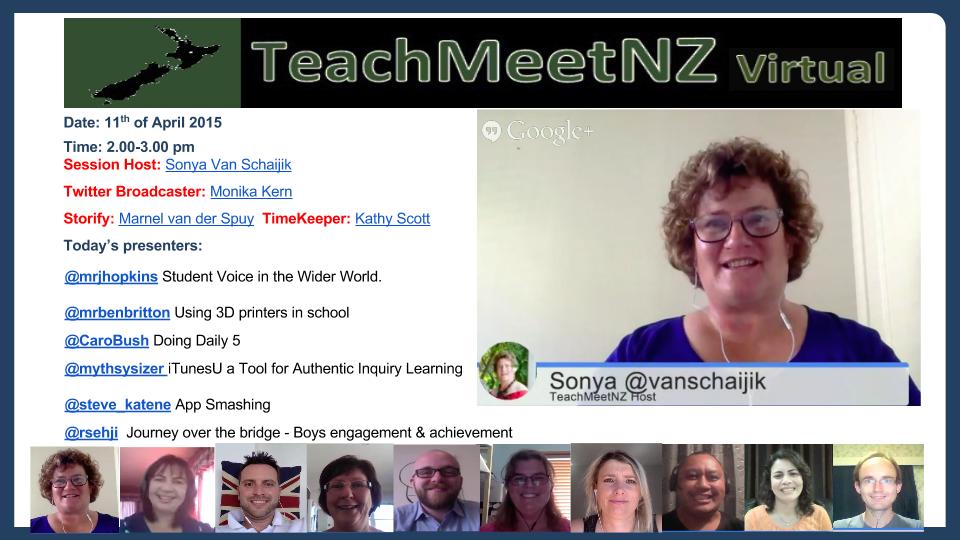
  • Host a national virtual TeachMeetNZ each quarter and have had 80 educators share their story.
  • Develop and maintain the school’s hidden infrastructure for digital learning

With many of these positions, monetary gains, in terms of a Retention unit or a Management unit, are often and have been non-existent. However, the teacher leadership experience has enabled me to learn about distributed leadership. The lack of monetary recognition is minor compared to my vast ongoing personal growth, critical reflection with professional development, community experience, networking, mentoring and being mentored, and having access to a range of knowledge, skills, mentors and leadership practices which have been part of my learning journey.

With this reflection I intend to look at the leadership practices associated with the concept of distributed leadership. I will examine both the educational and the practical utility of this approach to leadership. The reason I have undertaken this task is to further my own understanding about developing leadership in teachers as I believe teachers also need support, guidance and encouragement to undertake many tasks that sit outside their normal classroom practice and yet is an indication of leadership. My personal inquiry is to continue to explore the greatest variance that makes a difference to student learning and that is the teacher. Leadership also plays a role in making a difference to student learning and in particular distributive leadership.


The concept of distributed leadership.

In my readings, I found varying concepts of what distributed leadership is. Key ideas associated with distributed leadership, such as sharing, growing leaders within an organisation, recognising skills and knowledge, mentoring, group responsibility, group accountability, critical reflection and self efficacy appealed to me. I found defining distributed leadership in a way that made sense to me, increasingly challenging.

Defining

Probably the closest term to describe what I believe distributed leadership to be, is an organism that grows and changes depending on the environment it is in. It is constantly changing, living and adapting. MacBeath (2003) defines distributed leadership as ‘something in the gift of a head teacher, allocating leadership roles magnanimously while holding on to power.’ Hence the term distributive which implies a holding, or taking initiative as a right, rather than it being bestowed as a gift. In other words, it is a value or ethic, residing in the organisational culture. Harris (2008) defines distributive leadership as leadership shared and extended within and between organisations.

He Tangata, He Tangata, He Tangata

I strongly believe that distributed leadership also has heroes. Bass (1997) describes them as ‘transformational leaders with highly developed moral and ethical values that reflect the culture and community that they work in’. However, they are far from the ‘super hero’ concept. They stand out because the decisions made within an organization are based around their ‘inner voice’ input. They have people at the heart of all decision making.

Elements of Distributive Leadership

Senge (1990) suggests designer leader, teacher leader and steward leader are essential in distributed leadership. I will discuss teacher leader and steward leader further on in the writing as I have had personal experiences with these concepts of leadership. However within my current growing understanding, I have hesitations with designer leader as I feel that this leadership concept does not align with the concept of distributed leadership. In further searching for a concept to clarify my understanding of distributed leadership, I came across the National College for School Leadership Spring Report, (Bennett, Wise, Woods and Harvey, 2003). The report elaborates on the elements of distributed leadership. These elements are:

1) An emergent property or network of interacting individuals.

2) Openness of the boundaries of leadership.

3) Varieties of expertise distributed across the many, not the few.

I intend to take these elements and explore them further under practices associated with the concept of distributed leadership.

The leadership practices associated with the concept of distributed leadership.

Using the above elements, I will clarify what they are in leadership practices and because I am a teacher, I will reflect back on practices I have observed.

Element 1) An emergent property or network of interacting individuals.

Teacher Leader

In the research I read, the term Teacher leadership appeared regularly. This first came to my attention with the work of Senge (1990). I thought that this term clarified the first element discussed. In describing practices associated with teacher leader, I found it exciting to use the word Teacher Leader as an acronym and to search for practices that describe each letter. The following is what I developed around the various researchers.

Teacher leaders are action researchers who regularly use qualitative data to guide their practice. They are action researchers, peer developers, mentors and decision makers.

Emotional intelligence is one of their traits as described further by Fullan (2001).

They have high ethics and moral values that reflect the culture and community with whom they work. Teacher leaders act and think sensitively to the school culture in which they work. They critically reflect on practice and are constantly changing, adapting and improving their practice. They are committed to self-review and actively encourage critical feedback from their peers and students. Teacher leaders have high student achievement and work with qualitative data. They seek out embedded professional development that focuses on pedagogical knowledge and subject knowledge. They are morally responsible for improving the quality of instruction- not just their own but also the peers with whom they work.

Teacher leaders learn to create and manage learning culture. They have ethical principles, which drive their decisions. They acknowledge all stakeholders and are active stewards in the role they lead. They are daily communicators and ensure that information is accessible to all with whom they work. Teacher Leaders are effective educators.

They see one of their roles in education as supporting leadership activities with resources.

They equip students with the civic, moral, and personal skills and behaviours to live in a multicultural society.” (Cuban: 2001)

An example of teacher leader is the Sustained contract we were recently a part of. The delegated lead teachers and senior management pooled their ideas and expertise, and shared them around the schools within the cluster. At the same time, staff within the schools were part of the skills and expertise group. If any teacher showed signs of leadership within an area of digital learning or SOLO Taxonomy  they usually contributed to the cluster, by sharing their skills and expertise.  Everyone within a school was accountable and responsible for the success of the contract. Benchmarks were monitored, feedback was given and qualitative data gathered. This data was used to drive the next round of professional development. I became really skilled at curating evidence of our teacher’s learning and continue to do this even now.

2) Openness of the boundaries of leadership.

Leadership

Once again, I use the term leadership as an acronym to search for practices that describe each letter. A variety of leaderships are defined in Alphabet Soup. (MacBeath, 2003)

However, in this case when I focus on the practices of leadership, I am writing about leadership practices associated with the concept of distributed leadership.

‘The world is moved along, not only by the mighty shoves of its heroes but also by the aggregate of the tiny pushes of each honest worker.’ (Keller, H)

Leadership is about life long learning and is an inner drive about self-improvement in order to better interact with others. It is about empowerment. Empowering the learners, the peers, and the community that all are part of the community of learners. Leadership is guided by action research and can begin with a simple question. Leadership is distributed.

Elmore (2002:15) promotes distributed leadership in “which formal leaders widely distribute leadership responsibilities among various role groups in the organization while they work hard at. Leaders create a common culture, or set of values, symbols, and rituals.”

Leadership is about examining practice and using reflection to guide the practice. At Newmarket School nearly all our staff have taken this onboard and have developed their own reflective blogs.

LEadership is about shared decision-making. One of Lambert’s (2002) key assumptions about leadership is that  ‘leading and learning must be shared because school change is a collective endeavour.’ We know the importance of this at our school. I always say to our staff show me your example of what you are asking the children to do. A classic example of this is creating videos or asking the children to write.

Leadership is   holistic and supportive. It is about instructional improvement. One of Elmore’s (2002) principles states that ‘the purpose of leadership is the improvement of instructional practice and performance, regardless of role.

Finally leadership is about a professional learning community. Sergiovanni (1992) discusses the importance of ‘building a learning community by reorganising educational values, beliefs, and practices’.

I have established a learning community outside of school with the work I carry out with teachers on the #TeachMeetNZ project. I have explored many digital communities with our staff and each year brings a new one. I have recently set up one in Edmodo because maybe this year is the year where I can get more than a few contributing in a visible way.

I think back to the work of ULIMASAO bilingual teachers association to raise student achievement for Pasifika students in South Auckland. This is leadership in action, the association worked with school principals, teachers and the community to raise awareness about the benefits of Pasifika Bilingual Education. They used Cummins’ (1996) research on community empowerment, and Colliers’ (1987)  research, to drive best practice for student achievement. The community was very much a part of the process. All involved in the children’s learning are responsible and accountable for their achievement. Students’ results drove the work of Ulimasao. Pasifika Teachers came from all over Auckland to share best practice ideas, to support and nurture any new teachers, principals and community to Bilingual Education.

This was leadership in action.

Element 3) Varieties of expertise distributed across the many, not the few.

This element sums up the distributed leadership

Principles and Practices of Distributed Leadership

In order for varieties of expertise to be distributed across the many, not the few, the following leadership practices are necessary.

Daily quality communication takes place. Information is continuously fed through at all levels of the school. Murphy (2002) discusses stewardship. Stewardship is about “the willingness to be accountable for some larger body than ourselves – an organisation, a community“. ‘Stewardship is to do with our choice for service over self-interest, with being willing to be accountable without choosing to control the world around us.’

Transformational leadership provides the vision and inspiration that is intended to energise all members of the school community.’ (Leithwood and Jantzi, 1990.)

Distributed leadership is about actively taking responsible roles. Teacher leaders focus on instructional change. They have implicit and explicit goals.

Distributed leadership is about building sound relationships by strengthening webs of social relationships. It is about being a social architect. This concept is about understanding culture, symbols, rituals, ceremonies, and traditions. It is about knowing the community in which you work. This is telling our stories, and redefining our goals in educational concepts. From my previous experiences in Catholic Schools I believe that telling stories is particularly strong in Catholic School. My past schools celebrated and revisited their history each year. They created memories that were archived and shared with the community. I try and do that at Newmarket School with the wiki that was created for this very task. However because I often am the only person curating memories of our stories in a digital way that the work can be overwhelming.

Transferring control is another principle of distributed leadership. It is about sharing leadership even when the school leader makes limits explicit. It is about examining daily practice and embracing the daily macro and micro tasks and using them to critically reflect on daily practices. When all elements are aligned, the result is improved academic outcomes for all. Often the teacher thinks that this is a top down approach but as our understanding of accountability develops and our understanding that we are all on this journey together for the success of our children then this becomes ‘business as usual’.

I see stewardship as an integral part of this element. The Samoan Matai system in which I was brought up helps me relate to this element. A Matai is chosen to lead his village and to speak for the ideas and goals of his village to the council of chiefs. When a Matai is selected, he is selected as the steward of the village, the guardian of values and thoughts of the village he is representing. When Matai come together they represent more than individual villages, they present a presence, a concerted dynamic that moves the world along. In Samoan we say: ‘O le ala o le pule o le tautua.’ Translated this is ‘ The path to leadership is service.’  At my school of Newmarket this is also our historic motto, ‘Not self but service.’


Likewise, in a Catholic school, a similar process takes place. Leaders are appointed to be a steward of the school for which they are responsible. However, the role goes further than that. Leaders are responsible not just for their school, but also for the schools in their neighbourhood and all the surrounding community. When they come together, they become one group, one concertive dynamic which pushes the world along.

Te Hiringa i te Mahara, the Power of the Mind Project by the Ministry of Education uses this same concept – we are all responsible and accountable, for each other as teachers and for our children’s learning.

Educational significance of this approach to leadership.

The educational significance of this approach raises the following questions:

  •     How practical is distributed leadership in education?’
  •     How are we preparing for the future?

Taking the elements already discussed, I revisit them and view their significance to distributed leadership.

Element 1) An emergent property or network of interacting individuals.

Teacher Leadership

Schools cannot change teachers’ behaviour unless they discuss the teachers’ beliefs and values first. Fullan, Rolheiser, Mascall and Edge, 2001) argue that ‘Real change, occurs when teachers are fully engaged as active agents in the process of research and development and when it observes the three cardinal principles of responsibility, mutual accountability and collaboration.’ I have often used the term active agents of change and compared it to baking powder in baking. When baking powder is added the cake rises. At the same time, I use the term disruptive educator or the educator who asks the tough questions. The educator who questions the why of the system. Part of accountability is standing up and asking the tough questions of people leading our schools and leading the education system.

As we prepare our students for a future that is changing, it is not easy to prepare for a moving target. The work place of the future is continually changing and evolving. Teacher leaders recognise this paradigm and use it as a challenge for self-review. Teacher leaders must be life long learners. They must learn new ways of learning with the students that they teach.

Element 2) Openness of the boundaries of leadership.

Leadership

Elmore, (2000) links distributed leadership to the school’s fundamental task of helping students learn. He promotes ‘distributed leadership in which formal leaders widely distribute leadership responsibilities among various role groups in the organization while they work hard at creating a common culture, or set of values, symbols, and ritual.’

Leaders must forge closer links with external influences that help shape the system.

Sometimes, a true leader is able to be a led. They understand that by employing great people and know when it’s time to get out of the way.

Element 3) Varieties of expertise distributed across the many, not the few.

Distributed leadership

Johansson (2006) discusses distributed leadership in depth.

This is a values informed leadership a sophisticated, knowledge-based, and skilful approach to leadership. It is also a form of leadership that acknowledges and accommodates in an integrative way the legitimate needs of individuals, groups, organisations, communities and cultures – not just the organisational perspectives that are the usual preoccupation of much of the leadership literature.’

Leadership is about going beyond the four walls of the classroom and even including the students themselves. Leadership is about a professional learning community; it is about shared community knowledge and is organisations and people focussed. Prior knowledge is acknowledged. All members are empowered and are committed and accountable to the vision. There is trust between all stakeholders and normality is diversity.

An evaluation of the practical utility of distributed leadership to leadership.

When I refer back to the practices of distributed leadership, I have chosen to focus on five aspects to evaluate. There are: shared leadership, common vision, outside constraints, budget constraints and time constraints.

Shared leadership.

The leader must be open to shared leadership. Some leaders could feel threatened as they feel their leadership role is being eroded when they share the leader role. It can be equally frustrating for those who prefer to have someone lead him or her.

Having a common vision.

For distributed leadership to work, it helps if everyone in the school has bought into the school vision and goals. This works well in the New Zealand integrated school system, which allows only 5% to be a different faith. The Private Schools Conditional Integration Act 1975 dictates this.

However, in Australia, where Catholic schools, are private schools, not integrated, some schools can have as many as 40% of their students from other faith, or no faith traditions.  Distributed leadership would also work in a Bilingual Unit, such as O le Taiala, in Findlayson Park School. Parents, students and teachers buy into the concept when they apply for their children to be included in the units. There are other examples of schools having a common focus.  Examples include a schools with an elearning lense such as the schools in the Manaiakalani cluster, or a school based on Emilia Reggio principles. Difficulties can arise if not all stakeholders have bought into the concept. Such stakeholders must suppress their own views for the sake of the school’s common vision and goal, even if they are not in agreement.

Outside constraints

Outside constraints can affect the common vision, and these have implications on distributed leadership. Distributed leadership is about setting the communities’ educational goals. However sometimes outside agencies dictate the education goals. Examples of outside constraints include the Ministry of Education in their National Educational Goals, the Education Review Office in their school reviews, and the Proprietors of Special Character.

Budgets constraints.

Professional development is central to the idea of distributed leadership and the opportunity to critically reflect on one’s own self. However schools’ budgets are usually limited, therefore any money spent on professional development needs to be seriously considered, as in practice, the concept of distributed leadership takes a long time to implement and carry out.

Time constraint.

When leadership is distributed, more demands are placed on individual leaders. It takes time and commitment for school leaders to build a professional learning community. It takes dedication for a person to take on more responsibilities over and above an already heavy workload, and also to reflect on their learning while so doing. I know when I ask staff to do this I am asking a lot. When they reflect on their learning I make a special effort of acknowledging this and give them written feedback on their posts. I also give them a shout out on social media. A passionate belief in education is required to undertake leadership roles, which often comes with no extra monetary gains. I share this from personal experience over the thirty years that I have been teaching. Many times I am asked, ‘why do you run learning sessions for teachers?’ My response is ‘why not.’ I am an older teacher and it’s time to give back. I also take great pride in seeing their development. I take an even greater pride when I see this transfer to their classroom practice. Ultimately a learning teacher is learning children.

Conclusion.

Even with the challenges associated with the practical utility of distributed leadership, my current belief in this form of leadership is effective in sustaining lasting effective, learning environments. I identify with the Helen Keller quote, which I have rephrased to suit a school situation. ‘The tiny pushes from each stakeholders pushes the school towards a goal of long-term effective learning environment for all.’  My background has distributed leadership as a way of making decisions. From the Samoan Matai system, being taught and having teacher leadership modelled in the many of the Catholic schools that I have attended and taught in and having led a Samoan Bilingual Unit where as a team we had a common goal of student success. My current role is with second language learners and the teachers who teach them. We all have the common goal of student success.

Distributed leadership can be seen as a weakness in the current market of instant outcome based models, but I view the aligned elements of distributed leadership as a clear pathway to improved student achievement and the future for lifelong learning. Distributed leadership creates a professional learning community that continually reflects, grows and changes depending on the environment it is in.


Where to next

When I reflect on my understanding of distributive leadership using SOLO Taxonomy, I can define and list elements and practices and am beginning to make links with what is happening at our school. I can see that we are growing stronger as a staff in distributive leadership but still have a way to go. Analysis of data suggest that distributed leadership impacts positively upon student achievement. (Hallinger and Heck, 2009). But change takes time because the whole school needs to come on board with the concepts and share the same vision.  At Newmarket School we have recently embraced Google Apps for education. I can see the visible learning of our teachers. Our teams have changed and teachers have new roles and responsibilities.  I can see our professional learning community constantly changing, living and adapting as we move to a deeper level of learning cultures. I hear ‘Business as usual’ and for me that is the way we do things at Newmarket School and that is growing leadership capabilities in our teachers and our students.

 Finally a shout out for my friend Greg. We need to have another chat Greg. 

References

Bennett, N., Wise, C., Woods, P. and Harvey, J. Distributed Leadership. National College for School Leadership, Spring 2003. Retrieved April, 2015 from

http://oro.open.ac.uk/8534/1/bennett-distributed-leadership-full.pdf

Bass, B. (1999). The Ethics of Transformational Leadership. Academy of Leadership Press.

Retrieved April, 2015 from http://www.sciencedirect.com/science/article/pii/S1048984399000168

Cuban, L. (2001). Leadership for student learning: Urban school leadership- difference in kind and degree. Retrieved March, 2015, from

http://iel.org/sites/default/files/Leadership-for-Student-Learning-Series-4-Urban-09-2001.pdf

Cummins, J. (1996). Negotiating identities: Education for empowerment in a diverse society. Los Angeles: California Association for Bilingual Education.

Collier,V. (1987).Age and Rate Acquisition of Second Language for Academic Purposes. TESOL Quarterly, 21 (4). 617-641.

Elmore, R. (2000). Building a new structure for school leadership. Washington, DC: The Albert Shanker Institute. Retrieved March, 2015, from

Click to access building.pdf

Fullan, M. (2001). Leading in a Culture of Change. San Francisco: Jossey-Bass.

Fullan, M., Rolheiser, C., Mascall, B. and Edge, K. (2001) Accomplishing Large Scale Reform: A Tri-Level Proposition. Toronto: Ontario Institute for Studies in Education, University of Toronto.

Retrieved March, 2015, from http://www.michaelfullan.ca/media/13396045990.pdf

Hallinger, P. & Heck, R. (2009) Distributed leadership in schools: What makes a difference?  In A. Harris (Ed.), Distributed leadership: Different perspectives. Retrieved April, 2015,

http://philiphallinger.com/old-site/papers/Harris_chapter_2009.pdf

Harris, A. (2008) Distributed leadership in schools: Developing the leaders of tomorrow. Routledge & Falmer Press.

Johansson, O. (2001) Swedish school leadership in transition: in search of a democratic, learning and communicative leadership?, Pedagogy, Culture & Society, 9:3, 387-406,  Retrieved April 2015 from http://dx.doi.org/10.1080/14681360100200122

Helen Keller. Retrieved April, 2015 from http://www.brainyquote.com/quotes/quotes/h/helenkelle105698.html

Lambert, L. (2002). A framework for shared leadership. Educational Leadership, 59(8), 37-40. Retrieved April, 2015 from http://www.ascd.org/author/el/2002/05may/lambert.html

Leithwood, K. and Jantzi, D. (1990). Transformational Leadership: How Principals Can Help Reform School Cultures. School Effectiveness and School Improvement, Vol 1, No.3, pp 249-280.

MacBeath, J. (2003). The Alphabet Soup of Leadership. Inform Number 2. Retrieved April, 2015, from https://www.educ.cam.ac.uk/centres/lfl/about/inform/PDFs/InForm_2.pdf

Murphy, J. (2002). Recultering the profession of educational leadership: New blueprints. Educational Administration Quarterly, 38 (2),  171-191.

Senge, P. (1990). The Fifth Discipline: The Art & Practice of The Learning Organization New York: Currency Doubleday,

Sergiovanni, T. (1992). Moral leadership : Getting to the heart of school improvement. San Francisco: Jossey-Bass.

A week in the life

Hehe, I am guessing you thought I might be sharing my week! Well not this time.

Last year I completed my Flat Connections Global Certificate under the guidance of Julie Lindsay. This year, I have a small team of students involved in a global student project called ‘ The Week in the Life. 

I am working with a team of global educators from Australia, Bulgaria, Thailand, Nepal and the USA. So 6 school, 12 educators and 23 Global topics and 146 children.

As educators we meet with Julie approximately once a week. In order for us to achieve this across the 4x time zones some of us have to really step outside our comfort zone and learn heaps of new tools, accommodate time zones  and heaps of new ways of doing this. We learn across several digital learning environments and my big one for this project is Edmodo.

When I join the educator’s meeting the time is usually from 11.00-12.00pm on a Thursday night. By 11.00pm I am nodding and trying to keep awake as I usually try to be in bed by 10.00pm as I am up the next day between 5.30 and 6.00am.

This week, Julie was away and I put my hand up to run the group meeting. I joined the ‘Week in the life’ group group after it began and wanted to contribute as I feel like I have been lurking around the edge and watching.  I am experienced at running Google Hangouts and for this session I was determined to learn how to use Fuzemeeting. The notes set up for me were fabulous and it took a few sessions to get around the tool. Probably the only challenge I had was sharing a Google Doc. To overcome this I popped the link into the chat bar and had been advertising the link to the group.

I was probably so focussed on learning the tool, I forgot the importance of broadcasting and reminders about the session.

However I have learnt the importance of creating evidence from meetings so that there is always an archive for those who were not there.

I have been in and out of Edmodo for many years but could never quite get my head around it, Probably because I have never had anyone to play with. However with the other FlatConnection  teachers on the site I have plenty of support. As soon as I saw the way Edmodo worked I immediately invited our senior school teachers from Newmarket School into the Edmodo environment and they are flying with their classes.

Again the benefit of joining a global project. We learn about other ways of learning with our children.

Over this past week my Travelwise team have been busy with their school leadership roles as Travelwise students. They raised money for our friends in Nepal who have been in the earthquake, therefore making a real link with real children affected by a natural disaster. They have been chatting to them on Edmodo and finding out how they have been affected. I mean how more real can the learning be? My school sent through our contribution and Brian immediately responded that it had been received and what they would do with it.

Last night I met John from Thailand Face to face via Fuze and he has been helping me and my students join the right groups on Edmodo. He asked for my help with popplet which I thought was amusing. I have used popplet on ipads with some children but have never coconstructed a live popplet with a group of learners before. I said I would help where I could but really we are learning together. Sometimes when we work with under 14 year olds we find ways of working the system as we do not want to be gatekeepers for learning.

One way of ensuring our students and teacher’s safety at Newmarket School is to always have more than one educator from my school on any digital learning environment.

In Edmodo our children have been split up into the various teams and they are working with children who they have never met face to face. Again citizenship comes into the ongoing discussions. If we are able we will skype with other classes however at this stage, it might only be our Australian team because the time zone is a real challenge. I guess we could leave video messages and that might be something that I work on this week.

A big challenge that I have with what I am attempting is that the children I have trialling this project is a small group of school leaders. I meet with them once a week in their lunchtime as part of our work. If I was able to incorporate ‘Week in the life’  as part of their class learning, then we could really fly with this project. I have spoken with their teachers about allowing them to do some of their investigation during their Discovery Fridays, Yet at this stage, as a team they are also exploring what this would look like. When they move into asking questions around global themes and how this affects us locally, glocalsation, then I know they are ready for moving into global projects.

This week I showed the Travelwise children what the children from the other schools are already doing with popplet. Again some of the Flatconnections  teachers have the popplets all set up and some do not. So some of my group are learning with their global lead teacher.

I was working with Edmodo in one of the classes this week with a younger group and their teacher had ‘got’ Edmodo. She had added a link to a youtube clip and set up questions as part of an Edmodo assignment activity. I thought that was extremely clever. When I checked back today, the whole class had already responded. Therefore I will incorporate these ideas into some of my Flatconnection Edmodo posts to help generate discussion.

Where to next for me, I need to support my Travelwise students with adding to their team popplet and begin preparation for their voice thread activity. I want to pull in the rest of Newmarket School staff into Edmodo. As part of my personal inquiry I need to keep adding feedback on teachers and children’s comments and blogposts to encourage the ongoing work we are doing with digital learning environments at Newmarket School. I have to keep up with the curation of our teacher’s and children’s spaces as this helps drive the learning. Finally keep suggesting ideas for teachers about keeping their own learning visible.

If you want to know more about Global Education then join the programme. There is another intake happening in June.

Here is a link to my space on the #Flatconnections Ning.

If you want to know more about our learning spaces then visit our blogs 

#3DPrinting

Last week, we had the most amazing experience.

I have been hounding Wendy for a few years about getting us a 3D Printer. I watched enviously as Stephen @stephen_tpk tweeted out what they were doing with theirs and then attended Ben Brittons efellows sharing at Ulearn about his inquiry with 3D Printers. Recently even Steve @steve_katene was tweeting out what they were doing with theirs.

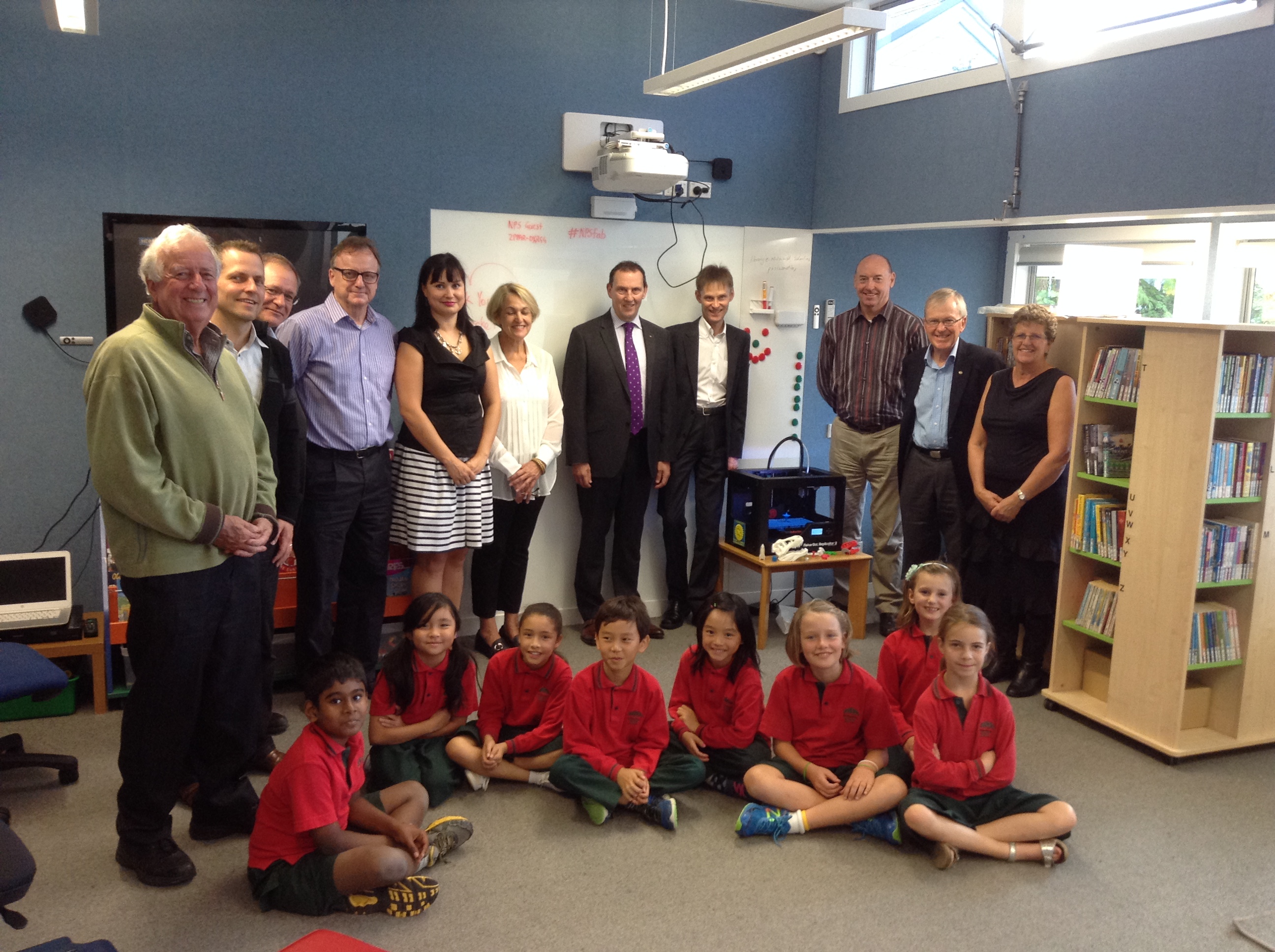
Well, a couple of recent events happened for us to finally receive ours. Wendy our principal  was invited by our local rotary group to pitch a reason for us getting a 3D printer for Newmarket School. She invited me along to the meeting and I was so excited I could pop. We spoke passionately about our children and shared some of the recent learning we had been involved in. After we left the session with the group, I returned to school and heard Waveny @wavesbryant sharing that their class really wanted one and had created a pitch to put forward to our Board of Trustees to get one.

Well a few weeks later, Wendy and I were emailed by Brian and blow me down, we were the first chosen school to be receiving a MakerBot Replicator 2 from Newmarket Rotary. They liked what we had to say about how we would use it in the design process and how we worked hard to make our children’s learning visible.

So last week the presentation team arrived at Newmarket School with our MakerBot. Waveney’s class presented their learning around 3 D printing and impressed the visiting group particularly when it was made known that the children were 7 and 8 year olds.

IMG_1174

Waves being the creative lady that she is immediately got to work and designed something totally impressive. I went home and youtubed everything, spoke with Myles @NZWaikato on twittter and had a good look around Aurora blog about 3D Printing, dowloaded MakerBot app in iTubes and adapted one of the templates.

Recently I have been in contact with Tim @MindKits, a connection through Myles who said he was willing to help us as we learn. Last night I spoke with Terje @terjepe in Norway who shared what their school have been doing with 3D Printing.

Some other connection we have made during this process has been with Murray Clark, Marketing Manager from Ricoh, and Brian McMath from @NZProdAccel.

I came back to school on the weekend and worked with a past student who happens to be Wendy’s nephew and we created a Batman cookie cutter from something that he drew. He drew a black and white image and we imported it into shapes and pulled it up to create the thickness.

But I will be blowed if I knew how to export the image into Thingyverse and make the image compatible with MakerBot.

Today after our staff meeting, Waveney took me through the process and voila, I am still here waiting for the blasted thing to print off.

So my learning with design , check the measurement. I also think I might have it too close to the plate and might need to chip it off with a credit card kind of implement.

While it printed I recorded a few minutes of the process using Persicope and I had so many people pop on to view. Therefore I know #3Dprinting is very hot at the moment.

The SOLOtaxonomy in me says reflect on the process, so I am doing that now while I wait for my first attempt to print.

Where to next:

The badge took 1hr 57 to print and it was stuck to the plate. I forgot to raise it a little before printing. I think that when I work with the children I would use beginning templates until we understand the process and then have a go at designing from the beginning.

IMG_1267

Language and learning

http---makeagif.com--media-1-23-2015-64zMJV

At my school we have children and staff from all over the world.

Combined together we speak a total of 23 languages including English and Maori.

As a trained second language teacher with a National Diploma of TESSOL and have a specialist Bilingual Certificate, I have a fascination with linguistics. Myself Samoan is my first language and I learnt English at school. I can get by in basic French and Dutch. At teachers college I specialised in Maori language and  later on I learnt Japanese for two years in order to empathise with children from Asia learning a different literacy script. In addition I learnt a little Tongan when I was immersed in a Tongan speaking class for one year. This year, I hope to learn some Mandarin too.

First Language Maintenance

I love hearing our children speak in their first language and encourage them to share with others in their own language if they are developing understanding of concepts. My bilingual training allows me to trust this strategy because of the work of educators who have come before me and have tested the theory of BICs and CALPs from the research of Jim Cummins. At my school we offer Chinese after school for our children and each year we see more and more mainstream children join these classes. In addition we are part of the Mandarin Language Teacher programme and we have a mandarin teacher work with our children teaching language and culture. We also teach Maori within our classes and have an itinerant teacher of Maori who works with us whenever we can.

Data

I spent a few terms as an ESOL verifier and began to learn how to analyse data. However my fascination with data has been as a second language teacher for twenty years and as a Bilingual Team Leader for two. I have worked alongside staff continuously and alongside bilingual educators during this time.

When I run English Language Learning professional development with staff I remind them of the graph from Collier and Thomas that charts how long it takes to learn a second language for academic proficiency. I remind them of how fragile language is and that it takes two generations for a language to die in a family. This is accelerated by children learning only in English at school. The language that children learn at school is the language that their children will grow up with. I am a living example of this. My own children speak English as their first language. They have a small bank of words in Samoan but nothing to survive with.

If we do not foster first language maintenance in our schools, our children will loose their home language within two years. We can see this by year three. You ask your children to say something in their home language, you can see them struggling to find the word. If English second language children are drowning in an English medium setting and not encouraged to think in their language they loose a 100 words of their first language a week. The faster they loose their language the slower they will be academically in English.  As children learn English they require a proficiency of 100 new words each week to reach the 5000 word yearly target to catch the moving target of the first language learner. In order for children to respond to your questions in a sentence they must have a 10,000 word vocabulary bank. This is the number that an average 5 year old English speaker begins school with. It takes an accelerated second language learner two years to match this number.

Therefore those of you who say your year 3 and 4 second language children who are at benchmark on our National Standards, I applaud your teacher judgement because you far out perform the thousands of bilingual educators who aim for 6 years at school to reach standards.

I am continually amazed at educators who place their students at national standard after being in New Zealand for 2 to 3 years at school. I monitor our data and I regularly see the year 4 drop in data. Two things cause this. The first is that often junior school teachers over score the children because they take the ‘surface’ data at face value. When cognitively applied language proficiency hits the learner and the data shifts to depth in literacy and knowledge across all numeracy strands teachers can no longer justify the surface gathering of data.

Educators who work with large numbers of second language learners know exactly what I am writing about because they are the ones who have to justify the drop in data. There is often the feeling of failure as a teacher because of this drop and questions are raised as to what kind of teachers are in the year 3 and 4 areas because the fabulous earlier school data has been allowed to drop. I often hear school principals ask, ‘What is going on? There should not be a change in data at years 3 & 4.’ However again I reiterate, this drop happens because at the earlier years the data gathering gathering is at surface level and teachers are going by what they can see at surface levels of learning to make their overall teacher judgements (OTJs) and are not taking into consideration that their children are learners of English as a second language before making that OTJ. Therefore that initial early data will NOT hold when the children hit academic levels of proficiency. From personal experience of continually working with data and from the ongoing research I have learnt from expert bilinguals,  this drop will continue to happen until a school understands how long it takes for a second language learner to meet national standards in English. I repeat myself that the data begins to even out by year 6. If only we followed the learning from Finland who do carry out data gathering and benchmarking of their children until their children have been at school for 6 years. Pasi Sahlberg calls what we do GERM or Global Education Reform Movement.

The next time I usually see a drop in data is at year 5. This happens as greater cognitive academic proficiency is expected from the children. Often I look at the year 4 expectation and I know from teaching this year level that they are expected to make an 18 month progress in one year. This is particularly noticeable in mathematics.

I also sometimes see children who have maintained progress for a few years suddenly hit year six and their data takes an accelerated jump to out perform average data that I would expect to see from intermediate aged children. Again, this is because their learning data has levelled out. However their teacher become so excited that they overscore the children. Again this happens when class teachers have been working for a few years with large numbers of second language learners. They become so excited when they see the acceleration of language learning happening. Again the work of Thomas and Collier shares that the acceleration happens then when a school has all its thinking correct around second language learning. However a reminder again that second language learners overtakes mainstream learners at intermediate because the acceleration takes off at year 6. Teachers begin to see this and suddenly place their children above national standard data.

Did you know?

From the conventions on the rights of the child, article 30, that children have the right to communicate in their language when other speakers are around?

children

If a child is literate in their first language then you can expect to see an 18  month gain in their learning each year at school? This is why I particularly love working with new migrant children at year 5 and 6. I literally watch their progress using graphs.

The younger the children are, the less academic exposure they would have had to literacy in their first language and this slows down their academic progress in English. This can be seen by the year 3 and 4 data. They appear to learn English very quickly and this is know as basic interpersonal communication skills or playground English. Therefore just because they appear strong orally in English, does not mean they yet have the academic proficiency in English.

From school wide data I would expect to see the data even out by year 6 if the school and teachers understand how to benchmark the children accurately against National Standards. If the data is too high in the junior school then expect to see the drop in year 3 & 4 data.

Mathematics generally moves first, then reading and then writing. If the children’s writing data is higher than reading, I ask our teachers to look again. Either they have misinterpreted the reading data or have over scored the writing data.

I also check historical data and if I see a shift of 2 or more sub levels in a semester that alerts me to an accelerated push and I ask to see in class evidence. This is usually something that takes place in the second gathering of data. This means, has the previous teachers got their data wrong or is something else going on here.

So as you return to school for this second term, I give a shout out to the year 3 and 4 teachers who are looking at the data. particularly when your class settles and your reading groups need reshuffling because the previous data does not match what you see in your class. Last year our teachers of year 2 and 3 children produced a realistic gathering of data so I know that the children’s new teachers will not have this problem.

In class support versus withdrawal

As I group our funded children for support, I always aim for as much in class support as I can give them. Research shows that children who have been identified as needing extra learning support do not need to fall even further behind their peers by being withdrawn. Colliers and Thomas research shows that withdrawal is the least effective form of second language acquisition. If I do withdraw children then I come in as an additional teacher to the team that has the most needs. Whatever they do in class I do that with the withdrawn children. Sometimes teachers think the ESOL teacher only teaches reading and writing. ESOL teachers are first and foremost trained teachers and can teach anything. We have have had additional training in second language acquisition. Sometime I teach maths to my withdrawn group.  I do feel anxious when my withdrawn children tell me that they are missing physical activities, science or art. I know from experience that often our second language leaners shine in these areas and the one chance they can get to shine in class is taken off them because ‘they need more English learning.‘  As much as I can I target teams during their literacy and numeracy times.

If I am working in class alongside a teacher, the teachers who have the mindset will sometimes have me take an accelerated group in their class while they work with the ESOL children.

At my school, I am conscious of always having my time in a classroom as a classroom teacher and I ask that part of my programme involves classroom teacher release or beginning teacher release. I like to do this as it gives me a sense of data normality. So when I am working with groups, I am clear about how hard to push my children in their learning.

Questions

  • What do you do as a school to ensure first language maintenance is happening?
  • Have you had experience with the year 3 and 4 data drop?
  • What are your views on allowing your students to discuss curriculum concepts in their first language?
  • Do you allow your children some opportunities to write in their first language?
  • Have you carried out personal research to identify where your children come from and would you be able to greet them in their language?
  • Does your school teach an additional language that is one of your children’s home language?

GAFESummit 2015 reflection

Recently I attended the GAFESummit North Island sessions held at Albany Senior College. Last year we had 6 teachers attend the summit from Newmarket School and when we returned we moved very quickly as a school. As a staff we embraced Google Apps for Education and all planning became collaborative as we moved into the transparent environment. Each team had folders and a site.

But the changes really took place this year as team leaders took control of their team sites and team blogs. Each team member had full ownership rights to both. I watched with pride as the learning spaces evolved and the speed at which information was shared with both teachers and their students.


Then this year, I had three teachers and myself accepted to present at the 2015 Gafesummit. As their mentor, I felt huge pride at the process each teacher underwent to prepare and then present in front of their peers. They had fabulous feedback via Twitter. I was away for the week leading up to the summit and the team got together in my absence and practiced a run through. They gave each other feedback. The experience enabled them to tweak their session and step through what they wanted to share. The practice session also enabled them to share ideas and identify how they could make their presentations even better.


I have been at Newmarket now for nearly 6 years and I have seen the growth in professional learning blossom as our school leaders and teachers move into making their own learning visible.


Myself and the management team have recently returned from an international conference and the trip confirmed that we are well on the way with what we are doing with our teachers and to continue encouraging and developing them as leaders in education.


I have identified that we need to provide further opportunities for collaboration outside our school. Each teacher has a Twitter account, they are all on the VLN and they all have their pond account activated. As they continue to make connections with educators outside our school I know that this will continue to have an impact on their practise and thus affecting the learning for their students.


I know that the educators who presented at this years GAFESummit have been changed by the experience. They were ready for the challenge and will return to school buzzing with more ideas. They will identify what they need to do next and their enthusiasm will generate the next group to step up


Some of my takeaways from the sessions include

  • Do not be a complacent expert but a restless learner
  • How do we find the adjacent possible in our classroom?
  • Disrupt Boredom


Myself I shared the TeachMeetNZ project and also took an advanced youtube session. I use youtube to mentor teachers and as a platform for them to share their learning.

Here are the teachers’ reflections who presented at GAFESummit

Here are the slides to my session ‘GAFE 2015 TeachMeetNZ’.

Here is my video introduction for my advanced youtube session.

Curating WELS15

I love curating links, lists and photos.

What an amazing couple of days of learning I spent last week with my principal Dr Wendy Kofoed and Assistant Principal Virginia Kung to attend INTASE – International Association For Scholastic Excellence held in Singapore.

https://www.facebook.com/intase.org

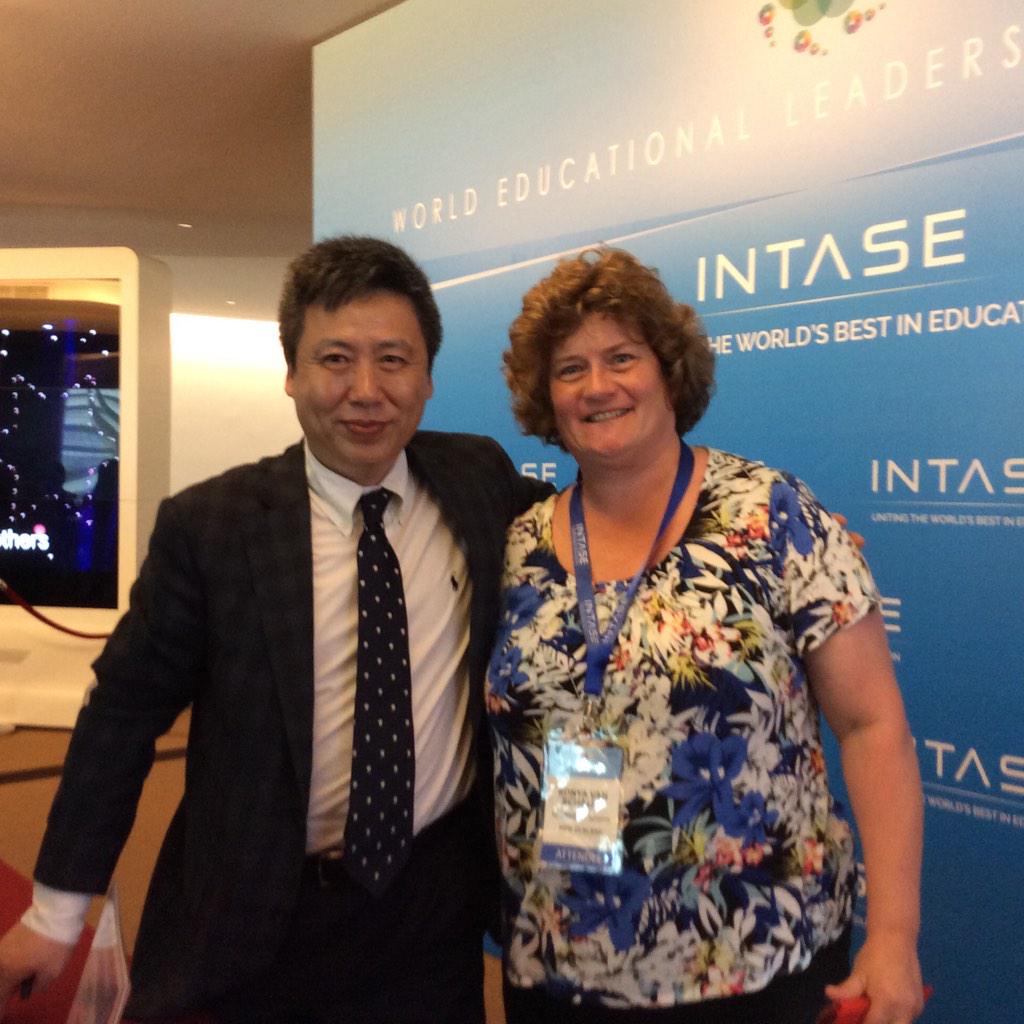
The Newmarket School team were set the challenge of getting a selfie with their masterclass presenter and to tweet it out. This they did.

wels15

Here are some fabulous reflections coming through from the World Education Leaders Summit.

(Thanks Neil for putting them on your blog.)

Here you can check out the twitter list of the educators tweeting about #WELS15 created by moi. Check the number who tweeted because over 1000 educators attended globally.

Jon Bowen created Prezi diagrams title Lead and Redefine Future Schools and they are awesome.

Andrea Stringer curated all the tweets using Storify. She was watching the twitter feed from afar.

Here is the list of speakers.

These were the topics they covered

  • Principalship
  • Middle Leadership
  • Innovative Leadership
  • Educational Technology
  • Self Organised Learning Environments
  • Professional Learning Communities
  • School Social Capital Building
  • Highly Effective School Culture Building
  • Creating Equity
  • Curriculum and Assessment Planning
  • Global Future Leadership
  • Change Leadership
  • Leadership Productivity Tools

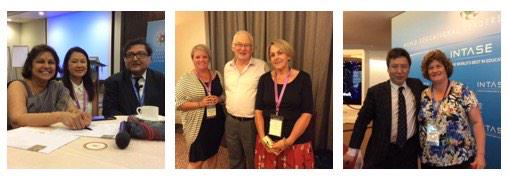
Here is my favourite photo from the conference. The photo highlights three educators having fun learning together.

wels2

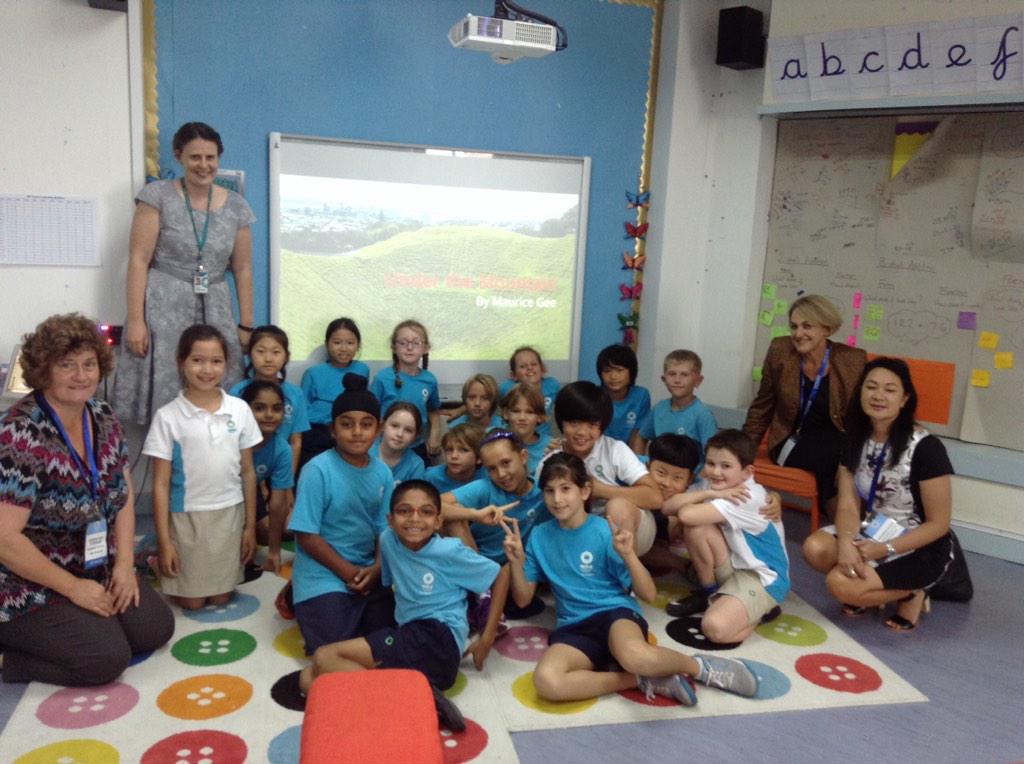
This post is multistructural because of all the lists and I must include that  we met Stephanie Thompson and her class. You can read Stephanie’s blog post about our visit.

steph

Summary

The three travellers had an amazing learning time and the dialogue that took place was incredible.

My list of takeaways from the conference

  • Keep pulling teachers to share their learning and water the flowers.
  • Keep up with my reflective writing.
  • Continue to have disruptive conversations
  • Look after myself better as a leader.
  • Keep up with global learning with the children.
  • Continue to gather evidence of children’s learning in disruptive ways.
  • Keep asking questions that are ungooglable

A New Education Paradigm

yong

Yong Zhao @

http://zhaolearning.com/

http://zhaolearning.com/category/blog/

http://www.slideshare.net/uocunescochair/world-lass-learners

Last week at the World Education Leaders Conference 2015, held in Singapore I attended Yong Zhao’s master class session titled ‘Designing and developing an education for the age of globalisation’. Yong shared the ingredients of a new education paradigm and these included student autonomy, product-oriented learning, and globalized campus

He spoke about redefining excellence and the need to abandon the current mindset entrenched in the obsolete employment oriented educational paradigm. Our children are being educated to exist in an existing society that no longer exists.

Research shows that the more successful an educational system is in the traditional sense as indicated by test scores the less likely it is to cultivate entrepreneurs. Therefore the less prepared it is for a globalised society.

Student autonomy

Diversity must be treated as a strength. We must identify that we must bring more than uniqueness  and creativity because globalisation reveals that we are not as unique as we think we are. Our students must be prepared for high skilled jobs that cannot be substituted by machines. We must give our student voice and choice. Student autonomy is essential if we are to help students identify and develop their talents because middle class jobs are going and currently there is massive youth unemployment in the world.

Globalised Campus.

We must have the students create their own courses which include creativity, entrepreneurship, and global competence and provide them with opportunities to experiment with their interests, their strengths and weaknesses, and engage them in authentic work. Our children must embrace entrepreneurship. In order to do this we need a new education paradigm—entrepreneur-oriented education, instead of the current employee-oriented education. Our children will become global, creative, and entrepreneurial,

Product orientated learning

Localisation and uniqueness support the development of diverse talents.  Students must connect with a global community because small niche skills are becoming sought after skills as  we become consumers of psychological products. We need independent young thinkers who are willing to use their learning differently to create jobs and contribute positively to a globalized society. We need to think about the the skills that cannot be acquired from another. Low income jobs are growing as we move into the age of abundance and choice. We no longer have a monopoly on education. Schools are not a museum. Teachers and leaders are not curators of school learners. We need to teach our children that we must work together. Glocalisation is embracing the localised culture. Creativity is entrepreneurship. We used to prepare employees but now we must prepare entrepreneurs.

Managed versus employable

If you want to be managed, you are not employable. Simply following orders is no longer employable. Current employees mindset seldom go an extra mile. Entrepreneurs look at extra miles as opportunities and have creative minds to come up with a solution to a problem.

Schools must forget about preparing employees and embrace entrepreneur education.

3x elements for a good school are

  • What: Student Autonomy
  • How: Product oriented Learning, student driven
  • Where: The global campus

Collaboration is a misused term. We must focus on social intelligence, social network and social capital. Human to human contact is the key. We must work on group mentality rather than individualism. Take the phrase, ‘It’s good to be nice to others for your own benefits.’ Start with what the children know and then the reading and maths follows. Have the students create courses for each other. Learning is a human activity so teachers will always be needed. Schools must provide opportunities for student voice, choice and personalised support and lets get the learning right first for adults. Lets create a sense of research and professional development because this builds trust between members.

If the outcome measured is only the test scores, then the process is ineffective.

Project Based Learning is not as effective as Product-oriented learning to test learning. Does the work we do produces authentic learning? The passion can drive the motivation.

We must ask the question, Has the student produced anything that matters to them or to someone else?

We must build resilience, empathy and the ability to overcome hurdles.

Learn about others, then learn with others and learn for others.

I got a lot out of the session but in particular the connections I made with other members of the group. I especially liked the discussion between the sessions.

Overall I think that our students need to connect with a global community in order to  achieve global prosperity. Our children must develop the knowledge and skills to live and work across cultural and national borders as global citizens in the global village.

My take aways from Yong’s session

1) Let us redefine excellence in our schools and not limit this to test scores.

2) Let us provide opportunities for our children to take part in global activities with children from other countries.

3)Let us allow our children to choose what they want to learn. For example do not limit their reading to their levels.

4) Let us create a sense of research and professional development within our school.

TeachMeetNZ Bloopers and Troopers and where to next.

TMNZ Anniversary

Yesterday was the second anniversary celebration of TeachmeetNZ. WOW I can hardly believe how fast the past two years have evolved with the project. To anyone who has taken part as a presenter, audience or the support crew, I say thank you. I cannot tell you how far the reach of TeachMeetNZ has been. All I can do is share some of the numbers I have such as having over 80 educators share their learning.

After each session I push out the evaluation form and use the feedback to drive the next session. Currently most of the feedback comes from the presenters. The feedback allows me to identify areas that need addressing.

Bloopers

One day I must put together a TeachMeetNZ bloopers clip. To be honest most of the major bloopers will end up being me. I still have a giggle when I recall one session going live with my opening slide telling the world that I was outside hanging up the washing and to get ready for the broadcast. Since that day, I now just launch straight into a session because TeachMeetNZ is not about my learning but about the current presenting team’s learning.

Yesterday was no exception. 40 minutes until live time, I could not get the hangout record button activated. The setting up has become so slick, that the link had been prebroadcasted as part of the advertising sheet I generally set up.

So I left the team on the original hangout while I problem shooted. I quickly set up another hangout, grabbed the links, readjusted and came back to the team where I gave them the new hangout link and asked them to rebroadcast the new link like mad over twitter and google+ hangout. This all happened in the space of 15 minutes. Thank goodness I knew hangouts so well that I was able to do this.

Then we went live and once I had greeted everyone, we had technical feedback happening just as the first presenter lined up for their spot. Someone had the video live and I watched the mics trying to identify who…. it was me. In embedding the new video onto the home wiki, I had inadvertently left the page open. One of the ‘rules’ I go through with the team during practice sessions.

Troopers

I will let the presenters into a little secret here, those of you who know me well know that I am not the best at multitasking. I cannot operate technically and listen to conversations at the same time. Therefore it is important for me to see your slides before the session so that I may prepare myself better as a host. During a live session, I am so busy watching cameras and mics that I have no idea what you say. I come back and rewatch the session after the event and then give you feedback via twitter. My feedback is usually positive because I know how far you have travelled technically as educators during this period of preparation. I know preparation has been intensive and I know how much work you put into your presentation. In addition, I know that you have already had feedback from your peers during the practice run throughs. I believe that last thing you need at this stage would be critical feedback.

Where to Next: TeachMeetNZ Leadership Panelist Discussion

From a presenter’s perspective TeachMeetNZ  is all about connecting and collaborating with each other to create a product for education. But from an audience perspective TeachMeetNZ  is about consuming. Yes there is some feedback on twitter and sometimes with the Q & A on a hangout and generally it is all positive. I have had some of the audience reflect on a session via blogging.

I do have an idea for an upcoming session. I can see a TeachMeetNZ critical discussion happening but will need to select the panelists carefully.  Maybe only have 4x. I envisage a depth discussion happening where we can come together as educators and have dialogue. Kind of like a debate, or a critical friend discussion. Where we are taking someone’s work or research and critiquing it. Not in a critical sense but yet in a critical way. From my experience in education I have identified very few educators who have the skills to cope with discussion like this. I do not believe I could cope with discussion like this because I am an educator who has better discussion after the fact.

I have to choose carefully and firstly I need a strong host. The major challenge is identifying who because I know what happens when school leaders get together, they can be worse than teachers in keeping to a time schedule. I am looking for dialogue leaders who are strong in their field of research and practice and can handle the discussion. That they are willing to be open to the critical dialogue. That they would treat this session as learning for their own professional growth. That they are open to having their views swayed with the discussion. That are happy to create a recording for education.

So I need some whos, I already have in a mind a host. Who do you think could cope with this task. In education who have you heard speak in a critical way and I am not just talking about blogs, I am talking about real time. Maybe this is the leadership TeachMeetNZ that many have asked for. Drop me a DM via twitter and give me some names.

To find out more about TeachMeetNZ, check out the previous sessions.


Critical friends

As an experienced educator I learnt from some of the best. One of which is my dear friend Patisepa Tuafuti and the other was Anne Saunokonoko.

Pati shows by her actions that she grows leadership. One of which is standing back. She would push me hard to do things well out of my comfort zone and then be there to celebrate with me when I ever did anything amazing. But again always in the background. She never takes credit for achievements and always focussed on the group success. I cannot count the number of times she has shared successes with me and often put me in the limelight. But really it is her driving force that has achieved the outcome.

The other is an old principal Anne. Anne would say, “when you are successful, we are successful so go for it Sonya.” When I would quibble at attending another professional development session particularly concerning ICT, she would remind me with, ” Its not what you get out of the session, but what you contribute.” Staff at my school will now hear me use the same words. At the end of most training or celebrations she would be there for me to recap with and she would gently nudge me into trying something else new. Now I would call that downloading and rewinding strategies with a critical friend as part of reflection.

I often observe presentations and watch who is hovering in the background like a mother hen. More recently with social media I observe who is broadcasting the success of their teachers. Yes that person could be at the front in the spotlight. But often you watch them hovering to ensure that the sessions go well and only step in when needed. They are there to help celebrate their teachers achievements and to be the person to recap with and help identify next steps.

At the same time we all need mentors. We all need someone we can download with and rewind our learning. We all need someone who helps us identify our next steps. Some schools use the term critical friends because often they ask the hard questions. They provide opportunities for staff to step up. They are the ones pulling the staff forward to take a jump into unfamiliar learning.

In your workplace, who do you identify as your critical friend? Who is the staff member who pulls staff hardest out of their comfort zone? Probably those of you who are reading this, it is you. If you are arrived via twitter or if you are from my school, then you are my one of my critical friends and you know me, I welcome discussion. Click below.

Science

Science has been dominating my time this past few months and it has been exciting.

@mattynicoll approached me to lead the 24th of February #ScichatNZ and of course I said yes. I know Matt because we were both on the steering committee for #edchatnz and he is one of the teachers joining the #TeachMeetNZ meets #Science session.

I enjoy teaching science and learning through the Nature of Science. For those of you interested in learning how to run a twitter chat, I use the #GlobalClassroom training shared with me from @mgraffin. He is an Australian Science passionate teacher that I have met on twitter. I set up a google Doc and divided the hour up with questions. You can see the one I set up for #SciChatNZ here. Matt was fabulous is supporting me by giving me the topic. During the hour chat, I have learnt too from @ussieEDchat the importance of using a graphic for questions as this helps hold the chat together. So I created a presentation of the questions here . I exported the presentation as jpgs and tidied up the images leading up to the session.

The session was storified by @NZScienceLearn so do go back and revisit the session. I was grateful for the #SciChatnz team who rallied around me and helped ensure that the twitter chat flowed. In fact it didn’t just flow, it stormed and we trended on twitter.

One of the important lessons I learnt from @julielindsay is about keeping a record of the sharing. So I like to see some kind of an archive of chat history. This is something that the #SciChatNZ team do very well.

The other big Science collaborative project I was involved in was with Cath @NZScienceLearn. We had been coordinating a #TeachMeetNZ meets Science Session for the 21st of March. You can read more about that here.  We had a team of 8 science educators joining us and they are well known in the science education community partly because of their twitter activity and their involvement in various science projects such as #scichatnz and Science fellowship.

As part of my collaboration with Cath I was interviewed by Melissa @NZScienceTeachr on behalf of the New Zealand Association of Science Educators. You can read that interview here.

My goal this year is to understand how social media works and so I had investigated how everything linked across platforms and how traffic was driven. I observed the TeachMeetNZ youtube channel with interest. Through the work of @abfromz and @BartVerswijvel I stumbled across Thunderclap. I activated a thunderclap to help broadcast the science session and also so I could see how it drove traffic. I set up tickets in Eventbrite and I could see the huge integrations that this site had with Facebook, Twitter and instagram. In addition, I activated my Mailchimp account that had been dormant for a while. I used the TeachMeetNZ meets Science session to play with many of the tools.

Science at Newmarket School has many links. In particular the work we did with @S_Heeps. I had @BelindaHitchman join me from School in the TeachMeetNZ session. In addition we had @Doctor_Harves join us at school for a visit.

My SOLOtaxonomy thinking hat is excited because I believe that my work with TeachMeetNZ is moving into relational thinking. I am having other educators put their hand up to host a session. Yes I can already see where it needs to go for extended abstract thinking here in New Zealand. But I need a few more strong Google + educators with a working understanding of youtube.

Hey Tony, thanks for sharing a viewer’s perspective. The fun is in the connecting and collaborating sessions. Thanks too with your support in Pond, Google + and Twitter.